Case fileEF-003Poiana Brașov, 1971
Murder at the Golden Stag
In March 1971, communist Romania threw open its doors to the West for the Golden Stag, Cerbul de Aur, its glittering international song festival. But a few miles up the mountain, in the snow above the resort of Poiana Brașov, women were being found dead, one after another, strangled by a killer the police could not catch.
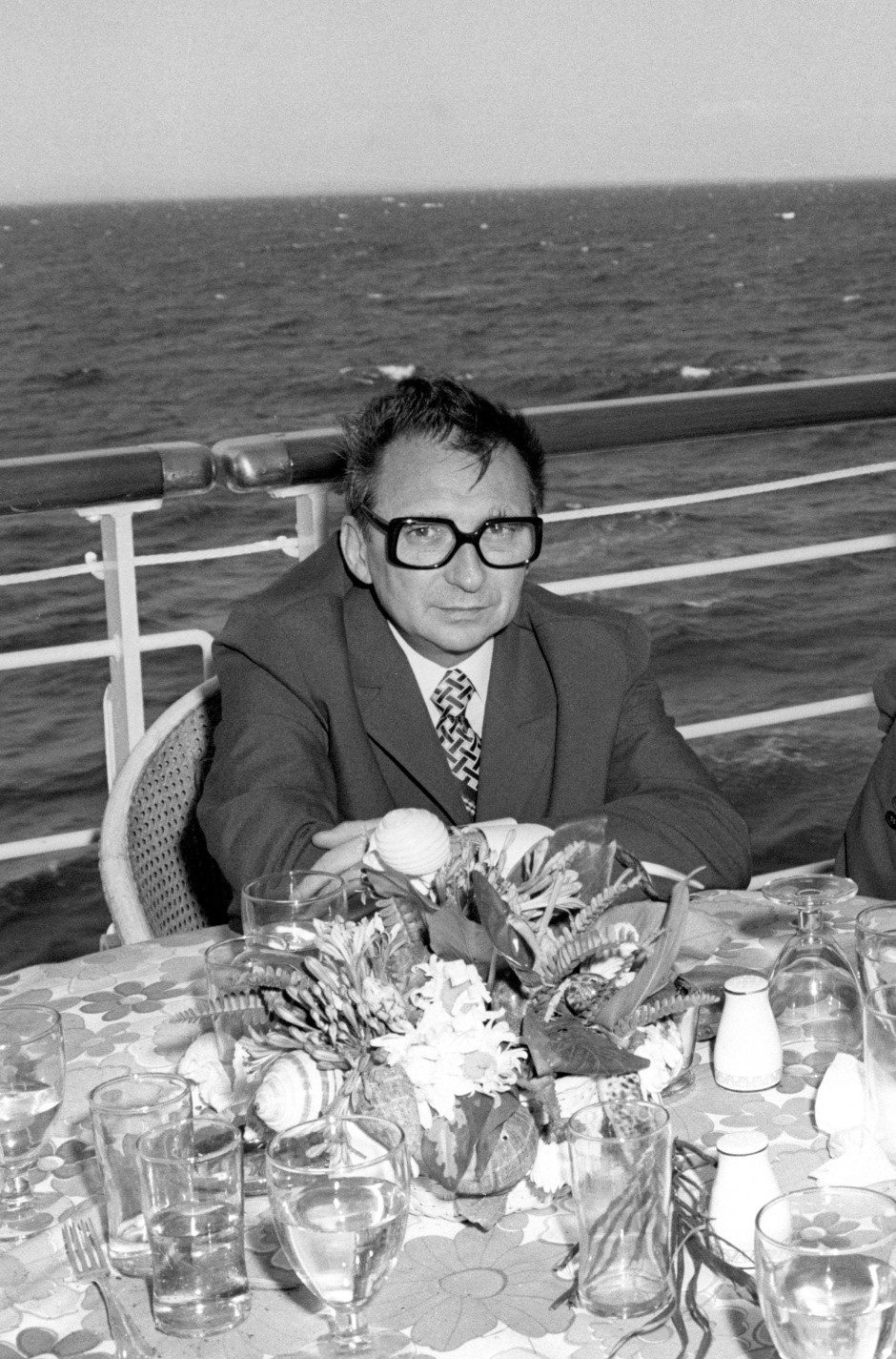
let us hope we don't find her like the German woman
Colonel Stelian Pereanu, reporting his wife missing, before a single body had been found
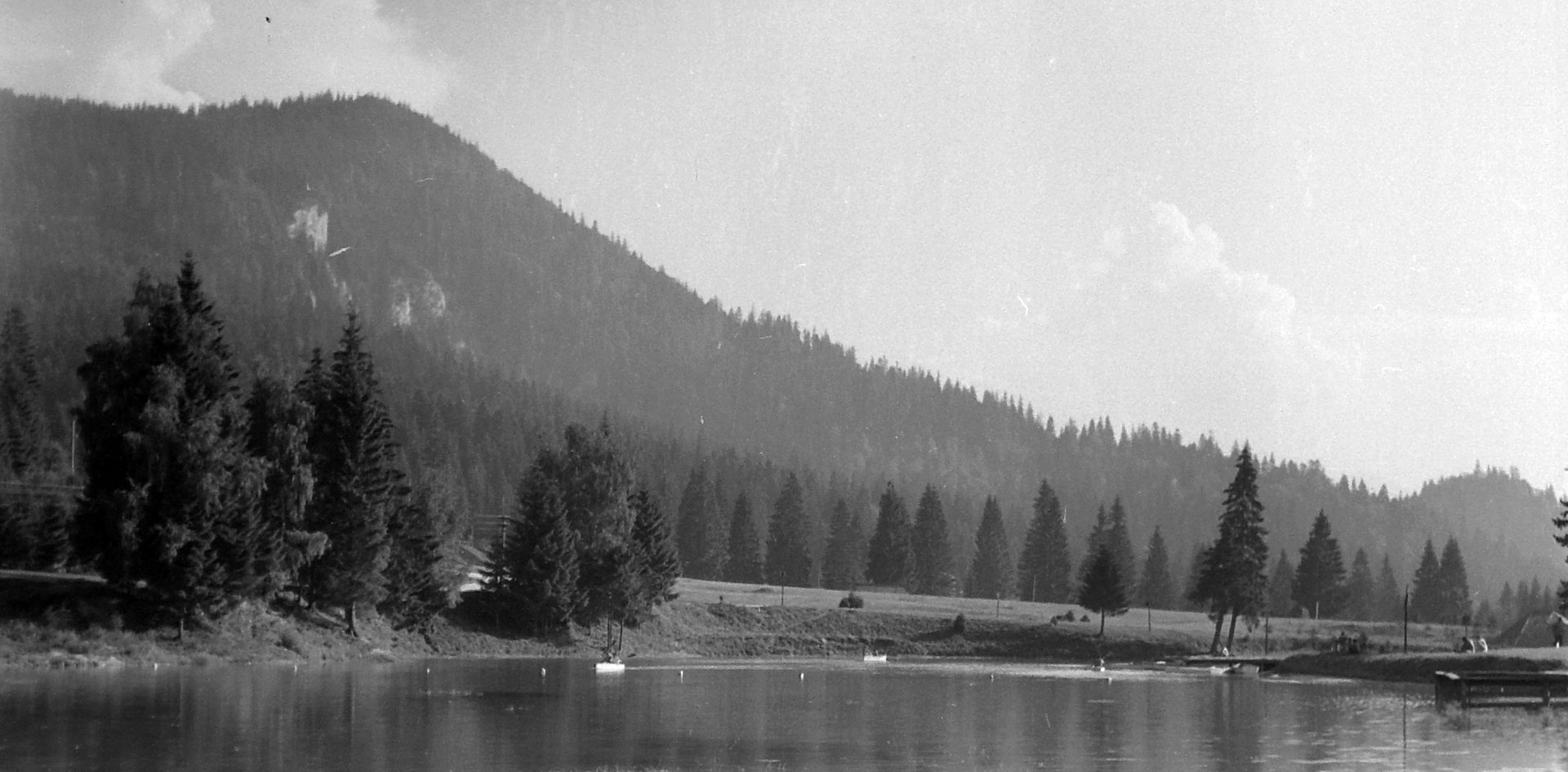
The lake at Poiana Brașov, 1961. Fortepan, image 13756, CC BY-SA 3.0 (source)
The film
At a glance
- Period
- 1969 to 1990
- Countries
- communist Romania (today Romania), Cyprus, United States
- Subject
- The Poiana Brașov murders and the Securitate cover-up of 1971
- Key locations
- Poiana Brașov, Brașov, Predeal, Timișoara, Bucharest, Cyprus, the United States
- Themes
- true crime, Poiana Brasov, Cerbul de Aur, Golden Stag, Golden Stag festival, communist Romania
- Status
- The case was officially closed in 1986, the crimes expired under the law, and four filing cabinets of documents and physical evidence were destroyed. The man who killed the three other women was never named. Colonel Stelian Pereanu was never tried for the murder of his wife. Status as the episode left it, 9 June 2026.
- Episode
- EF-003 · 24 min · published 9 June 2026
Case overview
This is the story of those murders, the festival they shadowed, and a truth that stayed locked inside a sealed Securitate file for half a century. Based on the CNSAS (Securitate-archive) investigation of historian Mădălin Hodor.
So when you hear this story told as the tale of a single madman who was never caught, and you will hear it told that way, remember that there were always two. One was a phantom the police could not catch. The other was a colonel they would not. And the only reason we can tell the two of them apart today is that the men who buried the difference were, in the end, buried by their own machine.
Timeline
Her name was Maria Sârcă. She was a bakery worker from Timișoara, unmarried, and that autumn her trade union had rewarded her good work with a twelve-day holiday in the mountains. She would not live to finish it.
According to one of the criminalists who worked the case, recalling it many years later, a young man who hung around the lodging office, one of the boys who made a little money carrying bags and playing guide, offered to walk her through the woods. He tried to attack her by a pile of sawdust. She fought him off, the investigator said, and got away, only to fall back in beside him on the path, where he struck her down and strangled her. On the 21st of September, 1969, a locomotive crew spotted her body by the railway line at Predeal. At the time, it looked like one terrible crime. Not the beginning of a series.
By the start of the 1970s, Poiana Brașov was the crown jewel of communist Romania. A mountain resort twelve kilometers above the city, built to dazzle. An open-air skating rink the size of a football pitch, kept frozen by machine even when the weather turned warm. A cable lift climbing the slope they called Bradul, the spruce.
On a holiday weekend, the buses brought twenty-five thousand people up the mountain. On the planners' desks were drawings for swimming pools, for a casino, for a golf course. This was meant to be a communist playground that could look the West in the eye.
Related documentsAt the end of January, a group of West German tourists arrived in Poiana Brașov. Some days later, one of the men walked into the local militia station to report that his wife had vanished. Her name was Gisela Borman, twenty-eight years old.
She had last been seen heading off to sell a few small things at one of the resort complexes, the quiet trading Western visitors did for a little extra cash. She never came back. For more than two weeks, there was nothing.
On the morning of the 19th of February, at the foot of a spruce tree behind the Poiana Ursului complex, they found her. She had been strangled. Her money and her gold watch were gone.
And the long delay had stripped the scene of almost everything useful. Whoever did this had a seventeen-day head start. Because the victim was a foreigner, murdered in the regime's flagship resort, the case detonated upward. Within days the deputy interior minister himself, the head of the entire militia, had taken personal command.
Related documentsOn the evening of the 21st of February, at the skating rink in Poiana Brașov, a woman stepped away from her husband and a group of friends and did not come back. Her name was Ana Pereanu. She was fifty-one, from Bucharest, and she was not an ordinary tourist. Ana Pereanu was herself an employee of the Securitate, the secret police, and her husband was one of its colonels.
By the next morning, the 22nd, they had found her, near the Coliba Haiducilor restaurant on the Bradul slope. The chief of Romania's criminalists came up the mountain in person. And what he saw stopped him, because it was almost a photograph of the Borman scene. The body arranged to suggest a rape. The objects around it placed with the same deliberate care. A serial killer, it seemed, had taken a third life.
Related documentsAna Pereanu was more than twenty years older than the young women the killer had chosen. Her heavy astrakhan fur coat was still on her. The gold at her throat, in her ears, on her fingers, none of it was missing, and robbery had been the killer's one constant. A ring had been slipped from her finger and laid carefully beside her handbag. There was popcorn scattered around the body, but none beneath it, as though it had been spread there after she was already lying in the snow.
And then the coroners delivered the detail that quietly broke the entire case in half. Ana Pereanu had not been raped. There was no sign of assault at all, and no sign that she had struggled. Someone had built this scene. Someone had copied the killer's signature, stroke for stroke, and laid it over a body the killer had never touched. The question was no longer who the serial killer was. The question was who had wanted, so desperately, for everyone to believe he had been here.
Related documentsIn March of 1971, the most glamorous week communist Romania had ever staged unfolded in the city of Brașov. Western pop stars under the lights. Television cameras carrying the spectacle out across the Iron Curtain. A festival the regime had built for one reason: to show the watching world that Romania was an open country, a place with nothing to fear, and nothing to hide.
Secret police reports from those days record exactly what the regime dreaded: foreign guests, unsettled. A West German journalist noted that the papers back home had run the story of the mysterious February murder, and wanted to know if the killer had been found. A Portuguese singer asked, simply, what Interpol was doing about it. One internal report admitted, in its own words, that the festive mood was shadowed by the cases at Poiana. The regime had invited the world to a party. A killer had answered the invitation.
Related documentsOn the 1st of April, in a wooded patch near Predeal, they found a fourth woman. Her name was Maria Blănaru, thirty-four years old, a standards worker at a carpet factory who had come up to the mountains for a training course. She had walked out of a railway station and simply vanished, and no one could ever explain how.
She was found raped, strangled, and covered over completely with spruce branches. To keep the panic out of the newspapers, the investigators carried her body to a basement in a hospital one town away and examined it there, in the dark, telling as few people as they could. The man who killed her would never be named.
Related documentsTwo investigators set out to answer that question. Both were secret police officers who had once been prosecutors, men who knew how to build a case. And the case they built led straight to the last man on earth they were supposed to suspect: Ana Pereanu's own husband. Colonel Stelian Pereanu was not just any officer. He belonged to the DIE, the foreign intelligence directorate, the glamorous, untouchable elite of the secret police, the men who lived abroad and moved in hard currency. He had served as a military attaché at the embassy in Cyprus, and he had been back in the country only a few months.
The neighbors told the investigators the colonel and his wife fought often, and that within days of Ana's death a young mistress had moved into his apartment, and that he had given the girl his dead wife's jewelry and her car. In the snow beside the body there had been two sets of prints, a woman's and a man's. A tracker dog followed the man's prints to the corridor outside the toilets of the very hotel where the colonel was staying. The boots that made them matched a pair he owned, a pair he had quietly swapped for different footwear right after the murder. And on the colonel's own wrist, the investigators found a watch. It was on the list of items reported stolen from his murdered wife.
On the 4th of August, 1971, they committed it all to paper. A hundred and eighty-eight pages. The colonel was summoned and arrested, and when they searched his home they found the boots with the strange sole, the leather coat he had worn the day she died, and a hidden roll of foreign currency.
The evidence, in the words of one account, was crushing. They had him. And that, precisely, is the moment the machine stopped hunting the killer, turned around, and came for the two men who had caught one of its own.
Related documentsAna Pereanu's original autopsy had stated, plainly, that there had been no recent sexual contact, the single fact that proved her death was staged. So the last pages of that report simply disappeared, and were replaced. On different paper. Typed on a different machine. Citing laboratory results dated after the report had already been signed and filed. And the new version said that semen had been found in the body.
The evidence was not lost, or overlooked. It was rewritten to order. Then they built the killer they needed out of thin air. Officers of the Brașov militia took their own service-issue rubber boots, pressed them into the snow behind their own headquarters, cast the prints, and mailed a hundred and fifty copies to police across the country, the calling card of a phantom rapist in rubber boots who had never existed.
Related documentsAnd when the two investigators demanded the tape of the colonel's confession, caught on a hidden microphone in his own home, the answer came down from one of the most powerful spies in Romania, General Ion Mihai Pacepa. He had listened to the tapes himself, Pacepa said. There was nothing important on them. He had destroyed them.
The colonel, for his part, wrote a letter directly to Ceaușescu's office, letting it be understood that he knew the General Secretary personally, complaining that he had been arrested without cause and beaten by his interrogators. To make the beating convincing, he took a razor blade and cut his own face.
Related documentsCeaușescu asked to be briefed on the case directly. The two stubborn investigators were removed. And Colonel Stelian Pereanu walked out of custody a free man, and went home, to the same villa where he had planned the whole thing.
But a staged murder still leaves a hole where the real murderer should be. And the colonel could not be allowed to fill it. So the secret police went looking for someone who could.
Through the winter of 1971 and into 1972, they arrested seventeen people from the world around Pereanu. Seven of them confessed. They confessed because they were tortured, with electric shocks, with iron bars, with wet ropes twisted tight, until they would say anything that was wanted of them. Not one of them had done a thing.
Their confessions had a single purpose: to plaster over the space the colonel had been lifted out of. And as it tortured the innocent, the investigation tipped over into something close to madness. The killer's victims had shown no sign of struggle, and the men in charge could not explain it, so one of the generals seized on an answer: hypnosis. They brought in one of the country's most famous stage magicians to advise them. By the time it was over, the file would record more than two hundred thousand people checked, four hundred suspects, thousands interrogated.
Related documentsOne of the investigators who had started asking the wrong questions was summoned, with great urgency, to headquarters in February of 1972. On the icy road back, his car crashed, and the colleague sitting beside him was killed on the spot. He himself survived.
And yet, while he lay alive in a hospital bed, five secret police officers were sent to his home to tell his family that he had died in the accident. They announced his death before it had happened. He simply declined to oblige them. Whether that crash was the accident it appeared to be, the files do not say.
A man arrested for two unrelated killings
The closest the regime ever came was a man arrested in 1974 for two unrelated killings, who fit the old description, who never confessed to these crimes, and who was never shown to have done them.
In 1978, General Ion Mihai Pacepa, the man who had made the colonel's confession disappear, defected to the United States. He remains the highest-ranking intelligence officer ever to flee the Soviet bloc.
And his escape went off inside the regime like a bomb. To find out how much he had betrayed, the Interior Ministry hauled hundreds of its own intelligence officers in front of a commission and made them account, on paper, for everything they had ever done. In the wreckage of that purge, an old, sealed case file was dragged back into the light, under a new codename: Cetina. The pine needle.
Related documentsThe case of the Poiana Brașov murders was officially closed in 1986. Fifteen years had passed; under the law, the crimes had expired. Four filing cabinets of documents and physical evidence were wheeled out and sent away to be destroyed, the entire case ground back into blank paper.
Colonel Stelian Pereanu was never tried for the murder of his wife. He died a free man, of cirrhosis, in his own bed. One of the innocent men who had been tortured into confessing died behind bars. That was the final arithmetic of justice in this case: precise, and exactly inverted.
Related documentsAnd General Doicaru, the spymaster who had personally steered the investigation away from the truth, was disgraced and forced out, and in 1990 he was shot dead during what was called a hunting accident.
He was the second man close to this case to die suddenly and violently, years after the first. The records call both of them accidents. They do not say anything more.
Key locations
Full mapDocuments and evidence
Sources
- Academic
Anatomia unei anchete trucate de Securitate Revista 22, four parts, 2015 to 2016, 2015.
Based on the CNSAS (Securitate-archive) investigation of historian Mădălin Hodor.
- Archive
CNSAS, the archive of the Romanian Securitate
It is the testimony from that purge, locked for decades in the secret police's own archives, that finally tells us what really happened on the Bradul slope.
- Documentary
Cerbul de Aur, the Golden Stag festival, 1971 Festival footage, credited on screen and in the published description, 1971.
The festival was called Cerbul de Aur, the Golden Stag.
- Archive
Fortepan photo archive
Fortepan (CC BY-SA): Poiana Brașov 1961 and 1969; Brașov, Piața Sfatului 1968, the old town and streets 1969, the Black Church 1971.
- Archive
Online Photo Library of Romanian Communism (IICCR / ANR)
Nicolae Ceaușescu (1965 portrait, the first Dacia 1968, the 1968 rallies, with Dubcek 1968, with Kim Il-sung 1971, the Buzau plant 1970, the 11th RCP Congress); Scînteia.
- Archive
Poiana Brașov 1937 and 1940s (Willy Pragher); the 1964 chairlift, the Sport-Hotel bus and the 1973 resort road (BK1950); Hotel Sport 1968; the 1963 ski races; Ion Mihai Pacepa 1975; Securitate file pages; vintage typewriters, a gold Longines watch, a razor blade, leather boots, an aged manuscript; Carpathian winter and footprints; maps of Romania.
What remains unresolved
- If the colonel could murder his wife and stage it this perfectly, could he have been the killer all along?
- The other women, the bakery worker, the German tourist, the factory worker, the ones taken by the real monster on the mountain?
- If a secret police colonel could murder his wife in the regime's own showcase, and walk out free while innocent men confessed in his place, then how many other sealed files, in how many other quiet drawers, hold a truth that someone with a uniform and a reason decided the world was never meant to see?
Related files
 Tortured Into Confessing: The Murder That Communist Romania Refused to SolveAlso in Bucharest
 The Communist Bank Robbery That May Never Have HappenedAlso in Bucharest
 The Vampire of Bucharest and the Murders His Father Got Away WithAlso in Bucharest
 4 Men Who Never Arrived: The Strangest Disappearances of Eastern EuropeAlso in Bucharest