Case fileEF-007Cluj, 1972
The Man With the Hammer: The Serial Killer Communism Couldn't Punish
Cluj, Romania, winter 1972. Women walk home from factory shifts through unlit streets, holding their keys in their fists.
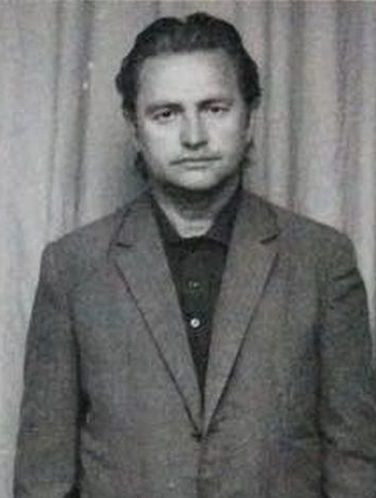
Shut your mouth. I drive this train, and nobody tells me what to do. Satan ordered me not to stop, and I must obey Satan.
Romulus Veres to his co-driver at Huedin station in 1968, as colleagues remembered the answer
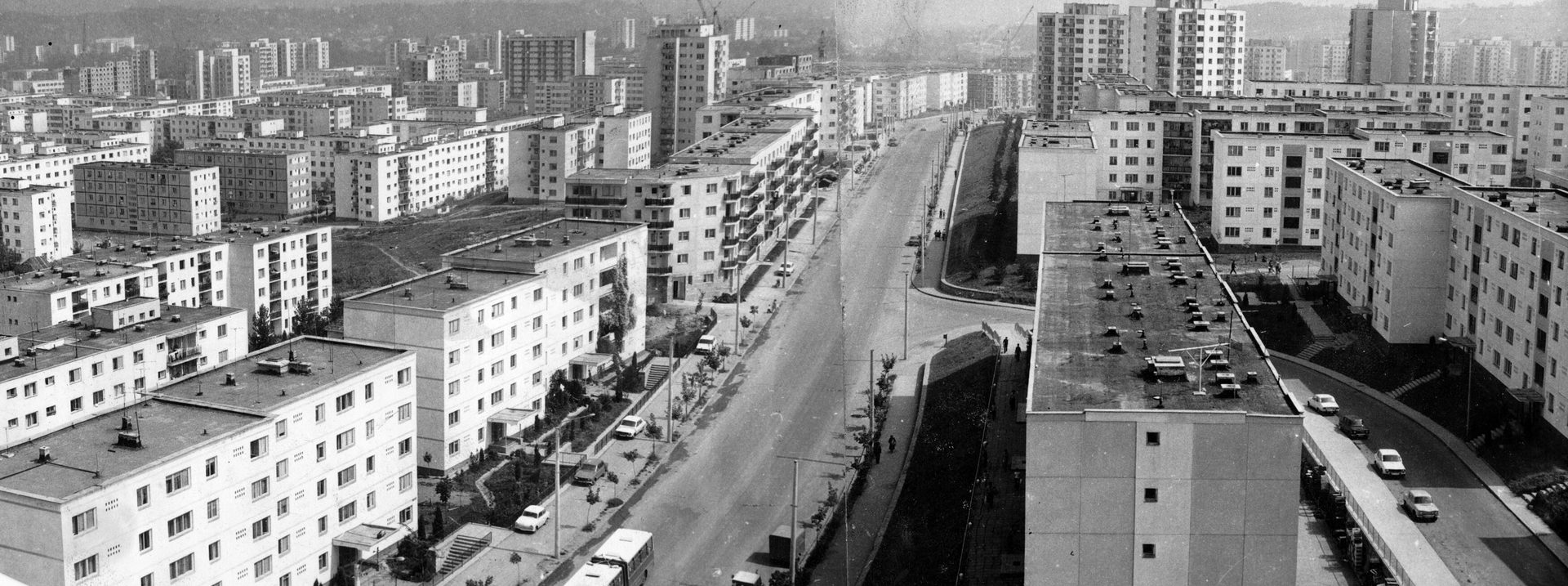
Manastur, Cluj, 1975. Fortepan, Sütő András, Mácsy Ildikó, CC BY-SA 3.0 (source)
The film
At a glance
- Period
- 1972 to 1993
- Country
- Romania
- Subject
- Romulus Veres, a pensioned locomotive mechanic of Cluj
- Key locations
- Cluj, Bucharest, Ștei, Nucet, Huedin, Salaj
- Themes
- true crime documentary, romanian serial killer, man with the hammer, romulus veres, omul cu ciocanul, cluj
- Episode
- EF-007 · 37 min · published 4 July 2026
Case overview
The newspapers print nothing, because in socialist Romania, cities like this do not officially have such problems. But door to door, four words pass in a whisper: omul cu ciocanul. The man with the hammer.
Eight attacks. A city counting its dead by rumor, all the way up to a phantom two hundred. The biggest manhunt Transylvania had ever seen: six hundred borrowed officers, four thousand interviews, policewomen walking the dark as bait, and the most famous detective in communist Romania reading nine hundred psychiatric files one by one. What Colonel Dumitru Ceacanica finally found on a fifth-floor staircase, and what the law could and could not do with the man behind that door, made this case unlike any other in Romania's files. This is the story of Romulus Veres, the killer a dictatorship hid from its own people, and the verdict that never came.
The investigators outlived everyone. Augustin Nona, the lieutenant from the staircase, grew old in Cluj; Iuliu Andrei, the prosecutor who signed the seventy-one pages, lived to within days of ninety-nine, and near the end of his life he sat with journalists, twice, and walked them through the Somesul file from memory: the winter of 1972, the woman who screamed through her door that he was the hammer man, the colonel on the hotel carpet at three in the morning, the staircase, the matchboxes. He died in 2021. With him went the last man who had carried the case rather than the legend; and what Cluj remembers now is mostly the legend, a name on the ditch radio, a count nobody made, a hammer nobody found, and a man the law looked at, and looked at, and could not touch.
Timeline
Romulus Veres was born in Cluj in January 1929, and the railway was his life before the Devil was.
He came up through the vocational schools into the cab of a locomotive, a respected trade, the aristocracy of the working class, and colleagues remembered him as quiet, withdrawn, a man who did not drink.
Related documentsThe first crack the record shows is in 1968, at the station of Huedin, west of Cluj: a train that did not stop. He drove it through the station at full speed, signals against him, hundreds of passengers behind him, and when his co-driver shouted, colleagues remembered the answer for the rest of their lives. Shut your mouth. I drive this train, and nobody tells me what to do. Satan ordered me not to stop, and I must obey Satan.
The railway removed him from the cab and pensioned him off on medical grounds, and former colleagues, decades later, told reporters how he had managed the certificate: a bribe, a whole Fiat car handed over for the paper that turned a fit man into an invalid of the state. His wife divorced him the same year; the clinics of Cluj admitted him in 1970, and again in 1973.
Related documentsOn the eleventh of September 1972, a few minutes before half past ten at night, a young woman was attacked in the hallway of a workers' hostel on Oasului street, near the river. Her name was Cornelia Vaida. She was twenty-five years old and she worked with computers, one of the most modern jobs in a modernizing city.
The next morning a caller told the militia there was a dead woman in the Somes. Her body had been carried a kilometer and a half downstream, to a bridge the locals call the Knackers' Bridge. She had been struck three times on the back of the head with something blunt and heavy. The examiners wrote down what the water told them: she had gone into the river alive. The militia opened a file and named it after the river. The Somesul file.
Related documentsIn the newspapers, the death of Cornelia Vaida did not happen. No warning was printed, no description, no appeal for witnesses. By the next evening, the investigators later recalled, the whole street knew, and the street after that.
A militia canvass is its own kind of newspaper. Two hundred officers knocking on doors tell a city more than any headline could, and what they tell it grows in the telling. The silence was supposed to keep the city calm. It did something else instead. One thing the first file never held would surface only much later: a close friend of Cornelia's eventually told investigators that back in 1969, three years before she died, she had been involved with the man who killed her. The first death in the file may not have been the work of a stranger at all.
On the seventh of October, at half past six in the morning, a fifteen-year-old girl was attacked inside her own home, on Vasile Lucaciu street, while her family was out. She was struck on the head and left bleeding; her attacker took her watch, and underwear from the room, and walked out.
She lay alone for hours until her mother came home. She survived, with damage that never left her. The examiners studied the wounds and wrote that they were consistent with a small hammer, the kind a cobbler uses, swung with terrible force at the back of the skull.
Related documentsIt happened again, in a kitchen on Traian street: a woman of thirty-five, eight months pregnant, struck from behind at mid-morning. She survived, and so did her child. Her watch was gone, and two hundred lei.
The address is the detail the investigators never forgot: two hundred meters from the county headquarters of the militia and the Securitate. The man was working, in daylight, in the shadow of the security state itself.
After the third attack the municipal militia, as one of its officers put it years later, went in with force. And the city went to work on its own account. The wound readings leaked along the canvass routes, the way everything leaked, and somewhere in those weeks the ditch radio gave the faceless thing its name. Omul cu ciocanul. The man with the hammer.
The militia never announced it. The newspapers never printed it. It was a name the city gave itself, in the dark, and it stuck because it fit the one thing everyone knew: the blow always came from behind, to the head, at the hours when a woman is alone.
Related documentsOn the fifth of December, at half past seven in the morning, he entered a house on Machinists' street, across from the railway stadium, where a nine-year-old girl was getting ready for school, alone. He struck her down, he assaulted her, and then he opened the wardrobe, set the clothes alight, and walked out into the morning.
Neighbors saw the smoke and pulled her from the house alive. She carried the damage for the rest of her life. A passerby saw a man hurrying away toward Buhusi street, and gave the militia its first real description: a fair-haired man, in a soldier's uniform.
A week later, on the twelfth of December, he attacked twice in one day. In the evening, in a bread shop on 1848 Square, he struck a forty-eight-year-old saleswoman on the head. She did not fall. She screamed, and a butcher from across the street came running, and for a few hundred meters that winter evening the city almost had him: a man chasing the man with the hammer down Rasaritului street, toward the railway embankment, losing him in the dark by the Railwaymen's Park.
It was the closest anyone would come for more than a year. That same night, around midnight, a forty-six-year-old telephone operator was struck at the entrance of her building on Horea street, coming home from the late shift. One blow, glancing; she screamed; her attacker fled. She told the militia she had seen nothing worth telling. Of all the survivors of that winter, she is the one whose silence would cost the investigation most.
Four days later, on the sixteenth of December, came the morning the city never forgave. That morning he waited for the building to clear, let himself into the woman's flat where he knew the key was kept, took a kitchen knife, and crossed to the room of Aurelia Ciulea, a sixteen-year-old student lodging two hundred meters from militia headquarters. She was at the table, drawing a map for her geography class. She fought, two fair hairs closed in her palm, before seventeen wounds killed her.
She had been raped. The room was set alight, the door locked, the key taken. She had come from the villages of Salaj, to Cluj for school. How he chose the girl, the investigators would learn only later, from a woman who had handed him what he needed without knowing it. She had known the man for years and called him her protector; he gave her money and gifts, and kept visiting after she married and had children. From her kitchen window he had once seen a girl at the courtyard tap and asked who she was, and over later visits he drew out the rest: the girl's hours, when the neighbors left for work, when the courtyard stood empty.
Related documentsAfter the sixteenth of December, Cluj stopped pretending. Women refused the night shifts, and factories rearranged their schedules around the fear. Shop girls walked in convoys. Within weeks, six hundred militia officers were brought in from five neighboring counties, and the hunt became the largest thing in the city that officially did not exist.
Policewomen in factory clothes walked the dark streets as bait, hour after hour, with armed colleagues trailing behind. He never went near one of them. Hundreds of men were taken from the streets and held for forty-eight hours in basements, without warrants, while their hair was sampled and their alibis were checked. Four thousand people would eventually pass through the interviews, and the operation found everything except the man: it found depot thieves, it found adulterers, it found every small secret a city keeps, and ordinary crime in Cluj collapsed under the sheer weight of uniforms.
Related documentsThe file had already been handed the man, more than once. In January he called on a former prosecutor turned party official, Jipa Stefan, to denounce a neighbor of seventy, and then amiably offered his own services to help catch the killer the whole county was hunting.
Jipa found the visitor suspect enough to put it in writing; his note, dated the fourth of January, reached the militia and was set aside.
A month later, before dawn, a patrol caught a fair-haired man pasting hand-stamped rants to a cinema wall on Horea street, accusing a neighbor of entering his flat at night through the walls and the keyhole. In his pockets, a kitchen knife with a wooden handle; under his jacket, a shirt stained with blood; in his bag, five small packets of human hair.
Hold those objects in your mind, because the file could not hold them. The shirt went to the laboratory, and no result ever came back. The knife and the hair packets were logged, and then they were gone. The man was examined, declared mentally ill, interned, and some months later, quietly released. His paperwork vanished from the archive. In an investigation drowning in suspects, one more madman with delusions about his neighbor did not look like a discovery. It looked like noise. The attacks stopped. Through the spring and summer of 1973 no woman was struck, and the city allowed itself to breathe; perhaps the terror had simply ended, the way storms end. The investigators later pieced together a different explanation: for much of that quiet year, the man with the hammer was a patient, locked in the very system that had caught him and failed to look at him. The deliverance was an accounting error.
In the autumn, Bucharest decided the Somesul file had humiliated the province long enough. Dumitru Ceacanica was the most famous detective the Romanian militia ever produced, and almost nothing about him fit the institution he served. In October 1973, the inspectorate general sent him to Cluj.
He took a room at the Hotel Siesta with two trusted officers and asked for everything: every file, every interview, every map. Then he read. He read for weeks, annotating in red pencil, rebuilding seventeen months of chaos into geography and hours. The crime scenes drew a tight ring around the station quarter, the left bank, the railway streets. He remembered a case from 1954, a child killer in this same city who turned out to live three houses from his victim, and he set his rule accordingly: the man was not a phantom passing through. He lived inside the ring. He had always lived inside the ring.
Related documentsThe work was slow, and it broke the men doing it. Prosecutor Andrei kept one memory of that winter all his life: three in the morning in the hotel room, and the great Ceacanica on the carpet, rolling, in his words, from nerves, from despair, from fury. The legend of the militia, beaten night after night by a man no catalog could find.
There was a worm in the investigation itself. The telephone operator struck at midnight on the twelfth of December, the survivor who had told the militia she saw nothing, had in truth seen everything. She had been one of the hunted man's lovers, and stayed silent, she later said, over what Cluj would think if it learned she had been his. The officer sent to question her she seduced: a militia major, who began passing her the progress of the case and coaching her for her own interrogation. Ceacanica wrote in his report that her aim ran as far as marrying an officer for the protection it would buy, and that she could not even be charged, since in the same file she was also a victim. Months of the hunt bent around her, and the city kept burning.
Related documentsOn the fourteenth of February 1974, at dawn, in a house on Iugoslaviei street, an elderly widow named Ilona Szilagyi was murdered in her bed. He had not used a hammer. She was struck with a bottle, and then a pillow was held over her face until she was gone, and then the bedding was set alight, the small fire, once again, lit on his way out.
It was the eighth attack in the series, and the third death, and it had happened with six hundred borrowed officers in the city and the best detective in Romania four months into his files. Whatever despair the team felt that morning, the scene gave Ceacanica the thing he had been waiting seventeen months of paperwork for: a fresh ring on his map, streets where the man had just walked. He ordered the registries opened, not the criminal records, the medical ones. Every psychiatric patient living within the new ring, name by name, door by door.
The canvass worked in pairs, posing as visitors from the health directorate, knocking, asking gentle questions about the neighbors. In the last week of February 1974, on Ariesului street, on a staircase in an ordinary block, a neighbor answered one of those gentle questions, and seventeen months of hunting arrived at a single sentence. Yes, she said. On the fifth floor. Romulus Veres. A former locomotive mechanic. He threatens the neighbors, sometimes with a knife.
The investigators climbed to the fifth floor and knocked. The door opened a crack, on the chain, and what they remembered ever after was the floor behind it. The hallway of the flat was scattered with matchboxes. Dozens of matchboxes, strewn across the floor of the entry hall, in the home of a man whose crime scenes kept catching fire. One of the officers who was there says Ceacanica needed nothing else. That is him.
Related documentsThere was no chase and no siege. The fifth-floor flat was visited again, with doctors, and Romulus Veres was taken for psychiatric examination at the end of February 1974, twelve days after Ilona Szilagyi died.
The city was not told. The newspapers, of course, said nothing, and so the stairwells said everything, and the ditch radio began composing its own ending to the story, an ending with a trial in it, and a sentence, and a wall at dawn. The file had other plans.
Related documentsWhat the search of the flat found has the quality of a dream that does not end when you wake. Seven diaries, kept since 1968, and five school notebooks filled edge to edge in a minuscule hand: conversations with Satan, recorded daily, like minutes of a meeting.
A calendar with days marked. A medical textbook of forensic science, annotated in his writing, at the chapters on wounds to the skull; two medical books on sex, marked through their sections on deviance; medicine for impotence in a drawer. Twenty-six keys. A shirt with pieces scissored out of it, where stains had been. Women's watches that had belonged to the victims. And copies of hand-stamped rants about a neighbor who came through the walls, together with the stamping kit that had printed the papers on the cinema wall in February 1973.
Related documentsThe psychiatrists examined him for months. The diagnosis they wrote, paraphrenia, names a rare and total architecture of delusion: a mind that has built a second world, complete and internally logical, and lives in it, while the everyday machinery of speech and memory and habit runs on apparently undisturbed. Exceptionally dangerous, the medical board wrote.
Seventy-one pages, signed by Iuliu Andrei on the seventeenth of July 1975, concluding with Article 48 of the penal code: the acts were committed without discernment. A man who was not present in his own actions cannot answer for them. There would be no charge. No charge means no trial. No trial means no verdict, no sentence, no wall at dawn, none of the endings the stairwells had written.
Related documentsIt fell to the Cluj tribunal to confirm the order and commit him to a secure hospital, a signature's worth of work, and the court postponed it twelve times. Twelve listings, across half a year, while the most hated name in Transylvania waited for a judge willing to put his own name under the words: no punishment. The confirmation came at the start of February 1976.
By then even the city's name had changed, redecreed from Bucharest as Cluj-Napoca while the file lay open. The man with the hammer had outlasted the very name of the city he hunted.
Related documentsHe was sent across the mountains into the hills of Bihor, to the locked wards at Stei, a small uranium-mining town that itself wore a dead prime minister's name in those years. Romulus Veres lived at Stei for seventeen years.
The staff who worked those wards described a quiet patient who gave little trouble, and who never stopped his conversations with Bere; tuberculosis took him to the sanatorium at Nucet for a while, and brought him back thinner, a shadow walking the corridors. No newspaper reported the committal, because no newspaper had ever reported the crimes.
Related documentsCeacanica retired a legend and died in May 1987, six years before the man he had caught; a free Romania later made him a general, posthumously.
In December 1989 the regime itself fell, the censorship died with it, and the newspapers that could finally print the words omul cu ciocanul found they had a legend to print and almost no facts. Nobody reopened the file. The man it described was already where every system, old and new, was content to leave him.
Related documentsHe died at Stei on the thirteenth of December 1993, of liver disease, sixty-four years old, never tried, never sentenced, never judged.
A hospital orderly remembered the burial: a grave dug in the hospital's own plot, no priest, no service, and for mourners, only the other patients of the locked wards, standing in the cold. At Stei he had filled more notebooks, his memoirs, the staff said; no one knows what became of them. Brambles took the grave long ago. There is no stone to read.
Related documentsIuliu Andrei, the prosecutor who signed the seventy-one pages, lived to within days of ninety-nine, and near the end of his life he sat with journalists, twice, and walked them through the Somesul file from memory: the winter of 1972, the woman who screamed through her door that he was the hammer man, the colonel on the hotel carpet at three in the morning, the staircase, the matchboxes. He died in 2021.
The investigators outlived everyone.
Related documents
Key locations
Full mapDocuments and evidence
Sources
- Web
Acțiunea «Someșul», parts I to IV
The four part series built on Ceacanica's memoir and on interviews with the surviving investigators, and the earliest online carrier of the case file photographs. Part II carries the hand stencilled warning letter from the dossier, part IV the identification photographs.
- Web
actualdecluj.ro, 2 March 2015: the surviving investigators on the Somesul file 2 March 2015.
The investigation with Colonel Augustin Nona and prosecutor Iuliu Andrei, which carries the militia identification photographs, the investigators' marked map, the victim's house and the correction that there was never proof of a hammer.
- Academic
Omul cu ciocanul: Povestea unui criminal în serie
The law faculty paper on the case: the mechanics of the investigation, the victims, and the Article 48 outcome.
- Web
Comisarul Ceacanica, cel mai tare detectiv din istoria Miliției 3 June 2018.
The profile of Dumitru Ceacanica, citing his own 1980 book: his methods, the Cluj case, and the February 1973 hospitalisation.
- Newspaper
adevarul.ro, 10 March 2013: the man with the hammer and the Devil 10 March 2013.
The press piece that carries the Huedin station answer, the two demons Bere and Puiu, the wardrobe arranged as a place of prayer, and the three quotations the episode uses.
- Web
Romulus Vereș, Romanian Wikipedia
The secondary summary the episode used for the victims and their dates, checked against its footnotes.
- Web
Dumitru Ceacanica, Romanian Wikipedia
Ceacanica's dates, his death in 1987 and the posthumous promotion to general.
- Documentary
Comisarul Ceacanica şi "omul cu ciocanul" 29 July 2016.
The 2016 television segment on Ceacanica and the case, a third carrier of the identification photographs and the check the case used to verify the portrait.
- Documentary
Romulus Veres „omul cu ciocanul” 21 June 2024.
The Romanian video account whose interviews with the Stei hospital staff carry the years in the locked wards, the transfer to Nucet and the burial without a priest.
- Documentary
Cluj 1964 Cinemateca pentru cultură urbană 1964.
The 1964 film of the city's streets, squares and shops, used as period footage.
- Documentary
Inaugurare Restaurant Intim Cluj 1968 1968.
The 1968 newsreel of a Cluj restaurant opening, used for period faces and interiors.
- Documentary
Erdély amatőrfilmesek lencséjén keresztül: Kolozsvár, nyolcvanas évek
Transylvania through the lens of amateur film makers, Kolozsvar in the eighties: the 8mm footage of the housing estates and streets, used as period footage.
- Archive
Wikimedia Commons: the period photographs of Cluj and the state documents
Period photographs and documents via Wikimedia Commons, including the Fortepan donations and public domain Romanian state sources. The published credits list every author and licence, and each file page is linked from the image it belongs to.
What remains unresolved
- So how many women did the man with the hammer kill?
- Whom do you think it really protected?
Related files
 The Vampire of Bucharest and the Murders His Father Got Away WithThe same detective: Dumitru Ceacanica had been central to the capture of Ion Rimaru in Bucharest in 1971, and the inspectorate general sent him to Cluj in October 1973.
 4 Men Who Never Arrived: The Strangest Disappearances of Eastern EuropeAlso in Bucharest
 The Culianu CaseAlso in Bucharest
 Tortured Into Confessing: The Murder That Communist Romania Refused to SolveAlso in Bucharest