Case fileEF-023Border marker 231, near Bröthen, 1976
The Man Who Stole East Germany's Death Machines
On the night of 30 April 1976, Michael Gartenschläger walked back alone to the East German border fence at marker 231, near Büchen. Bolted to its posts were machines East Germany said did not exist: the SM-70, a metal funnel packed with explosive and steel cubes, set off by trip wires.
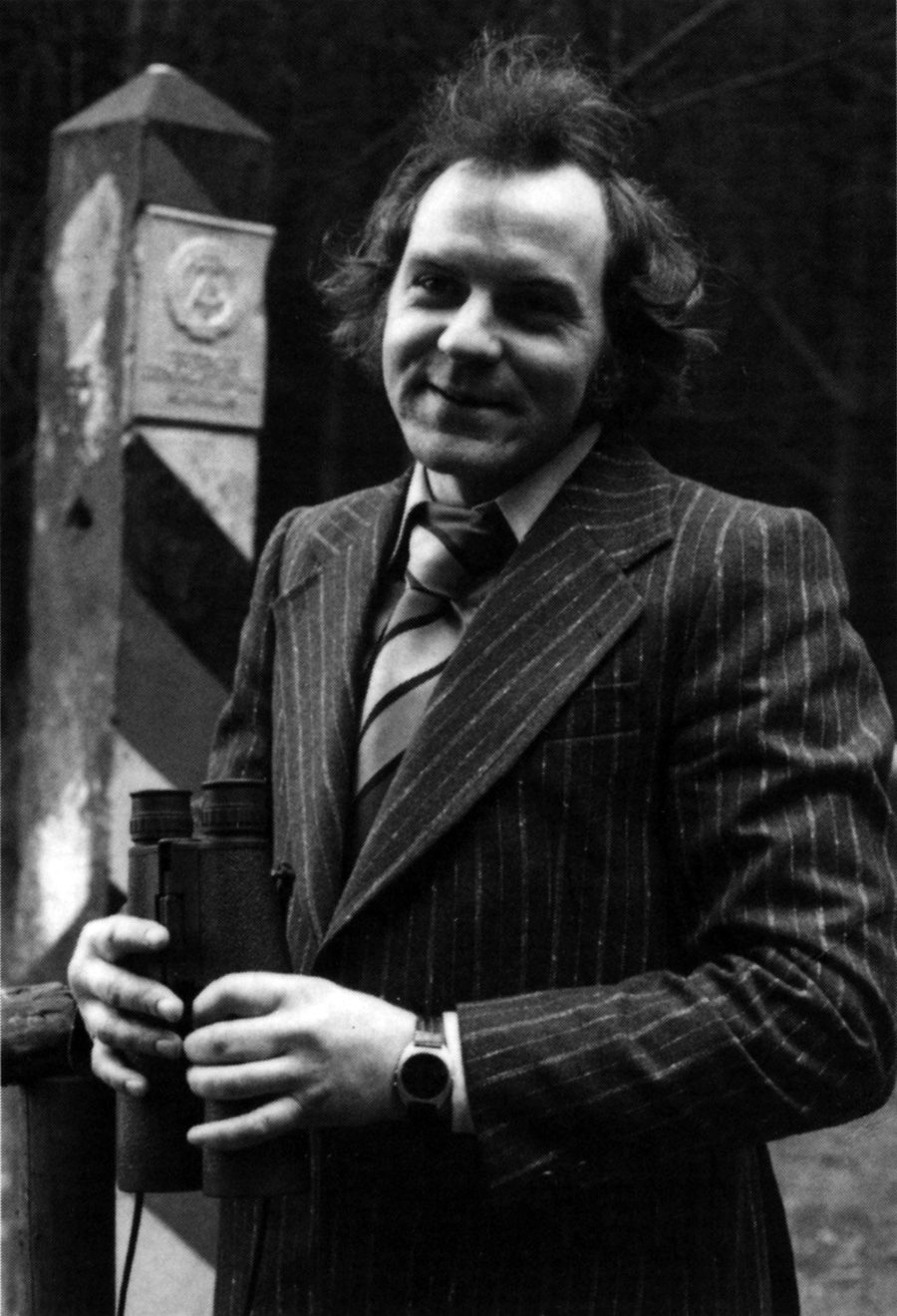
My years in prison convinced me that meaningful resistance against the system of injustice in the GDR is not only a right, but a duty.
Michael Gartenschläger to Rainer Hildebrandt, April 1976, as Lienicke wrote it
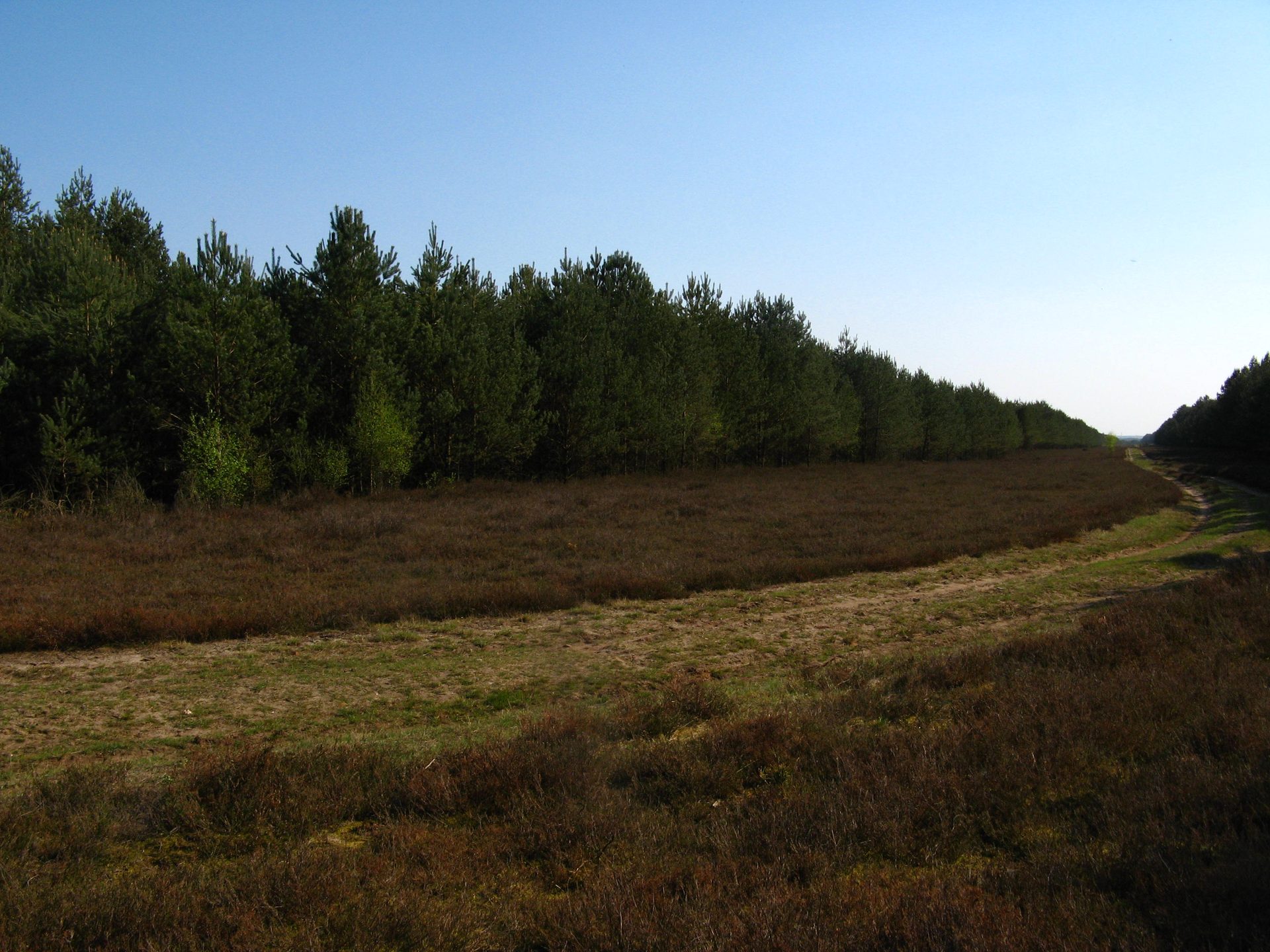
Patrol track at the bend, 2011. Bruschi, via Wikimedia Commons, CC0 (source)
The film
At a glance
- Period
- 1944 to 2026
- Countries
- East Germany (today Germany), Germany, West Germany (today Germany)
- Subject
- Michael Gartenschläger, former political prisoner and escape helper
- Key locations
- Border marker 231, near Bröthen, Strausberg, West Berlin, Torgau, Brandenburg-Görden Prison, Giessen, Reinbek, Hamburg, Salzwedel, Bonn, East Berlin, Schulzendorf, Schönberg, Lübeck, Schwerin, Karlsruhe
- Themes
- Michael Gartenschläger, Lothar Lienicke, SM-70, Stasi, cold war, inner German border, escape helper, Der Spiegel 1976
- Episode
- EF-023 · 63 min · published 9 October 2026
Case overview
That spring he had taken two of them off this stretch of fence, and Der Spiegel had a laboratory take the first apart. He was thirty-two. At seventeen, in the summer the Wall went up, he had been sentenced to life for painting slogans and setting fire to a barn. He spent nearly ten years in East German prisons, climbed the prison chimney at Brandenburg in a protest the whole town could see, and was bought free by West Germany in 1971. In Hamburg he became an escape helper. This is the file: the crate, the chimney, the first mine, the suitcase, the Stasi's plan for the bend and the night itself, told from his own account in Der Spiegel, his friend Lothar Lienicke's book, the Stasi's papers and Dieter Schmidt's film of the border.
He lies today in an honorary grave in Schwerin. On the first of May 2026, fifty years after the night, a memorial stone was unveiled at the corner of the border near Bröthen, which people there call the Gartenschläger corner. That same month a stone with a plate made by tenth-graders from a Strausberg school was set at the town's old army culture hall, where, at seventeen, he had been sentenced to life.
Timeline
Michael Gartenschläger was born in January 1944 and grew up in Strausberg, a small town east of Berlin. From 1956 it was the seat of East Germany's Ministry of National Defence, and new blocks of flats filled with officers and their families. His parents ran an inn. His sister, six years older, often looked after him.
By sixteen he was an apprentice car mechanic who lived for rock and roll. In 1960 he and some schoolmates started a fan club for Ted Herold, West Germany's answer to Elvis. They listened in secret to RIAS, the American-run radio station in West Berlin, painted their idols' names on their shirts, and went over to West Berlin for the cinemas and the record shops.
Related documentsOn Saturday the twelfth of August 1961 the boys went to West Berlin for the last time. That night East German border police and factory militias sealed off the western half of the city. Within days the Wall was going up.
Over three nights in the middle of August, Michael and four friends answered it. First they daubed white paint across a huge mural in the army's housing estate, a picture celebrating the bond between the people and the armed forces. The next night they painted slogans on barns and garages: "No to the SED", the ruling party, "Free elections", and "Red today, dead tomorrow". Then they went to their favourite pub and boasted about it. On the night of the sixteenth, some of them cycled out to Wilkendorf, a village nearby. Michael and another boy had built a fire bomb with a delayed fuse, and that night it set fire to a collective farm's barn, full of rye and clover hay. The boys had meant the fire as the signal for an uprising in Strausberg. The barn was a total loss.
Related documentsOn the fifteenth of September 1961 the court sentenced Michael Gartenschläger and Gerd Resag, both seventeen, to life. The other three got fifteen, twelve and six years, the six for a boy who had taken no part. A murmur of horror went through the hall. A teachers' newspaper ran the story under the headline: From RIAS listener and Herold fan to state criminal. East German papers wrote that he had to be isolated from society for ever.
On Saturday the nineteenth of August the Stasi, East Germany's secret police, arrested all five. Their trial was a show trial, staged in the army's own culture hall in Strausberg. Teachers sent loyal pupils to sit in and report back to their classes. A shirt with Elvis painted on it lay in a glass case, as evidence of subversion. The law allowed the death penalty for what the boys were charged with. The prosecutor asked for life imprisonment for Michael and for his friend Gerd Resag, who had taken the photograph of the others that summer.
Related documentsOn Christmas Eve 1968 the guards searched his cell, which held eleven men. The prisoners had made cakes, and potato salad. In the account he gave Der Spiegel in 1976, the guards took nearly all of it. He said: "That made me so angry I thought: now you're getting out."
After Christmas he went through the hall looking for what he needed, and found it: a metal crate for machine parts, a metre twenty long, eighty centimetres wide and sixty high. Crates like it went out of the prison on trailers, to a storage yard and then to a factory in the town. He hung a sign on it that read "Closed, quality control", and nobody touched it again. On his lathe he cut down the rack inside, fitted a false bottom, and put the rack back on top. A crate that normally held seventy-five parts would now hold fifteen, and him. To make up the weight he went round the hall collecting ballast. A Stasi man stopped him and asked what he was up to. Michael told him he was building a fixture that would let him mount fifteen parts at once instead of one, and said: "That'd be an increase in labour productivity of fifteen hundred percent." The Stasi man said: "Well, that's something. Carry on, then."
Related documentsIn early January 1969 he climbed into the crate and had a fellow prisoner tell the forklift driver to take the crates out. At one in the afternoon he was missed. It was the day the prisoners collected their cards for the prison shop, and he had not collected his. Nobody could see how he could have got over the fence and the raked strip, so the guards filled the whole hall with tear gas. By then the crate was outside, on a trailer in the storage yard.
A tractor came to tow a trailer into town. Someone told the driver to take Michael's trailer too. In Michael's telling, the driver said: "Man, I don't feel like doing that much today. I'll just take the one." That, Michael said, was his bad luck. Then he heard the siren. He said: "I hear the siren and I think, well, now you'll have to settle in here for a while." At about nine that night he climbed out to look for a way off the yard. He kept away from the woods, where he guessed the guards would be thickest, and slipped into a new building on the far side. He climbed a heating ladder and looked down through a narrow window. Something grey was moving below. He took it for a cat. It was a policeman's fur cap. The policeman stepped out of the shadow with his submachine gun on him, more nervous than Michael was. He asked what Michael was doing there. Michael said he was just looking. The policeman asked who he was. Michael said: "Well, the one you're looking for." The policeman fired a shot into the air, and about a dozen men came running. A Stasi first lieutenant came down the stairs. He said: "Well, Gartenschläger, now I've finally got you. And now I'll have you on your knees, begging for mercy." Michael said: "You'll have a long wait."
In 1969, during seventeen months of strict solitary confinement, he got into the prison yard, sprinted for the chimney, and climbed the steel rungs set into it, some fifty metres up. Every prisoner and every guard in sight stopped to watch. At the top he broke bricks out of the rim and used them to paint one word on it: HUNGER.
People in the town could see it. Some of them came to the prison gates with food, until the People's Police drove them away. The prison could not get him down by force, and it wanted no more attention, so it negotiated. He asked for an end to the total isolation of the prisoners kept apart, and for more bread. The governor agreed on the spot: six hundred grams of bread a day instead of three hundred, and books and newspapers in solitary. Michael came down, and the governor kept his word. In 1976 Michael said he had climbed the chimney "because I wanted a word with the governor".
In the early summer of 1971 West Germany bought his freedom. Bonn had been paying East Germany to release political prisoners since 1963. That year it bought close to fourteen hundred of them, for more than ninety-two million marks, about two hundred and twenty million dollars in today's money. That came to about sixty-seven thousand marks a head, roughly a hundred and sixty thousand dollars today. Michael Gartenschläger had been inside for nine years and ten months.
The bus carried the bought prisoners west through Thuringia and over the border to Giessen, the camp where refugees from the East were first taken in. Wolfgang Welsch had come through the same camp three months earlier.
In the summer of 1972 his room at Haus Billetal went to another young man just bought out of an East German prison: Lothar Lienicke, twenty-five, from Dresden. At fourteen, Lienicke had been refused his school report for turning up to the flag ceremony in jeans. The two became friends, and then partners.
Their business was getting people out. Under the transit agreements of the early 1970s, West German cars on the roads through East Germany to West Berlin were not normally searched, and a person could ride out hidden in a boot. Michael drove a red Opel Rekord. Their first run came at Christmas 1972. Lienicke remembered the East German controller handing back his papers with a "Merry Christmas", and that he stalled the engine several times as he drove off, because he could not believe their luck. By Lienicke's count they brought out thirty-one people between the end of 1972 and the end of 1975: at first former prisoners who had been released into East Germany against their will, then people from all over the Eastern bloc. Michael said he brought out six of them with his own hands. Some routes ran through Czechoslovakia, and two people came out through Libya.
Related documentsIn January 1973 an engineer of twenty-six from Wismar, Hans-Friedrich Franck, tried to get across the border near the town of Salzwedel. Late on the sixteenth he reached the fence unseen in thick fog, and climbed the mesh using the brackets that held the trip wires. One of the machines on the posts went off. Badly hit, he fell over the fence into the West, while East German soldiers fired blind into the fog.
West German customs officers heard the blast, the shots and the screams, and followed a trail of blood a hundred and fifty metres into the West. Franck thought he was still in the East. He said: "Just finish me off, I can't go on anyway." He had twelve wounds from the steel. Eight people gave blood for him, six of them West German border policemen. His heart stopped at about eight the next morning. Michael knew what had happened to Franck.
Michael read about the machine in Der Spiegel, the Hamburg news magazine, in November 1975. The article said that West Germany's own border police still did not know in detail how it worked. He told the magazine later what went through his head: "If they need one of those things and haven't got one, then you'll just get them one."
The machine that hit Hans-Friedrich Franck was the SM-70. East Germany's border troops called it installation 501, and West Germans came to call such things death machines. It was a metal funnel on a short tube, bolted to the eastern face of a fence post, usually every fourth post, at three heights: forty centimetres, a metre and a half, and three metres. Trip wires ran along the fence between the funnels. If a wire was cut, or pulled a couple of centimetres, the funnel fired a charge of steel along the fence, and at the same moment an alarm went off at the nearest control point. East Germany's government denied the devices existed.
Related documentsAt about a quarter to five Michael tied a fifty-metre fishing line around his waist. The other end stayed with Lienicke at the edge of the wood, as a silent alarm. Michael crawled to the fence with a ladder made of wooden slats and leaned it against the concrete post. He cut the two cables into the funnel, then undid the bolts on its mount. The funnel would not come away, however hard he shook it. There was a second mount, on the other side. He had to stop and rest. Then he cut every other wire around it, including the trip wire of the next machine along, which did not go off. That, he said in 1976, still puzzled him.
He called the machine "the comrade". He told Der Spiegel: "Left arm over the fence, holding the comrade so the funnel always pointed away from me, and with the right hand I cut all the wires. Nothing happened, nothing could, and I had the thing off the fence in no time." Lienicke remembered him holding it up to the black sky like a World Cup trophy. At the top of the ladder a flash picture was taken of him, and Der Spiegel printed it. The first to notice was a West German customs officer, early that morning: a ladder against the East German fence, an empty mount, slack wires. For two days the customs men watched the ladder from the western woods while East German patrols drove past it. In the end one of them called across to a patrol: "Someone's pinched a fragmentation mine from you." East Germany's own report says its soldiers found the theft on the first of April, at about a quarter past seven in the morning.
Related documentsThe issue was dated Monday the twelfth of April 1976. Its story opened with his name: "Michael Gartenschläger, thirty-two, likes to work on his own, and prefers tricky jobs." On the Sunday night Michael fetched the first copies from the kiosk at Hamburg's main station at midnight and rang Lienicke out of bed. Lienicke remembered what he said: "Wait and see, Honecker will have to answer for this at the UN!" Erich Honecker was East Germany's leader.
So he went to Der Spiegel. The machine sat in his workshop, in a battered brown leather suitcase among old tyres, and he carried it into the magazine's offices in Hamburg in his blue overalls. The rusty locks would not open until someone tried a silver letter opener. Nobody in the room could say what the thing was, until a man from the legal department who had trained as an army explosives technician read the word Brieselang on a rubber cap, and declared it safe, and almost certainly genuine. Der Spiegel paid twelve thousand marks for the device and his life story, about twenty-eight thousand dollars today, and had a laboratory take it apart. By the laboratory's count it held a hundred and eighteen steel cubes, each about four millimetres across, packed in paraffin in front of about a hundred grams of TNT. Fired in a cone, the cubes flew about twenty-five metres. An expert told the magazine they worked like dumdum bullets.
Related documentsAt ten past midnight an alarm went off at the nearest East German command post: the circuit of an SM-70 had been tripped. A platoon went out to search. By then Michael had cut the machine loose from the top of the fence, about two hundred metres east of marker 231, and the two of them were gone. This time they took the ladder home. Lienicke wrote: "No more presents for the GDR, not even a cheap slat ladder." They hid the machine under fir branches by a compost heap.
In the morning the soldiers of both sides stood facing each other across the line. Michael turned up at about half past seven, delighted. Der Spiegel reported that, two metres from a group of East German soldiers, he called out: "Don't take it so hard. I'll take the third and the fourth thing off you as well."
In East Berlin the news had reached the top hours earlier. At about half past two that morning it went to Erich Mielke, the minister who had run the Stasi since 1957. A Berlin court later established what Mielke ordered. The dismantling was to be stopped at any price. Gartenschläger was to be arrested if possible, on no account allowed to escape, and if necessary annihilated, which, the court found, meant killed.
The order went from Mielke to General Karl Kleinjung, head of the Stasi's Main Department One, which watched over East Germany's army and border troops from the inside. Kleinjung had fought in the Spanish Civil War, had carried out special missions for the Soviet secret police during the Second World War, and had run the department since 1955. From Kleinjung the order went to Lieutenant-Colonel Tyra, who took command at the border. On Saturday the twenty-fourth of April a Stasi captain, Wolfgang Singer, drove to the border regiment at Schönberg with eleven fighters, each with a Kalashnikov, and two light machine guns. They came from a special deployment company of Main Department One, based at Schulzendorf near Berlin. Its men had cover names and cover stories, and wore ordinary border-troop uniforms. The Berlin court later called Singer the practical man, who knew how best to lay an ambush.
Related documentsThe officers walked the ground at the bend and met to plan. Lieutenant-Colonel Tyra's report of the next day survives in the Stasi's files. It says the meeting fixed the measures "for the capture or liquidation of the culprits". From nine every evening to three in the morning, two pairs of sentries were to lie on the enemy side of the fence, on the strip of East German ground in front of it, with the aim, the report says, "of the arrest or annihilation of the culprits". Snipers were planned on both sides of the fence, by day and by night.
A written plan, signed on the twenty-sixth, raised the force to twenty-one men. Captain Singer's own orders said the firearm would be used if there was no other way to achieve the aim, and they gave the shooting a direction: "Fire is to be directed parallel to the state border." Lienicke later found in the files how the trap was laid each night. At about nine, one or two lamps near the bend would fail. Shadows unscrewed a lower panel of the fence, and four men crawled through with their weapons and blankets, into hollows in the heather on the strip. The panel was hung back loosely, and the lamps were repaired. At three in the morning the men crawled back. From the twenty-fifth of April, they lay there every night.
Related documentsThat afternoon Michael drove out to the bend and looked over the ground through binoculars. From the woods on the other side, Stasi men watched him through their own binoculars, and photographed him.
At the regiment in Schönberg the prints were still in the fixing bath when the local Stasi chief walked in, took them out wet, and left. The men in the ambush were shown his face. Lienicke's book quotes the briefing: "Remember his face, comrades! The man is armed and extremely dangerous!" If he came near the border, they were told, he would certainly use his gun without hesitation.
Lienicke wanted to leave, and do it at the new place near Uelzen. The two friends talked Michael out of going any closer, and the three of them started back along the customs path through the wood. Michael sulked. About a hundred and fifty metres on, he turned round. His friends gave Der Spiegel his words in May: "Oh, shit. I'll set off another one of those things before we go. It'll be really quick." In the version Lienicke wrote down years later, Michael added: "They should know I've been there. If you don't want to come, I'll do it alone." Back near marker 231, he said he would go to the corner, because there, in the light of the lamps, he would not have to fumble so long to hook the wire on. He posted Uebe about ten metres to the left, where he could see both arms of the bend, and told him: "It'll go quickly." Lienicke took up a position about twenty-five metres along the other arm. If soldiers appeared, the friends were to shout "Halt, border police!" and cover his retreat. Michael gave Lienicke a friendly punch on the chest, and went into the dark.
On the other side of the fence, nobody was celebrating May Day. On blankets in the grass of the strip, about five metres in front of the fence and near the corner, lay four men of the special company. Behind the fence, others watched the ground in front through night-vision devices, on a telephone line to Tyra in Schönberg. The two lamps at the bend had been turned so that they lit only the strip behind the fence, and the ground in front of it, the court found, lay completely in the dark. The machines at the bend had been switched off for the night, so that they could not hurt the fighters. The device Michael was going back to set off could not fire.
Related documentsAll four men fired, in continuous bursts. Three bullets hit Michael in the upper body while he was still upright or bent forward. One of them went through his heart, his lungs and his spine, and he collapsed. For several seconds the bursts went on, into the man on the ground. Behind the fence, the men carried Michael through the gap to their command post and laid him on the ground. He was still breathing. An army doctor recorded his death at a quarter to midnight.
One of the four, a sentry, had laid his submachine gun down beside him, against orders. The Berlin court found that he might even have fallen asleep. Now he saw a shadow a few metres away and grabbed for the gun, and it made a metallic noise, perhaps against a stone. The sentry said later that a shot came from the shadow and struck beside him, and that he fired back. Some East German witnesses told the court they had heard a single shot before the bursts. Michael's friends heard no single shot, no challenge and no warning. Lienicke told Der Spiegel: "Suddenly I saw four muzzle flashes, heard submachine-gun fire. I think Micha staggered backwards. I heard no warning shout or warning shot before." Uebe said: "Then all I saw was fire, and all I heard was rattling. No challenge, no warning." East Germany's own expert found that Michael's pistol had been fired. Later, two courts could not establish who fired first. They found that if Michael did, the sentry's burst came almost at the same moment, so close that the sounds of the two weapons overlapped.
On Monday the third of May the party newspaper, Neues Deutschland, printed the official version from the news agency ADN, under the headline: Armed attack on GDR border security forces. A provocateur from West Germany had entered East German territory to destroy border installations, it said, and had attacked the border troops: "In the exchange of fire opened by the criminal, the perpetrator was seriously wounded. He has since died of his injuries." It listed his pistol and two magazines, his dark clothes, his blackened face and the fact that he carried no papers, but not his name.
Related documentsThe body was autopsied in Schwerin in secret, with Stasi officers present, anonymously, and without an entry in the autopsy register. The record counted nine bullet wounds. He was cremated as an unknown drowned body, and at three in the afternoon on the tenth of May his ashes were buried at the Waldfriedhof in Schwerin, in a grave registered only by a number, and his sister was not told where.
On the twelfth of May all four men from the grass received the Combat Order in Silver. They were not allowed to wear it, and they were sworn to secrecy about the night. In the department's ledger of operations, the night at marker 231 was marked "very good".
Related documentsOn the twenty-first of November 1976, the Sunday on which Protestant Germany remembers its dead, his friends put up a wooden cross on the western side near marker 231, its inscription facing east. Hildebrandt spoke. Across the line, East Germany had built a tower to watch the ceremony, and the Stasi photographed everyone who came.
In October 1977 the Stasi wrote up its own analysis of the case. Its main text called him the Gartenschläger "later liquidated while repelling a terrorist attack on the state border". An annex, which mentions no attack, put it differently: "Before he could carry out the act, Gartenschläger was liquidated by security forces of the GDR."
Related documentsOnce the Stasi's files were opened, they held something about Lienicke himself. In 1995 Der Spiegel reported that he had been a Stasi informer, code name Robby, while also working with West German intelligence. It began in the spring of 1980, four years after the night at marker 231. He offered himself to the Stasi, and at a hotel in Budapest he signed on, taking three thousand marks, about seven thousand dollars today, for his expenses. He said later that he did it to get his brother out of Dresden and a West German woman out of an East German prison, that he fed the Stasi invented information, and that he was hunting for the name of whoever had betrayed Michael. The courts never established where the Stasi's tip of 1976 had come from.
The journalist Andreas Förster, who read the files, found something more in them. In the summer of 1982, at the Stasi's request, Robby took down the wooden cross he had put up at the border for his friend.
On the twenty-fourth of March 2000 the court acquitted all three. It could not establish who had fired first, it said, though it thought it more likely that Michael had. It could not prove that the second round of fire had been aimed at him. The presiding judge summed it up: "Everything is possible, but none of it can be proved." Lienicke said afterwards that it was as if Michael had died a second time. His sister appealed. In April 2001 the Federal Court of Justice rejected her appeal as obviously unfounded.
In October 1995, prosecutors in Schwerin charged three of the four men from the grass with attempted murder, but only for the second round of fire, after the light came on, at a man already lying hit on the ground. The prosecution assumed that Michael had fired first. The sentry who had laid down his gun was not charged. He became the prosecution's main witness. The trial opened in Schwerin in November 1999. By then the three defendants were, as one newspaper put it, an insurance agent, a pool attendant and a labourer. Michael's sister sat in court as co-plaintiff, and looked into their faces for the first time. The platoon leader's lawyer was East Germany's last interior minister, who had overseen the dissolution of the Stasi in 1990. The prosecution asked for three to three and a half years.
The prosecutors appealed, and on the sixteenth of February 2005 the Federal Court of Justice in Karlsruhe ruled. It upheld the finding that the East German leaders, the accused among them, had planned the killing of Gartenschläger and his helpers, "barely hidden in the documents behind the word 'annihilate'", in case they could not be arrested. But under West German law, the court said, the only road to murder in this case was treachery, a killing aimed at victims who suspected nothing. And these three, it found, had expected an attack, concretely and with good reason, as they came to the border armed, with blackened faces, hands and sneakers. What remained was attempted incitement to manslaughter. That had expired on the twenty-ninth of April 1996, one day short of twenty years after the night. The prosecutors' first step against Singer came ten weeks later. The court acquitted him. Nobody was ever convicted for the death of Michael Gartenschläger.
That left the men who gave the orders. Erich Mielke had died in May 2000. In Berlin, prosecutors charged General Kleinjung, Colonel Helmut Heckel, who had signed the plan, and Captain Singer. The trial began in 2002, collapsed, and began again. Kleinjung was declared unfit to stand trial, and he died in February 2003, aged ninety. In April 2003 the Berlin court acquitted Heckel. It found that the order had run from Mielke through Kleinjung to Tyra, and that Singer had helped to lay the ambush. But it accepted that Michael might have fired first, and so the killing could not be shown to be the one that had been planned. What was left against Singer was an unsuccessful incitement to murder under East German law, and that had expired. The court stopped his case.
Related documentsHe lies today in an honorary grave in Schwerin. On the first of May 2026, fifty years after the night, a memorial stone was unveiled at the corner of the border near Bröthen, which people there call the Gartenschläger corner. That same month a stone with a plate made by tenth-graders from a Strausberg school was set at the town's old army culture hall, where, at seventeen, he had been sentenced to life.
In 2006 the town council of Strausberg turned down a proposal to name a street after him. In 2025 an advisory panel in Potsdam recommended against one there too. In 2024 the Bundestag's commissioner for the victims of the East German dictatorship said: "To this day there is not a single street named after Michael Gartenschläger."
Related documents
Key locations
Full mapDocuments and evidence
Sources
- Book
Todesautomatik Fischer, 2008.
Lienicke's book quotes the briefing: "Remember his face, comrades! The man is armed and extremely dangerous!"
- Book
Zielobjekt Rechts Ch. Links, 2018.
The journalist Andreas Förster, who read the files, found something more in them.
- Academic
Das Selbstbehauptungsrecht eines Unrechtsstaates Die Politische Meinung 442 (Konrad-Adenauer-Stiftung), September 2006.
The journalist Roman Grafe, who has written books on the border, quotes it: the forces on the enemy side of the fence were to open fire at once, "without challenge".
- Academic
Federal Court of Justice, judgment of 16 February 2005, 5 StR 14/04 HRRS 2005 Nr. 289; BGHSt 50, 16, 16 February 2005.
It upheld the finding that the East German leaders, the accused among them, had planned the killing of Gartenschläger and his helpers, "barely hidden in the documents behind the word 'annihilate'", in case they could not be arrested.
- Academic
Judgment of the Schwerin regional court of 24 March 2000 De Gruyter, 24 March 2000.
On the twenty-fourth of March 2000 the court acquitted all three.
- Archive
Stasi photo report on the missing SM-70 at the bend, 1 April 1976 MfS HA I Nr. 18346, via the Stasi-Mediathek, 1 April 1976.
East Germany's own report says its soldiers found the theft on the first of April, at about a quarter past seven in the morning.
- Archive
Lieutenant-Colonel Tyra's report on the theft of two SM-70s, 25 April 1976 MfS HA I Nr. 1410, via the Stasi-Mediathek, 25 April 1976.
Lieutenant-Colonel Tyra's report of the next day survives in the Stasi's files.
- Archive
East German file note on the theft, 6 April 1976 MfS BV Halle AOP Nr. 652/79, via the Stasi-Mediathek, 6 April 1976.
A file note of the sixth of April said it had to be the work of a specialist with excellent theoretical and practical knowledge of the installation, prepared long in advance.
- Archive
Drawings of the SM-70 and its mount on the fence, 1974 MfS Abt. BCD Nr. 3226, via the Stasi-Mediathek, 1974.
East Germany's government denied the devices existed.
- Archive
The Stasi's plan of 26 April 1976 and its analysis of 31 October 1977 (BStU copies) e-o-d.net, via the Wayback Machine.
Copies certified by the Stasi records office in 1992, published on e-o-d.net; read in the Internet Archive's 2016 captures.
- Archive
Robert-Havemann-Gesellschaft archive Robert-Havemann-Gesellschaft, Berlin.
A Stasi informant's photograph of the first anniversary at the cross, 30 April 1977 (RHG_Fo_HAB_17386).
- Academic
Biografisches Handbuch “Eiserner Vorhang”: Michael Gartenschläger todesopfer.eiserner-vorhang.de.
The research handbook of the dead of the inner German border; it holds the Stasi ledger copy and Dieter Schmidt's film of the border.
- Web
Strausberger Schüler jugendopposition.de.
The photographs by Lothar Lienicke, Gerd Resag and Kai Greiser, the Stasi's photographs of the 1961 slogans, the trial exhibit and the teachers' paper of 1961.
- Newspaper
Der Spiegel 45/1975 DER SPIEGEL, via the Internet Archive, November 1975.
Michael read about the machine in Der Spiegel, the Hamburg news magazine, in November 1975.
- Newspaper
Der Spiegel 16/1976: “Schnell das Ding vom Zaun” DER SPIEGEL, 12 April 1976.
Its story opened with his name: "Michael Gartenschläger, thirty-two, likes to work on his own, and prefers tricky jobs."
- Newspaper
Der Spiegel 16/1976: “Ich höre die Sirene und denke, na ja” DER SPIEGEL, 12 April 1976.
In the account he gave Der Spiegel in 1976, the guards took nearly all of it.
- Newspaper
Der Spiegel 18/1976: “Tödliche Würfel” DER SPIEGEL, 26 April 1976.
Der Spiegel paid twelve thousand marks for the device and his life story, about twenty-eight thousand dollars today, and had a laboratory take it apart.
- Newspaper
Der Spiegel 20/1976: “Verrechnet! Bursche!” DER SPIEGEL, May 1976.
His friends gave Der Spiegel his words in May: "Oh, shit. I'll set off another one of those things before we go. It'll be really quick."
- Newspaper
Der Spiegel 17/1995: “Spiel mit heißen Eisen” DER SPIEGEL, 1995.
In 1995 Der Spiegel reported that he had been a Stasi informer, code name Robby, while also working with West German intelligence.
- Newspaper
Deutsche Lehrerzeitung 19 September 1961.
A teachers' newspaper ran the story under the headline: From RIAS listener and Herold fan to state criminal.
- Newspaper
Neues Deutschland 3 May 1976.
On Monday the third of May the party newspaper, Neues Deutschland, printed the official version from the news agency ADN, under the headline: Armed attack on GDR border security forces.
- Newspaper
Neues Deutschland 5 May 1976.
East Germany's party paper, 5 May 1976: the prosecutor opens a case and asks Bonn for legal help; a protest to Bonn's mission.
- Newspaper
Prager Volkszeitung (Prague) 7 May 1976.
7 May 1976: East Germany's chief prosecutor investigates the “attack” by “provocateurs from West Germany”.
- Newspaper
Svobodné slovo (Prague) 17 August 1976.
17 August 1976: “In the spring the provocateur Gartenschlager several times entered GDR territory armed, to damage the border installations”.
- Newspaper
The Canberra Times via Trove, National Library of Australia, 3 May 1976.
In Australia, the Canberra Times ran the Reuters report under the headline "Raid on gun": a West German killed "in a spray of gunfire" from four or five East German border guards.
- Newspaper
Die Zeit 1976.
Die Zeit wrote: "Such a death is senseless. Borders kept by a state order to kill cannot be overcome by the sacrifice of single lives."
- Newspaper
Die Welt 27 April 1976.
On the twenty-seventh, Die Welt reported that the machines along this stretch had been rearranged, so that taking one down would set off several.
- Documentary
Der Tod des Michael Gartenschläger SPIEGEL TV Magazin, 30 June 1991.
That summer Spiegel TV filmed two of the men from the grass, from behind.
- Documentary
ZDF report from the border, 1 May 1976 ZDF, as shown in SPIEGEL TV, 1991, 1 May 1976.
A reporter for ZDF television, at the border, spoke of a dubious act of heroism that had ended in death.
- Documentary
Die Reaktion der DDR-Grenztruppen auf Gartenschlägers Aktion via the Biografisches Handbuch “Eiserner Vorhang”, 1976.
That evening a West German customs officer, Dieter Schmidt, sat for about four hours at a shelter some twenty-five metres from the corner, because his German shepherd, Athos, was unusually restless.
- Documentary
Gedenkfeier zum 50. Todestag von Michael Gartenschläger 4 May 2026.
On the first of May 2026, fifty years after the night, a memorial stone was unveiled at the corner of the border near Bröthen, which people there call the Gartenschläger corner.
- Documentary
Grenzgedenkstätten erklärt, Teil 5: Gedenkstätte für Michael Gartenschläger 13 September 2022.
The border museum's film on the memorial at the bend, with the photograph of him at the border sign.
- Documentary
Zur Erinnerung an Michael Gartenschläger 23 November 2018.
The memorial cross at the bend, filmed in 2018 (CC BY).
- Web
The Bundestag's commissioner for the victims of the SED dictatorship, 2024 bundestag.de, 2024.
In 2024 the Bundestag's commissioner for the victims of the East German dictatorship said: "To this day there is not a single street named after Michael Gartenschläger."
- Web
Potsdam's panel on remembrance: statement on Michael Gartenschläger potsdam.de, 19 February 2025.
In 2025 an advisory panel in Potsdam recommended against one there too.
What remains unresolved
- What do you think happened in the dark at marker 231?
- Should anyone have answered for it?
- Why did a man who had spent nearly ten years in East German prisons keep coming back?
- The courts never established where the Stasi's tip of 1976 had come from.
Related files
 The Friend Who Cooked Dinner: A Stasi Murder Plot on the Sinai, 1981Wolfgang Welsch, the escape helper the Stasi tried to poison on the Sinai in 1981, worked a different shift in the same prison hall at Brandenburg-Görden, came through the Giessen camp three months before him, and spoke on Berlin television after his death.
 4 Men Who Never Arrived: The Strangest Disappearances of Eastern EuropeAlso in West Berlin
 Yugoslavia Sent a Hitman to Scotland. A Neighbour's Envelope Beat HimGermany, 1988
 The Friend Held the Key: The Cold War Murder Germany Took 33 Years to SolveGermany, 1983