Case fileEF-022Coral Island (Pharaoh's Island), south of Eilat, 1981
The Friend Who Cooked Dinner: A Stasi Murder Plot on the Sinai, 1981
On the twenty-first of July 1981, on a beach in the Israeli-held Sinai a few miles south of Eilat, a West German on holiday with his wife and their seven-year-old daughter sat down to a bowl of meatballs cooked by his best friend. The friend had been working for East Germany's secret police for eleven years, and there was poison in the mince.
I had no suspicion. There was no reason for any. That was the Stasi's plan.
Wolfgang Welsch, on camera, years later
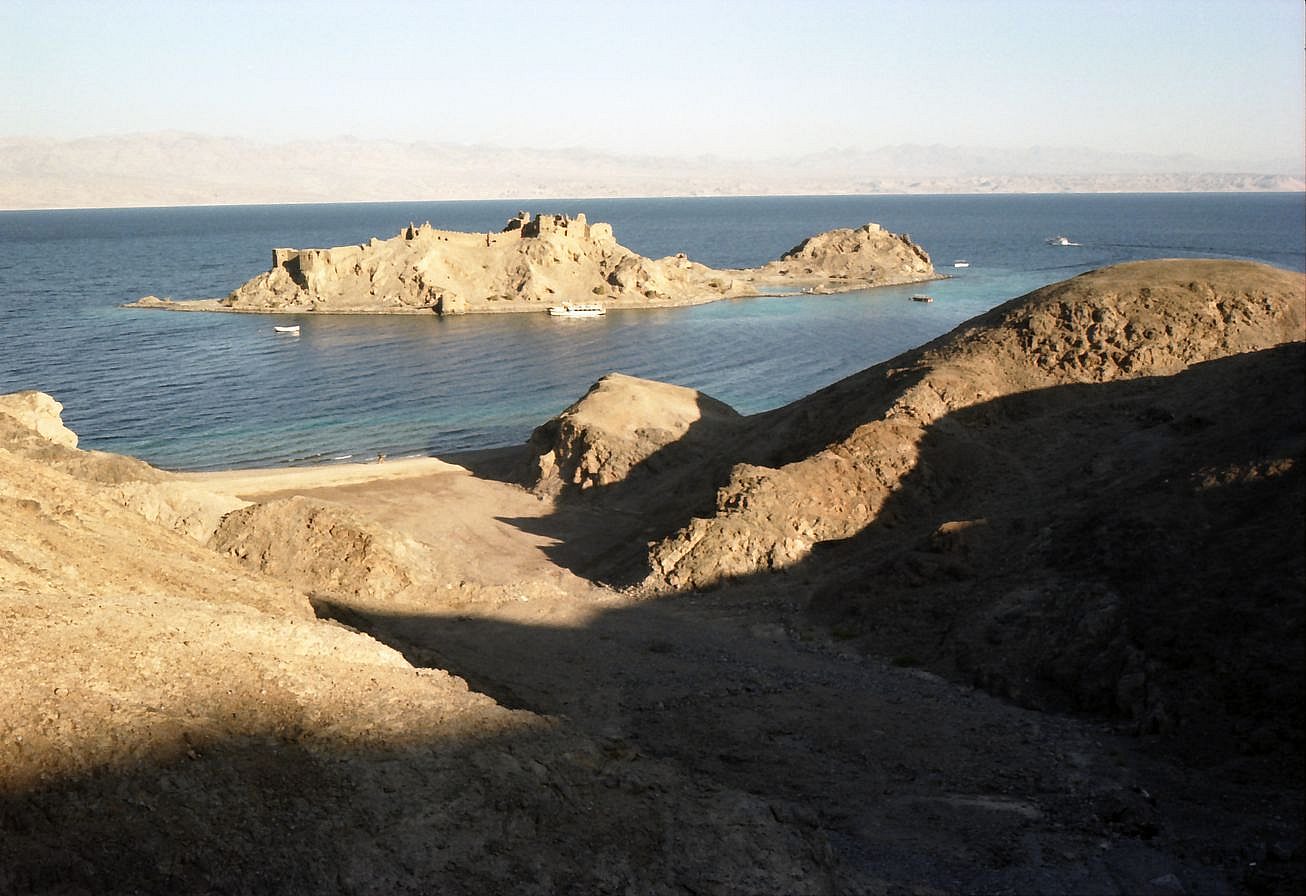
Coral Island, April 1979. Willy Pragher, Landesarchiv Baden-Württemberg, CC BY 4.0 (source)
The film
At a glance
- Period
- 1944 to 2021
- Countries
- Israel (today Egypt and Israel), East Germany (today Germany), West Germany (today Germany), Bulgaria, Greece, United Kingdom, Argentina, Costa Rica, Germany
- Subject
- Wolfgang Welsch, an escape helper, and Peter Haack, the friend who worked for the Stasi
- Key locations
- Coral Island (Pharaoh's Island), south of Eilat, East Berlin, Boizenburg, Bautzen, Brandenburg an der Havel, Herleshausen, Giessen, Sofia, Weinheim, Platania, Pelion, London, The autobahn south of Frankfurt, Dartford, Kent, Mannheim, Köpenick, East Berlin, Acre, Tel Aviv, Eilat, Sharm El Sheikh, Cologne, Buenos Aires, Costa Rica, Moabit, Berlin
- Themes
- Wolfgang Welsch, Peter Haack, Operation Skorpion, Stasi, thallium poisoning, Heinz Fiedler, Coral Island, Sinai 1981
- Episode
- EF-022 · 47 min · published 2 October 2026
Case overview
Wolfgang Welsch had spent almost seven years in East German prisons before West Germany bought his freedom in 1971, and he went on to run an escape organisation that, by his count, got more than two hundred people out. The Stasi ran its war on the escape helpers as one case, code-named Skorpion. This is the file: the checkpoint at Boizenburg, the cellar cell, the escape institute run from a house with no name on the door, the photographer from London, a car fire on the autobahn and a hole in a windscreen outside London, both in Welsch's telling, the plan of May 1980, a week in a rented motorhome, and an illness no doctor could name. Told from Welsch's memoir, the German television films of 1994, 2003 and 2015, a 2021 interview, and the press of the time.
Wolfgang Welsch is in his eighties now, and still talks to school classes about the Stasi. In 2021 an interviewer asked him about Haack. He said: "I forgave him, of course. That does not mean I forgave the Stasi."
Timeline
He was born in Berlin in March 1944 and grew up in the Eastern half of the city. At sixteen he fled to West Germany on his own, found he could not manage there alone, and went back. The next summer, in August 1961, East Germany closed the border and built the Wall.
He was seventeen. He said on camera, years later: "We were, quite literally, prisoners."
On Friday the twenty-second of May 1964, by his account, he walked up to the East German checkpoint at Boizenburg, on the road from Berlin to Hamburg, some fifty kilometres short of Hamburg. He was twenty. In his pocket was a small grey West German identity card, left over from before the Wall, and he had a story ready: he was a young West German on his way home.
He held out the card and said he would like to leave the country. A guard took it away to a telephone. When the guard came back, he asked where Welsch had entered East Germany. Welsch named a crossing on the western border, Wartha-Herleshausen. The guard said: "Wartha-Herleshausen has been closed for three months." Then came the handcuffs, and a cell.
Related documentsBy his account, in 1967 they let him out and offered him a choice between East and West, and he chose to stay. He wanted to make a secret film about the regime, and gave it a Latin title, Discite moniti, which means "learn, you who have been warned". Someone informed on him. He was arrested again, given five more years, and sent to the penitentiary at Brandenburg.
He has described what was done to him inside in a memoir and on camera. He spent eight days in a cellar cell in his underwear, with frost on the walls, a rubber seal around a door without a spyhole, and a caged light that never went out. One February night he was blindfolded, led into a courtyard and read a death sentence, and he heard the order to fire. Nobody fired. He said: "Inside I was as good as dead. It took years before I could even talk about it."
Related documentsA note reaches Amnesty International
His notes did get out. In 1970, Amnesty International's history of the case says, one of them, headed "Save my life!", reached its West German section, carried out with a friend's help. Amnesty's group in Leeds, in the north of England, took up his case, got it into the British papers, and that summer named him its political prisoner of the year. On a prison visit that year his mother passed him a message: greetings from the uncle in London. He had no uncle in London. He said later: "Whoever was in London, or whatever London meant, someone was helping me."
In the spring of 1970 a Stasi officer recruited him in East Berlin. His code name was Alfons, his own middle name. In the same months Welsch was still in prison, a year away from the bus to Herleshausen.
The informer was Peter Haack. He was born in 1942, and he had drifted. He volunteered for three years in the West German army and felt at home there. After that he drove for a building firm in Munich, then for the American army, and married an Austrian woman, mainly so that she could stay in Germany. By 1969 he was living in Kreuzberg, in West Berlin, and working on a building site on the other side of the Wall, in East Berlin, on a visa renewed every three months.
Related documentsIn March 1971 West Germany bought his freedom. Bonn had been buying political prisoners out of East German jails since 1963. A federal foundation that studies the East German dictatorship puts the average price in those years at about forty thousand marks a head, close to a hundred thousand dollars in today's money. He had been inside for almost seven years.
The buses that carried the bought prisoners drove to the border on East German number plates, and at the crossing the plates were flipped over to West German ones. His bus crossed at Herleshausen, the crossing he had named in his lie at Boizenburg seven years before. He said on camera: "We had not only gained our freedom. We had changed worlds."
Related documentsThat same year the Stasi folded its war on several West German escape organisations into one central case, and gave it a code name: Skorpion. It was run by Main Department Six, the department in charge of passport control, tourism and transit, which also hunted escape helpers. Its head was General Heinz Fiedler. Welsch's Institute was one of the case's targets.
In August 1976, by his account, his wife flew to Sofia with papers for a refugee sewn into the lining of a vanity case, and their daughter, then two, along to make it look like a holiday. She was arrested at the airport. She was released against a large sum of money, and the Bulgarian route was finished.
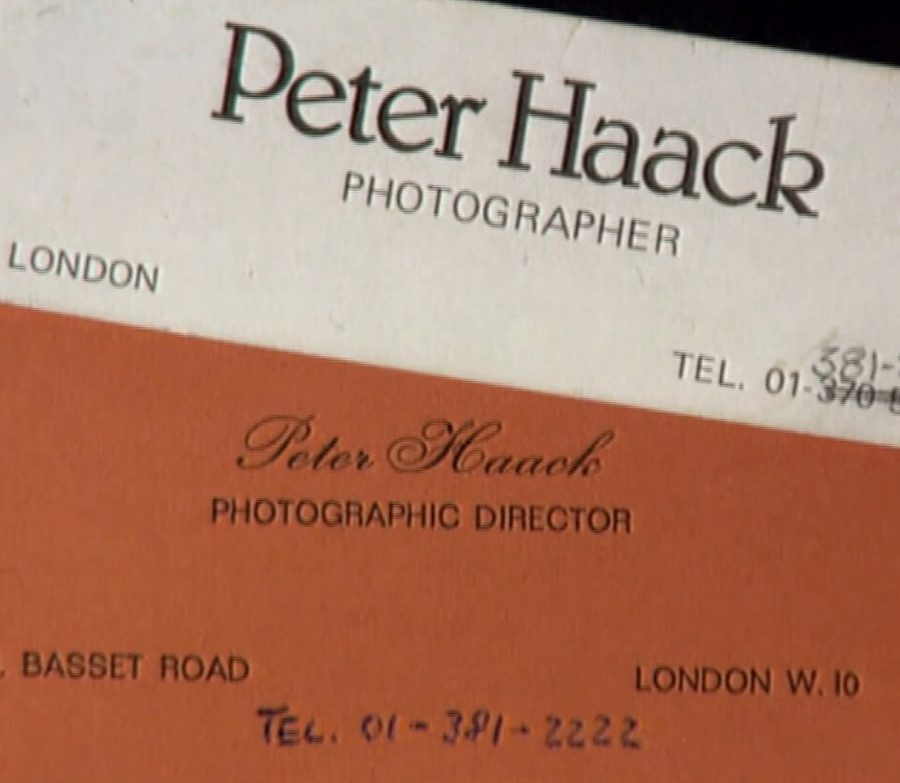
Related documentsIn 1978 the Stasi put Haack onto the escape organisations. It sent him to London to find work and a flat, and paid him eight hundred marks a month, about twelve hundred dollars today, plus his fares to East Berlin whenever he came in to report. He carried business cards: Peter Haack, Photographer.
That summer he turned up in Platania and did not manage to get close to the family. In the summer of 1979 he was sent back.
Related documentsWelsch remembered him afterwards as a man with a moustache at the next table, strolling along the beach "in a freshly-ironed, brand-new tropical suit". He introduced himself as Peter Haack, a German who lived in London and had a photo studio there. Welsch said on camera, years later: "I had no suspicion. There was no reason for any. That was the Stasi's plan. They knew I was on holiday, relaxed."
They became friends. Haack spent that holiday with the family, and the next summer's too, and came to visit them at home. He worked his way into their trust until they thought of him as the family's best friend. After that first summer, the Stasi's orders to Haack were to invite the family to London, or to go and see them at home.
Related documentsWelsch says the first attempt to kill him came in 1979, on the autobahn south of Frankfurt. He was driving his Volkswagen Golf at about a hundred and forty kilometres an hour when an explosion under the dashboard filled the car with smoke and flames. He steered blind for the central barrier, stamped on the brake, beat out the flames on his jacket, and kicked the passenger door open. Other drivers had stopped, and two of them ran over with fire extinguishers.
At a clinic in Frankfurt he was treated for plastic splinters in his face and legs, for smoke poisoning and for shock, and he went home the next day. The police, he says, told him it had probably been a cable fire, an electrical short circuit.
On the twenty-second of May 1980 Stasi officers drew up a new plan for the Skorpion case. At its centre, the plan said, stood "combat measures against the Welsch couple". The informer Alfons was to visit the family in West Germany for one to three days, on the strength of an invitation posted from England, look over the house, and learn the family's holiday plans. The plan went on: "The results of the informer's deployment are the precondition for launching combat measures against the family in the summer months of this year. Deadline: June 1980."
The same paper had another idea. East Germany backed SWAPO, the movement fighting South African rule in Namibia. The plan proposed feeding SWAPO's office in East Berlin information that painted Welsch as an arms dealer working for South Africa's apartheid government, and it named the aim: "a covert move by SWAPO against the person Welsch".
Related documentsAt the beginning of 1981, the men responsible for Skorpion decided to kill him. That spring Haack was called to Stasi safe flats in and just outside East Berlin: a small villa at Wendenschloss, by the river in Köpenick, and a flat in Zeuthen. Only three men sat in on the meetings: Haack; his handler, Colonel Franz Mattern, who ran the department's Berlin office; and the head of Main Department Six, General Heinz Fiedler. In those meetings Fiedler said clearly that Welsch was to depart this life.
Fiedler's first idea was a bomb on Welsch's yacht in Greece. Haack had bought a Volkswagen Passat in West Berlin for the Stasi, and it was fitted with a hidden cavity for the explosive. He drove it from East Berlin to the Greek border as a test, with nothing inside, while Colonel Mattern followed him in a Mercedes. The plan was dropped, partly because Haack objected, and partly because Welsch, for all his talk of one, never bought a yacht. A second plan, to have a sniper shoot him at Israel's border with Lebanon or Syria during a holiday, was dropped for fear of international complications. Then Fiedler laid out the plan that stuck. Haack would get the family to Israel for a holiday together, and Fiedler would give him something to mix into their food when the moment was right. The attack was meant for Welsch. If his wife was hit as well, Fiedler said, that would be a welcome side effect, since she had helped with the escapes too. Welsch would fall ill a few days after the meal, and that was how Haack would know it was working.
Fiedler handed him the poison and told him that half of it would kill a man. Haack was to divide it, and keep the other half for a second attempt. He also received between six and eight thousand marks in cash, about ten thousand dollars today, with new clothes and expensive camera equipment. He knew the poison was deadly, but not its name, or how it worked. It was thallium, a metal once sold as rat poison, which has no taste and no smell, and takes days to show itself.
In East Germany, Haack's partner was expecting their child. His daughter was born on the second of June 1981, seven weeks before the meal on the beach. That month, from London, he telephoned the Welsches. He had a photo job in Israel in July, he said, and a car, and they could come along.
On Sunday the twelfth of July the family landed at Tel Aviv. Haack met them at the airport and took them to a holiday village at Caesarea, on the coast. He rented a motorhome in Tel Aviv for a week's tour, an orange Bedford, and the young woman joined them, introduced as his girlfriend. On the first day they all bought supplies at a supermarket in Haifa. Welsch's wife picked out a pack of mince, and it went into the motorhome's freezer.
In early July Haack flew from London to Tel Aviv and took a room at a hotel in Acre, on the coast north of Haifa. At the hotel he met a young woman of about twenty-five who said she was an American Jew. When he told her about the tour he was planning with a German family, she wanted to come, and he invited her. Welsch's book calls her Susan.
Related documentsLate in the afternoon of Tuesday the twenty-first of July, on the way back, they stopped on a beach a few miles south of Eilat. About a hundred metres out stood a small rocky island with the ruins of a fortress on it. The Israelis called it Coral Island. There were a few bungalows with steep roofs, a restaurant closed for lack of customers, and no other vehicle in sight. Welsch remembers what Haack said: "You can go swimming. I'll make the food. Meatballs, with salad." The three of them swam out to the island and looked at the ruin. In the motorhome, Haack worked the mince into a dough. When he was sure nobody was watching, he mixed in more than a gram of thallium, about as much as it takes to kill a grown man, and shaped fifteen or twenty meatballs. When the young woman came back to the motorhome, he began frying them, a few at a time, because the pan was small, and set them out on the table in front of the motorhome. Frying does nothing to thallium.
After about forty minutes, Welsch writes, Peter called and waved them back. On a wooden table stood a big bowl of meatballs and a lettuce salad. Haack knew meatballs were Welsch's favourite, and Welsch ate the most. He wrote later that he had the hunger of a bear. His wife, who did not care much for meat, ate one or two. Their daughter ate at least half of one, and ran back down to the beach to play. The young woman did not eat. She said that as a Jew she ate only kosher. Welsch wrote that it was the first real sentence he had heard from her in days.
Related documentsA urine sample taken two days before had gone to a laboratory. The result showed thallium at three thousand eight hundred micrograms per litre, in a test where a healthy person shows none at all. Welsch remembers that a doctor from the clinic telephoned him at home at about ten o'clock one night, and said: "You have been poisoned. With a very high, several times lethal dose of thallium. You are in acute danger of your life." His first answer was that he would not go back. Then he went.
In intensive care they gave him the antidote through drips in both arms, and on the fourth day the pain stopped. Years later a doctor from the clinic explained it on camera: a thallium level in the blood of point two can kill, and Welsch's had been over two. White lines appeared across his fingernails, the marks thallium leaves, and he writes that fainter lines appeared on his wife's nails, and on his daughter's. In September the girl still had thallium in her urine.
Related documentsIn October 1981 a picture postcard came from Buenos Aires, with no sender's address. The handwriting was shaky, and ran crookedly across the card. In Welsch's book the card reads: "Dear Wolfgang, I am in Buenos Aires now, I am very ill. My team has gone on without me. I have pawned my cameras to pay the doctor. I don't know what I have, and I don't know how things will go on. All the best, your Pet."
Welsch took it to his doctor, who looked at the writing and confirmed his fear: Peter had thallium poisoning too. With a certificate saying Peter's life was in danger, Welsch went to Deutsche Welle, West Germany's overseas radio service, in Cologne. That evening an emergency message went out on the service to South America. It asked Mr Peter Haack from London, now travelling in Argentina, to call Mr Wolfgang Welsch in Germany at once, because he had a life-threatening poisoning.
Related documentsIn the spring of 1984, by his account, after Argentina's military junta had handed power back to civilians, he flew to Buenos Aires. He walked into police headquarters as a German journalist asking about a missing compatriot, and was taken to the chief of police himself. By midday, officers had brought in the records of every border crossing and port of entry for the months in question. The chief said: "I can tell you definitively that a person named Peter Haack did not enter Argentina."
Welsch wrote: "Peter Haack had never been to Argentina. And yet this was where he had died." He was sure now that Haack was in East Berlin. As long as East Germany stood, he would stay there.
The Berlin Wall opened on the ninth of November 1989. By his account, in the summer of 1990, while East Germany still existed, Welsch filed a complaint with the East German prosecutors against Erich Mielke, the minister who had run the Stasi since 1957. That August, through a lawyer in West Berlin, he filed another against Peter Haack, for attempted murder. Nothing happened. A year later he was shown the Berlin prosecutors' folder on his case, and it was empty.
He took the story to the press. In 1990, he says, the head of the Berlin office of one of West Germany's big news magazines heard him out, looked at his evidence, and told him: "This suspicion has no substance. The Stasi gave no orders to kill. That simply did not exist." The telephone calls started soon after. By his account they went on for weeks, anonymous voices telling him his last hour would strike soon. Shortly before Christmas 1991 one caller spelled it out: "If you don't stop your slanderous accusations, we will finish what we haven't managed so far. And this time we'll get you." In 1992 he left Germany for Costa Rica.
In June 1993, by Welsch's account, with the Stern team in the house, a specialist firm from Mannheim opened up the sockets Peter Haack had wired in Weinheim. In one of them, in the bedroom, they found the remains of a miniature microphone that drew its power from the mains.
The Stern, the big Hamburg weekly, took him seriously. Its reporters, he says, spent a whole night questioning him in a Hamburg hotel. Their own account of the investigation says: "The reporters are sceptical. But the first checks show that Welsch is no crank." Working with a Berlin police unit set up to investigate the crimes of the East German state, they followed Haack's trail through Britain, Greece and Israel for eight months.
On Tuesday the twenty-third of November 1993, detectives arrested Peter Haack at his home. On the drive to Berlin, Welsch writes, he confessed.
On the first of December, eight days later, the police arrested Heinz Fiedler in Berlin, on suspicion of joint incitement to murder. The general was sixty-four, and had been a pensioner since the Stasi was dissolved. Colonel Mattern was charged as well. On the fourth of December the Stern ran the story under the title "Assignment: Murder. Operation Skorpion".
Fiedler dies in his cell at Moabit
On the fifteenth of December 1993, two weeks after his arrest, Heinz Fiedler took his own life in his cell at Moabit, Berlin's remand prison. His headstone gives the years 1929 to 1993.
The trial opened on Thursday the first of September 1994, at the regional court in Berlin, with Judge Hansgeorg Bräutigam presiding. It sat on eighteen days between September and November. Welsch took part as co-plaintiff. Peter Haack, fifty-two, held a folder in front of his face for the cameras. Beside him sat Colonel Mattern, sixty-nine.
Haack confessed. He told the court he had mixed the thallium into the meatballs as agreed, and that the plan had come from the top of the Stasi. He named Fiedler, and described the meetings and the poison. He said he had signed up with the Stasi in 1970 to keep seeing a girlfriend in East Berlin, and because the work seemed interesting and adventurous. He had liked the Welsch family very much, he said, and the idea of killing them had been rather unpleasant to him. But he had feared that if he refused he would lose his place as a good informer, and might never see his own family again. On the dose, his story kept changing. First it had been a knife-tip, meant only to make Welsch ill. Then it was a third of what was left, and then a half. A toxicologist from the Bavarian criminal police held up a glass vial with one gram of thallium sulphate in it, about the median lethal dose, and Haack said he had used that much. He said: "No less, but no more."
Related documentsOn Monday the twenty-eighth of November 1994 the court sentenced Peter Haack to six years and six months in prison, for triple attempted murder: one meal, three victims, the father, the mother and the girl. The judge said that on the surface the case might look like a cheap crime story, but that it showed the Stasi had stopped at nothing, and that it was unfortunate that Haack was only the final link in a chain. In 1995 the Federal Court of Justice rejected his appeal, and the verdict was final.
In a recess, Welsch writes, Haack was allowed out from behind the dock. It was the first time since the airport in Tel Aviv, thirteen years earlier, that the two men had looked each other in the eye. Haack was crying. He took Welsch's hand and said: "I am so sorry. If I had known what I really brought on you and your family." He asked Welsch to forgive him. Welsch answered: "I forgive you, Peter. I forgive you as a man."
Related documentsWolfgang Welsch is in his eighties now, and still talks to school classes about the Stasi. In 2021 an interviewer asked him about Haack. He said: "I forgave him, of course. That does not mean I forgave the Stasi."
In the same interview he said the young woman had been a full-time Stasi officer, and that she was still being sought, because murder does not expire. Nobody has ever found out who she was.
Key locations
Full mapDocuments and evidence
Sources
- Book
Ich war Staatsfeind Nr. 1 Piper, 2006.
Welsch's memoir prints one of the photographs from the hard shoulder: Peter Haack, at the wheel of the van.
- Documentary
Mordversuch an Wolfgang Welsch SPIEGEL TV; bpb Mediathek, 25 September 1994.
SPIEGEL TV's report on the trial, aired 25 September 1994; the Stasi file pages, the Mannheim letter and the trial footage on screen.
- Documentary
Die Macht der Stasi: Jagd auf einen Staatsfeind ZDFinfo, 2015.
Welsch's own photographs of the motorhome and the van, and Welsch reading his files, as the episode shows them.
- Documentary
Operation Skorpion MDR / ARD, 2003.
Welsch said on camera, years later: "I had no suspicion. There was no reason for any. That was the Stasi's plan. They knew I was on holiday, relaxed."
- Documentary
ProSieben late news, 28 November 1994 ProSieben, 28 November 1994.
The verdict night report from the Berlin courtroom.
- Documentary
Wolfgang Welsch interviewed by Ulrich Timm tagesschau24 / ARD, 2021.
In 2021 an interviewer asked him about Haack.
- Web
Federal Archives podcast: Mythos und Realität der HV A bundesarchiv.de, 17 March 2021.
Welsch has often been asked whether nothing on that trip made him suspicious.
- Web
MfS-Lexikon: Hauptabteilung VI bundesarchiv.de.
Welsch counts three attempts on his life, and so does the Federal Archives' own reference work on the Stasi.
- Web
Amnesty International Germany: Wolfgang Welsch amnesty.de.
In 1970, Amnesty International's history of the case says, one of them, headed "Save my life!", reached its West German section, carried out with a friend's help.
- Web
Flucht, Fluchthilfe und Freikauf: Geschichte bundesstiftung-aufarbeitung.de.
A federal foundation that studies the East German dictatorship puts the average price in those years at about forty thousand marks a head, close to a hundred thousand dollars in today's money.
- Academic
Judgment of the Berlin regional court of 28 November 1994 28 November 1994.
The judgment says nothing about a bomb in a car or a shot on an English motorway.
- Book
Leidenschaft: Recherche 1998.
Their own account of the investigation says: "The reporters are sceptical. But the first checks show that Welsch is no crank."
- Newspaper
Stern 4 December 1993.
On the fourth of December the Stern ran the story under the title "Assignment: Murder. Operation Skorpion".
- Newspaper
taz, 6 September 1994 6 September 1994.
Stasi-Prozess: Versuchter Mord? (dpa): the photographer admitted mixing the poison into meatballs.
- Newspaper
taz, 20 September 1994 20 September 1994.
Stasi-Generalmajor übergab Gift (adn): the Stasi major general handed over the poison.
- Newspaper
Heti Pesti Riport (Budapest) 20 January 1994.
Hungarian weekly, January 1994: “The Skorpion operation”
- Newspaper
Dziennik Polski (London) 7 September 1994.
London Polish daily, 7 September 1994: “The poisoner's confession”
- Newspaper
Délvilág (Szeged) 29 November 1994.
Hungarian daily, 29 November 1994: “The Stasi used rat poison”
- Newspaper
Illyria (New York) 1 to 3 December 1994.
The English wire on the verdict: Spy Jailed for Poisoning Burgers
What remains unresolved
- What do you think happened on those two roads?
- Who was she?
- Whether anyone above Fiedler knew was never established.