Case fileEF-020Friern Barnet, London, 1988
Czechoslovakia Sent a Spy to London. A Dutch Mother Thought He Was Her Son
On the morning of Saturday 2 April 1988, Special Branch officers broke down the door of a flat in Friern Barnet, north London, and found an art dealer in his pyjamas with headphones on, listening to a woman's voice reading numbers in Czech. He said his name was Erwin van Haarlem, a Dutchman.
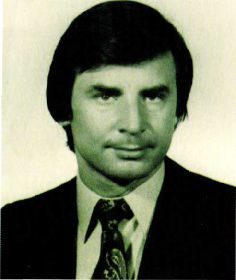
I use this name, even though I am convinced it was not yours at birth.
Mr Justice Simon Brown, passing sentence at the Old Bailey, 3 March 1989
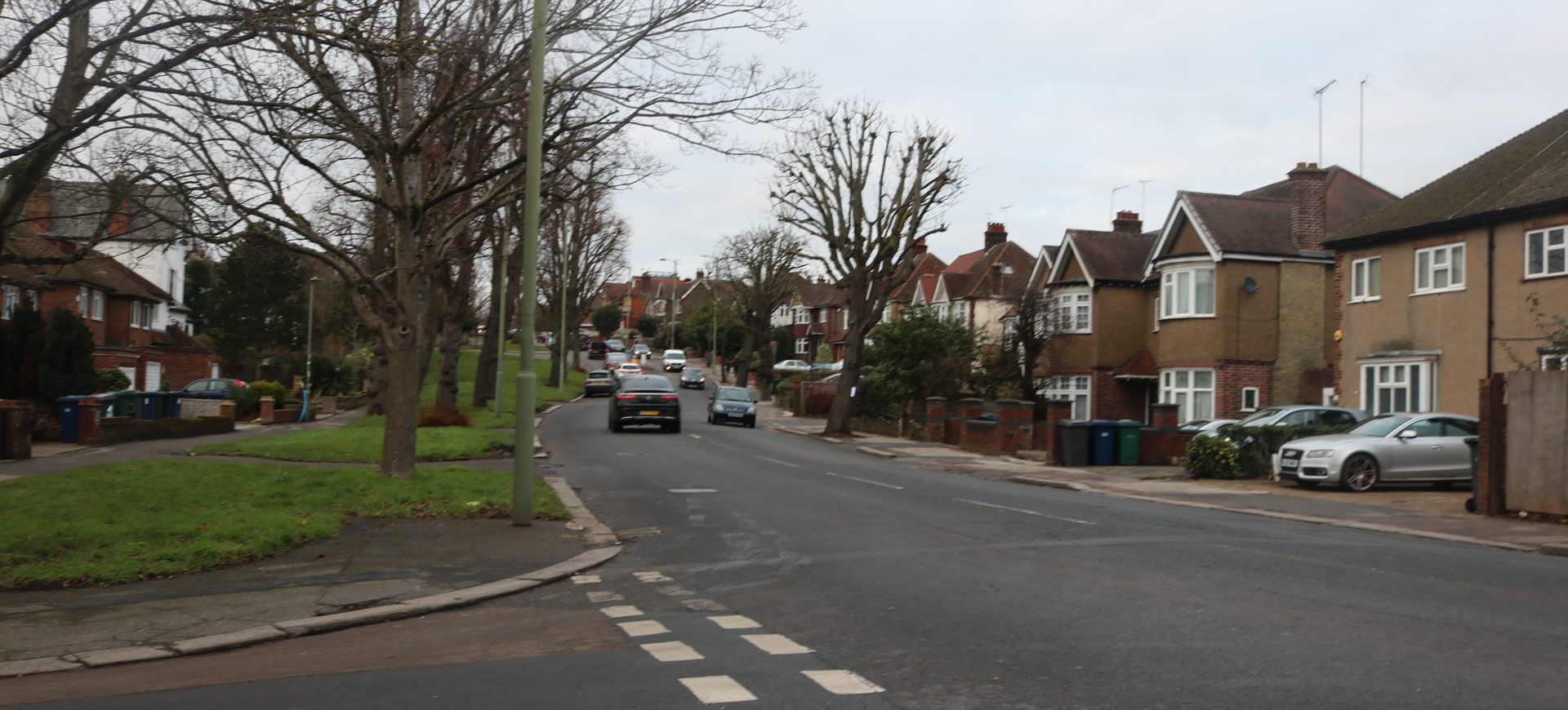
Friern Barnet. David Howard, CC BY-SA 2.0 (source)
The film
At a glance
- Period
- 1944 to 2024
- Countries
- United Kingdom, Netherlands, France, Czech Republic, Czechoslovakia (today Czech Republic), East Germany (today Germany), Austria, Soviet Union (today Russia), United States
- Subject
- A Czechoslovak intelligence illegal who lived in London as a Dutchman
- Key locations
- Friern Barnet, London, London, The Hague, Amsterdam, Schaijk, Caen, Teplice, Rumburk, Olešovice, Prague, Kolín, Brno, Halle, Vienna, Isle of Wight, Moscow, Washington
- Themes
- Erwin van Haarlem, Czechoslovak spy, StB, Friern Barnet, Old Bailey 1989, spy with no name, numbers station, Official Secrets Act
- Episode
- EF-020 · 71 min · published 18 September 2026
Case overview
For four years he would say nothing else. A Dutch mother had believed for ten years that he was the son she had given up in 1944. The Old Bailey tried him under a name the court itself was convinced was not his. This is the case of the man with no name: the mother's search, the illegal's London decade, the blood test, the trial behind a screen, and the letter that finally named him.
A file in a Prague safe called her an asset. A court in London called her the victim of a cruel game. He called her Mother for eleven years, and then Mrs van Haarlem, and then, to a writer, a woman he had had to put up with. So the question this case leaves is hers, not his: when a stranger writes "your son" at the bottom of a letter, and means it for ten years, what did she lose, and what did she find?
Timeline
In November 1943 Johanna was nineteen, a shorthand typist. On a train home to The Hague she met a soldier in a German uniform. His name was Gregor Kulig. He was twenty-one, blond, from a farm in Poland, and he had been conscripted into the German army and posted to the coast at Wassenaar. In her own account, told decades later, he forced himself on her at a party at his barracks just before Christmas. She ended it that night. By the new year she knew she was pregnant.
The boy was born in Amsterdam on the twenty-fourth of August 1944 after a labour of twenty-four hours. She was alone. She named him Erwin, because it was not the name of anyone she knew. Six days later she carried him home to The Hague on a train that was strafed from the air on the way. Her father opened the door, looked at her and the baby, and closed it. Her mother watched from the window in tears.
Related documentsIn November the Czech child-welfare officers came and wrote a report: a furnished room, very cramped conditions. The Red Cross took Erwin, not yet three months old, to a children's home in Rumburk, a small town on the German border. The sister at the door said, "You must go now." Johanna went back to her factory job, and then, with the war ending around her, she went home to Holland without him.
In 1945 the boy was moved to a chateau outside Prague called Olešovice, one of four confiscated castles where a Czech preacher named Přemysl Pitter and his colleague Olga Fierz took in children the war had thrown away: Jewish children out of the camps, German children whose parents had been expelled, and Czech orphans, all together under one roof. The staff remembered a happy, fair-haired child, the darling of the others.
Related documentsIn February Czech social workers came to the house with the same choice: sign, or bring him home. On the seventh of May 1947 Johanna signed. The document survives. The undersigned, Johanna Hendrika van Haarlem, hereby declares that she completely renounces her child, Erwin van Haarlem, born in Amsterdam on the twenty-fourth of August 1944, for the benefit of the foster parents in Czechoslovakia. Her father stood over her while she wrote her name. "You must never have the war product. Do as you are told."
On the seventeenth of January 1947 a Red Cross official knocked at the van Haarlem door in The Hague. Erwin was alive. He was in a home near Prague. A Czech couple wanted to adopt him. If she wanted him back she would have to repay the cost of his care: twenty-six thousand Czech crowns, more than a year's wages. Izaak turned the man away at the door. "Do not contact us again. This is the end of the matter."
On the second of April 1949 Erwin van Haarlem left Olešovice for the last time. He was four years old. The home kept a ledger of nine hundred and thirty-three children, and he is number ten in it.
Beside his name, in a state official's handwriting, are four words the staff had never seen before in the book: "Missing. Handover. Interior Ministry." No foster parents are named. There is no forwarding address. Nobody wrote down where the boy had gone.
By 1967 he was inside the ministry's First Administration, the foreign intelligence arm of the service the Czechs knew as the StB, the secret police. He was told to destroy every document that carried his name and to stop seeing his parents. His first cover name was Karel Elsner. His operational code name, the one the file would use for the next twenty years, was GRAGERT.
The service wrote him up after a year. He was persistent and self-motivated, the assessors said, brave, able to suppress fatigue and to work at night. And then the other half: the personality of the subject is not yet stable, with a tendency to concentrate on himself, and a hysteric component with hints of infantile features. They kept him anyway. He was being trained as what the trade calls an illegal: an officer who lives abroad under a false identity, with no embassy to hide in and no diplomatic passport to save him if he is caught.
Related documentsThe identity had been waiting for him since before he joined. In the late 1950s an officer of the service named Čenda Jungmann had built it for use in West Germany, from a classified register the service kept: the names of real children who had passed through the country's orphanages, whose paper trails could be taken over. He gave it a foster childhood at a Prague address in a house chosen because it had been demolished, foster parents invented down to a tobacco tin, and a school register altered to match.
Then it sat on a shelf until a candidate fitted it. The boy they had picked had a particular use. He had been born in Amsterdam to a Dutch mother. A Dutch mother meant a claim to a Dutch passport, and a Dutch passport would draw none of the suspicion a Czech one would. Nobody, he said later, had ever tried to penetrate Holland, so the checks would be lighter. The service already held the boy's original documents from the children's home. In 1968, at twenty-four, the handler told him: "It has been decided. You are now Erwin van Haarlem." He learned the life by heart, he said, like a poem.
Related documentsPrague drafted a letter for him to Queen Juliana of the Netherlands. It told the true story of a baby abandoned in Bohemia by a Dutch girl in 1944, raised in a Czech home, and now asking for the nationality that was his by birth. The Queen replied personally. Three months later he collected a genuine Dutch passport at the embassy in Vienna, after three days of questions from officials he took to be watching him.
In 1972 his training was signed off as complete and he swore the oath of the service: to fight decisively against the enemies of his homeland and of the Soviet Union, and to risk his life for the victory of communism.
Related documentsHe arrived in June 1975, by train, on a Dutch passport that was entirely real. He rented a room in Pimlico for seven pounds fifty a week, about a hundred dollars a week today, and took a job as a waiter in the rooftop restaurant of the Hilton on Park Lane, twenty-four floors above Hyde Park. His English was poor and his hair was long.
From 1975 on, on a schedule fixed in Prague, he sat down at a short-wave radio and listened for his messages. The method was as old as the Cold War. A station somewhere in Czechoslovakia broadcast a woman's voice reading groups of five numbers. Anyone in Europe with a cheap receiver could hear her. Only the man with the right sheet from a pad of random numbers, used once and then destroyed, could turn the groups into words. He kept his pads hidden. Over thirteen years the station would send him more than two hundred messages.
Related documentsOn the thirty-first of May 1976 she wrote to the Czechoslovak embassy in The Hague. The embassy answered on the eighth of September. Erwin van Haarlem, born the twenty-fourth of August 1944, had been living outside the territory of the Czechoslovak Republic since 1972 without the permission of the authorities. It was a routine letter about an emigrant. In Prague it landed on the desk of the men who had invented the emigrant, and it told them something they had never planned for: the mother was alive, and she was looking.
The Red Cross took up the search on her behalf. In May 1977 its tracing service wrote to a man in London, asking whether he was the Erwin van Haarlem born in Amsterdam in 1944, and whether he would allow his address to be released to his mother. "We hope you are the above mentioned." He read it in his flat, took it to the dead letter box in Hainault Forest, and asked Prague what to do. Prague argued about it for weeks. A colonel named Mráz, the deputy head of the illegals section, wrote a memo on the eleventh of May. "Why did she start to care?" GRAGERT, he noted, was not interested in family life or in closer contact with his mother.
On the day, she walked out alone into the snow to look at his street, hours before the appointment, and a man in Queen's Gate Gardens stopped in front of her. "Excuse me, but aren't you Mrs van Haarlem?" She said she was. "My name is Erwin van Haarlem. I am your son. I recognised you from the photos you sent me."
There was champagne in his room. She asked to see his passport, and he showed it to her. He showed her the form she had filled in at Teplice in October 1944, which he said he had found among his adoptive parents' papers. She noticed one thing and put it away. His eyes were brown. She remembered her baby's eyes as blue. For the next ten years he was her son. He came to Holland; she came to London two or three times a year, and they spoke on the telephone every week.
Related documentsOn the twelfth of May 1982 he walked into an office above a disused laundry in Golders Green and said, "I hear you need some help." The office was the headquarters of The 35s, the Women's Campaign for Soviet Jewry, run by a woman named Rita Eker, and he had answered their advertisement in the Jewish Chronicle for fluent Russian speakers.
He told them he was a Dutch Jew. Rita Eker remembered him as a normal bloke, slim, tall, fair-haired, always paying the women compliments. They gave him their files. Over the next six years he copied the names of their activists in Russia, their contacts around the world, and the home addresses of the members of parliament who supported them, and sent it all to Prague.
Related documentsTen days after Washington they brought him home for a few days to tell him so. The head of the service commended him for his exemplary combat mission. He answered, "I serve the socialist homeland." He was promoted to major. And at a villa in a village outside Prague, the chairman of the KGB, Viktor Chebrikov, presented him in person with a Soviet decoration for the strengthening of combat friendship. He had brought latex masks of Thatcher and Reagan as a present for the guard dog.
In June 1986 he went to Washington with a British delegation to a conference on Soviet Jewry. The archive that now holds his file quotes one more line from it. He built up contacts of intelligence interest, the file says, inside an ideo-diversionary organisation conducting active hostile activity against the Soviet Union. The archive adds, in its own voice, what that organisation was: B'nai B'rith, whose aim was to support the legal emigration of Jews from the Soviet Union, and which the KGB in the 1980s regarded as hostile.
Related documentsIn January 1987 he flew to Prague uninvited and asked to be pulled out. They told him he was imagining things, that he could not come home, that his task was to fight the enemy on the front line. And they told him something else, which was true. "Do you know how many illegal people there are in England? Two. Rather, there were two of you. The other betrayed us." He went back to London.
MI5 watched him for a year or more. They intercepted his post. An engineer came to fix a fault on his telephone and left a tap in it. There were bugs in the flat and a tracker on his car, and a rotating cast of painters, window cleaners, joggers and postmen in the close. The policeman who lived next door borrowed him to lift a fridge, poured him a beer, and took the glass away afterwards as if it were dirty.
Related documentsThe door came in. An inspector took him from behind. "Enough. It's over." A superintendent read the words: Erwin van Haarlem, I am arresting you on suspicion of espionage. Do not try anything. I have a gun. The man's hand had gone to the drawer where the knives were. He counted the officers coming through the door, and took his hand away.
On the tenth of March 1988 the head of MI5's counter-espionage branch, a woman named Stella Rimington, decided to move. He had worked out that he was being watched, and a man who knows he is watched may run. The operation was named Orlando. Special Branch, the police arm that makes the arrests MI5 cannot, would go in on the Saturday of the Easter weekend, during his morning schedule, so that they would take him with the numbers in his ear.
Related documentsOn the nineteenth of April 1988 a scientist at the Metropolitan Police Laboratory, John Edward Bark, reported on the two blood samples using a technique that was then three years old, the genetic fingerprinting invented at Leicester by Alec Jeffreys. The profiles showed it was one thousand eight hundred times more likely that Mrs van Haarlem was not the mother of the man calling himself Erwin van Haarlem. It was, he concluded, extremely unlikely that he was her son.
The result went through her, she said, like a plague. She drew the curtains for two days. Then she telephoned the superintendent in charge and told him she would not give evidence for the Crown. Erwin was her son and she would stand by him.
Related documentsOn the thirty-first of July she went to see him. In a visits room at Brixton she asked him straight out. "Tell me, I'm hearing all these strange stories. You're not really a spy, are you?" He answered her with a proverb from his own country, translated into English. "We have a saying that where you see the smoke, there will be a fire. But this time it is not true. Too much of the smoke and no fire. I did absolutely nothing that could harm England."
She looked at him while he said it, and he looked away first. What she saw, she said, were the cold, hard eyes of a professional liar: no remorse, no warmth, nothing. She went back to her hotel and telephoned the superintendent again. She would give evidence after all. From that day she did not call him Erwin. She called him The Liar.
The trial opened in Court One at the Old Bailey on Monday, the twenty-seventh of February 1989, nearly eleven months after the kitchen. The indictment named the defendant as Erwin van Haarlem, because the court had no other name to give him.
Then Amlot said the thing that made this trial unlike the spy trials that had come before it in that room. "Although the Crown can point to the evidence of his communicating information to Czechoslovakia, we cannot establish what he was sending, or what he intended in the future to send." More than two hundred messages had reached the flat. The British had read one.
Related documentsThe jury went out before noon on the Friday, the third of March 1989, came back once to ask what message he had been preparing to pass, and gave its verdict in the middle of the afternoon. The clerk asked whether they found the defendant, Erwin van Haarlem, guilty or not guilty of doing acts preparatory to an offence under the Official Secrets Act. The forewoman said: guilty.
The judge told him to stand. "I use this name, even though I am convinced it was not yours at birth. You have been convicted by this jury on the basis of what can really be shown to be the most convincing evidence of a truly serious crime. I have no doubt that you are a devoted, disciplined and resourceful spy. I also have no doubt that had you not been caught, you would have done whatever your Czech controllers required of you in the years to come, however harmful it could be to our national interests. These interests and our freedoms we must jealously guard." Ten years. And a recommendation that he be deported when he had served them, which the Home Secretary, Douglas Hurd, had already signed.
Related documentsIn October 1991 the Daily Mail reporter who had covered the trial, Paul Henderson, took her back to Czechoslovakia with a photographer, an interpreter, and Hans. At Olešovice the director brought out the ledger, and there was the line: number ten, Erwin van Haarlem, left the second of April 1949, and the four words in the official's hand.
A nurse from 1947, shown a photograph of the man in the London dock, said: "No. That is not Erwin. He was like you, Johanna." A nursemaid produced an album with twenty pictures of a white-blond boy. And at Kolín the old neighbour, the Mauthausen survivor, told her about the cellar. "My blood feels like it is running cold," she said. "I feel such a bad mother."
Related documentsOn the twenty-seventh of November 1991 he came into the lobby of the Grand Hotel carrying flowers his wife had bought, and went straight to the men's room to change his winter boots for the polished shoes he had brought in a bag. He took so long that the Dutch ambassador thought he had run away. Then he came out.
"I stared at him and kept staring," Johanna said. "I looked into his deep blue eyes and saw kindness. He was staring at me too. I did not dare to hug nor to kiss him. I reached out for him, and he took my hand and kissed it, smiling at me." She had learned one sentence of Czech from the interpreter for the occasion, and she said it: I am very happy to see you. He had been Ivo for forty years.
The strike ran forty days and took him from seventy-eight kilos to forty-five. On the twentieth of February 1992 the prison governor came to his cell with a letter from Prague, and the letter was addressed to Lieutenant Colonel Václav Jelínek.
That was his name. Václav Jelínek, born on the twenty-third of August 1944 in Modřany, a suburb of Prague, the son of a baker whose small business made pastry. One day before the boy in Amsterdam.
Related documentsThe British now had the name, and it changed nothing in the sentence. What changed it was the law. The judge had recommended deportation, the Home Secretary had ordered it, and under a section of the Criminal Justice Act passed in 1991 a prisoner who was going to be deported anyway could be released early. On the fifth of April 1993 Václav Jelínek was put on a Czechoslovak Airlines flight to Prague.
Three months later a Conservative MP who wrote spy books under the name Nigel West asked the Home Office in a written question on what grounds Erwin van Haarlem had been released and deported. The answer took four sentences and is in the parliamentary record. It uses the false name throughout.
Related documentsThe public learned his real name only in November 2005, when a Czech journalist published the memoir they had written together, and a Budapest newspaper reported that analysts and historians were learning only now who the mysterious prisoner of 1989 had been. By then he had been out for twelve years.
Three years of interviews became a book in 2005, his own account, written with an admiring journalist from his private papers, and it sold. It opens with a line from a Czech novel about an outlaw who sits unrecognised in an inn while the men around him talk about him: for one of the greatest joys is not to seem, and to be.
Related documentsVáclav Jelínek died in Prague on the eighth of February 2022, aged seventy-seven. His widow calls him a hero, a brave patriot of Czechoslovakia.
His headstone is a grey granite book, lying open, with a gold crucifix down the spine. Across the top, in Czech: Life is a book you can read only once. On the left-hand page, in gold letters, Václav Jelínek, 23.8.1944 to 8.2.2022. On the right-hand page, in gold letters, Erwin van Haarlem.
On the nineteenth of November 2024, in her bungalow in Schaijk, Johanna van Haarlem turned a hundred. She had outlived the son she found and the man who took his name.
The man who had been Erwin van Haarlem first died suddenly in June 2024, at seventy-nine, of his heart, and was buried near his village in Moravia by a Catholic priest. Asked, years before, who his mother was, he had said he could not answer. Reason told him to say Mrs Johanna. What he remembered most were the aunties from the home.
Key locations
Full mapDocuments and evidence
Sources
- Book
Český špion Erwin van Haarlem JKM, Prague 2005; 2014 e-book edition, 2005.
Three years of interviews became a book in 2005, his own account, written with an admiring journalist from his private papers, and it sold. Photographs and documents from the subject's private archive.
- Web
The spy with no name BBC News Magazine, 4 January 2017.
In 2016 a British writer asked him, in a restaurant off the Old Town Square, whether he had ever felt compassion for Johanna van Haarlem. "I had no pity whatsoever," he said.
- Archive
The False Dutchman: the personal file, registration number 39589, cover name GRAGERT The Security Services Archive (Archiv bezpečnostních složek), Prague: Archiválie měsíce, December 2019.
His personnel file is in the Czech archive now, and part of it has been published. The archive adds, in its own voice, what that organisation was: B'nai B'rith, whose aim was to support the legal emigration of Jews from the Soviet Union, and which the KGB in the 1980s regarded as hostile.
- Archive
Radio Free Europe monitoring transcript of Czechoslovak Radio, 6 March 1989 RFE/RL Czechoslovak Monitoring, bulletin pages 40 and 41; via the Arcanum Digitheca, 6 March 1989.
Radio Free Europe was listening, and typed it up, and the page survives.
- Archive
Hansard, House of Commons written answers, 9 July 1993, column 297W House of Commons, HC Deb 9 July 1993, vol 228, c297W, 9 July 1993.
The answer took four sentences and is in the parliamentary record. It uses the false name throughout.
- Archive
Hemligt telegram: a coded telegram from Czechoslovak intelligence, 1982 to 1986 Säkerhetspolisen (the Swedish Security Service), from its archive, 1982 to 1986.
A station somewhere in Czechoslovakia broadcast a woman's voice reading groups of five numbers. Anyone in Europe with a cheap receiver could hear her.
- Newspaper
The Sun 28 February 1989.
The papers called him the man with no name, the spy with no name, Agent Nobody.
- Newspaper
Daily Mirror 4 March 1989.
The papers called him the man with no name, the spy with no name, Agent Nobody.
- Newspaper
The Times 4 March 1989.
A senior Scotland Yard officer told a reporter that he was probably the first man ever tried at the Old Bailey under an alias.
- Newspaper
Daily Mail 4 March 1989.
Johanna gave one interview, to the Daily Mail, the day after the verdict, in tears. In October 1991 the Daily Mail reporter who had covered the trial, Paul Henderson, took her back to Czechoslovakia with a photographer, an interpreter, and Hans.
- Newspaper
Today 4 March 1989.
The papers called him the man with no name, the spy with no name, Agent Nobody.
- Newspaper
Daily Express April 1988.
In the first week the Daily Express and the Daily Mail wrote of NATO submarine secrets, of an underwater research centre in the West Country, of a sonar line watching Soviet submarines off Norway.
- Newspaper
The Canberra Times: Dutch national under arrest Trove, National Library of Australia, 5 April 1988.
Both the Netherlands and Czechoslovakia said they had never heard of him.
- Newspaper
The Canberra Times: Mystery spy jailed for 10 years Trove, National Library of Australia, 5 March 1989.
The papers called him the man with no name, the spy with no name, Agent Nobody.
- Newspaper
Reform, Budapest Via the Arcanum Digitheca, 2 January 1992.
At the Czech foreign ministry a consul told her that her son had been adopted by decision of a court and was protected by the adoption laws.
- Newspaper
Népszava, Budapest Szép Szó supplement, page 19; via the Arcanum Digitheca, 22 May 2004.
The method was as old as the Cold War.
- Newspaper
Népszabadság, Budapest Page 20; via the Arcanum Digitheca, 21 November 2005.
A Budapest newspaper reported that analysts and historians were learning only now who the mysterious prisoner of 1989 had been.
- Book
I Lost My Child Twice 2010.
She wrote her own instead, in English, under the title I Lost My Child Twice, and it was published in 2010 in Czech, in the country where the boy she lost and the man who had worn his name had both grown up. No English edition has appeared.
What remains unresolved
- What was it all about? What was he doing here? What was he interested in? Whose side was he on?
- Why did she start to care?
- When a stranger writes "your son" at the bottom of a letter, and means it for ten years, what did she lose, and what did she find?