Case fileEF-010Babice, 1951
He Was in a Cell When the Shots Were Fired: The Babice Case
On a July night in 1951, armed men walked into the village school of Babice, Czechoslovakia, and shot the three communist officials meeting inside. Within two years the state had hanged eleven men for that night, including a young priest who had been sitting in a secret-police cell for sixty-three days when the shots were fired.
I will not lie to you, and the truth must not be spoken.
Frantisek Blaha, the carpenter who survived the school corridor, to a friend
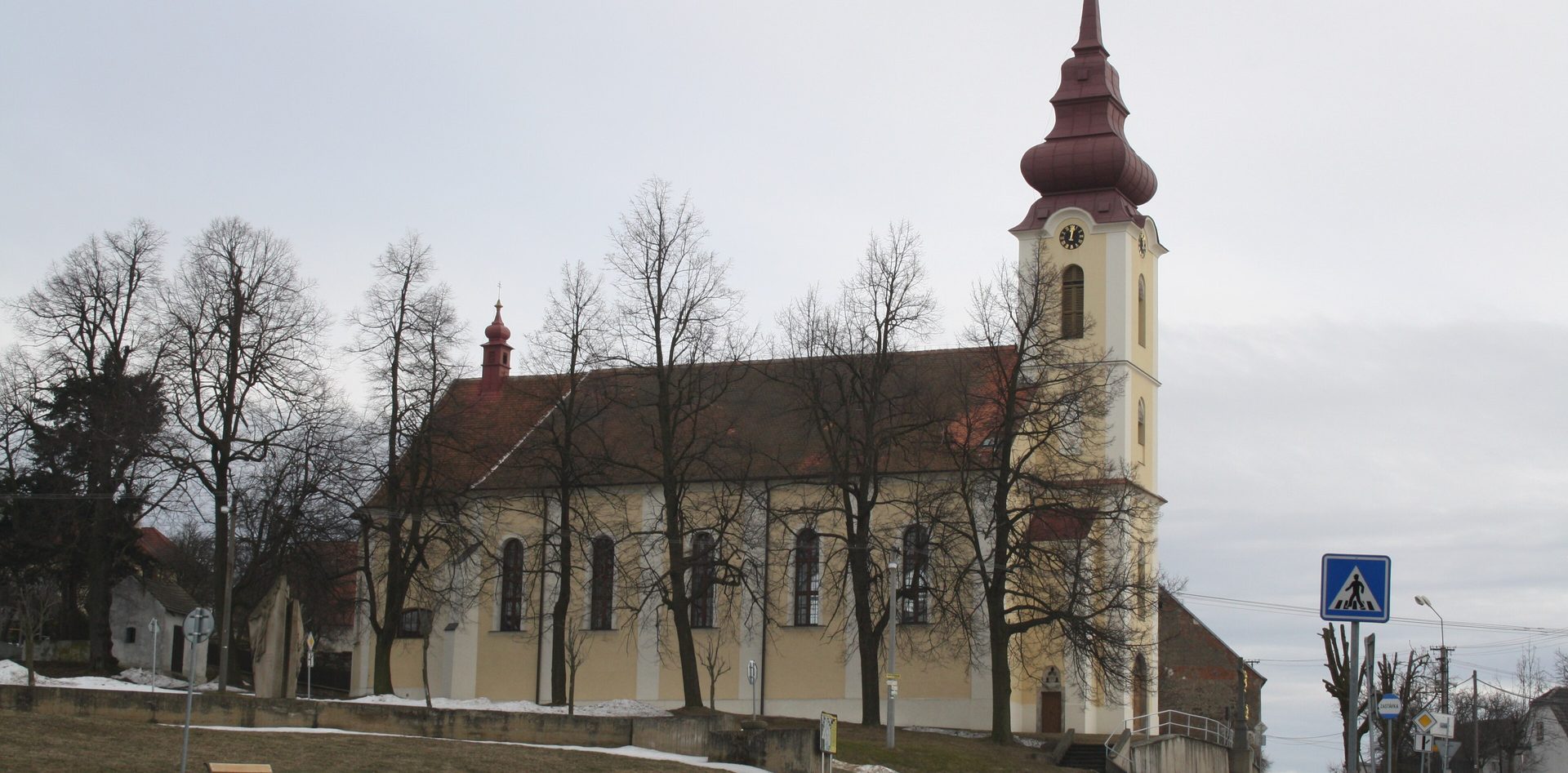
The square in Babice. Jiri Sedlacek, Frettie, CC BY-SA 3.0 (source)
The film
At a glance
- Period
- 1951 to 2026
- Country
- Czechoslovakia (today Czech Republic)
- Subject
- The Babice case: three officials shot in a village school, eleven men hanged
- Key locations
- Babice, Rokytnice, Šebkovice, Horní Újezd, Jihlava, Třebíč, Brno, Prague
- Themes
- true crime, cold war, czechoslovakia, babice, show trial, StB
- Status
- Every Babice verdict was annulled by April 1996. The two surviving judges of the first trial were charged in 1997: one died in 2001 with the case unfinished, the other was ruled unfit. No one who built the machine was ever convicted. Jan Bula and Vaclav Drbola were beatified in Brno on 6 June 2026. Status as the episode left it, 25 July 2026.
- Episode
- EF-010 · 45 min · published 25 July 2026
Case overview
The gunman called himself a captain from the West. For seventy years, Czechs argued about who really sent him: Washington, Prague, or no one at all. Then the archives opened. This is the full story of the Babice case, from the collectivization terror and the show-trial machine to the 2016 finding that ended a national myth, and the June 2026 beatification, before 13,000 people in Brno, of two priests the regime hanged as murderers.
Perhaps the truest thing the village keeps is the double grief. Three men shot in a school corridor, and eleven men hanged in prison courtyards, and around them a hundred broken families on both sides of a line the state drew through one July night. They were good people, the mayor said of the murdered officials, and they did not deserve such a thing. Neither did the men whose names were on the coffins that came early. Two sets of victims, one narrative machine between them, and in the middle, forever, a carpenter on a staircase who lived twenty-five more years with the answer and left the country a single sentence in its place. I will not lie to you. And the truth must not be spoken.
Timeline
In 1948, the Communist Party had taken Czechoslovakia. By 1951 it was taking the villages. Farms that families had held for generations were being pushed into collectives. Delivery quotas were set high enough to break the ones who refused, and the men who missed them were branded the village rich, the regime's label for any farmer who owned more than it liked. Missing a quota could mean prison.
The Church was being taken apart with the same patience. Monasteries had been emptied in the night. The Archbishop of Prague, Josef Beran, had vanished into internment, held without trial, his name spoken in the villages like the name of a captive king. In Babice itself the parish had already lost one priest to the police before his successor ever arrived. Religion lessons still ran in the schools, for now. Everyone understood they were being counted.
Related documentsOn the twenty-fifth of February 1951, the priest of Rokytnice, a market village a few kilometers from Babice, heard a knock at his rectory door. Jan Bula was thirty, a railway worker's son, the kind of young priest the countryside produces once in a generation: he ran the youth club, staged amateur plays, and the village children followed him around. The man at the door was Ladislav Maly. They had sat in the same gymnasium classroom for four years. The old classmate said he was now a police officer.
Maly told Bula, in confidence, the kind of secret that stops a believer's breath. He had come from the West, working against the regime. He had already freed Archbishop Beran from internment and was hiding him nearby, moving him toward the border. And before the dangerous crossing, the Archbishop needed what any Catholic in danger of death needs: a trustworthy priest to hear his confession. Would Bula be that priest?
Related documentsThrough the spring of 1951 the captain from the West built himself a resistance. A twenty-year-old romantic named Drahoslav Nemec. The Plichta farm in Sebkovice: the father, Antonin, a respected farmer who had hidden Czechoslovak paratroopers dropped from England during the Nazi occupation, and his teenage sons, Antonin and Stanislav. A young farmer named Antonin Mityska, facing jail over impossible delivery quotas, recruited with a line the historians would later dig out of the files: they will lock you up anyway, so come with me. Two gamekeepers. A hiding pit dug under a beehive shed.
This resistance moved at night, paying armed visits to communist functionaries in the surrounding villages, with warnings and sometimes with shots. The targets were not all the captain's choices; some names came from the local men themselves, farmers settling three years of scores. The group stole for supplies and waited for a war everyone believed was coming.
Related documentsFrom the twenty-ninth of April 1951 at the latest, the secret police knew with certainty, by name, that Ladislav Maly was the armed man behind the raids in the district. The office's report counts what followed like a metronome: to the second of July, sixty-four days remained. For sixty-four days, the most penetrating security apparatus in the country's history let him run.
In that one small district, in the first half of 1951, the police ran a network of thirty-seven informers. The day after the certainty date, they arrested Jan Bula; the people around Maly kept vanishing into cells while Maly himself walked free.
Related documentsAt the end of April, Bula closed his door to his classmate for good. But he did not report him; a priest does not hand a man to the secret police on suspicion, and in that decent, ordinary decision his death was already written. On the thirtieth of April, the police came for Bula. They took him out of a religion lesson, in front of the children.
Bula was taken in, at first. Then he began to notice things. The mission that never quite happened. The evasions. The visitor's appetite for alcohol, noted later even in the files. Bula confided in an older priest nearby, Jan Podvesky, and got a cold answer: be careful, this may be a provocateur, a man sent to trap you.
Related documentsIn May, Maly walked the same legend into Babice itself, to Father Vaclav Drbola, a farmer's son of thirty-eight administering the parish. The Archbishop, the confession, the border. Drbola, warned like Bula and torn like Bula, agreed at least to help hear the hidden man's confession, and with that he too was compromised in the only sense that mattered: he had met the visitor and not reported him. On the seventeenth of June, fifteen days before the murders, the State Security, the secret police Czechs call the StB, arrested Drbola.
The raid on the school would present itself as revenge for exactly that arrest.
Related documentsAt the end of June, Mityska brought the captain to Father Frantisek Paril in Horni Ujezd, his own parish priest, a restless farmer's son of forty. The group stayed under his roof for three days. Paril did not want them there, and he did not denounce them, the same fatal middle path. When they left, he gave them rosaries and a blessing.
Forty-one days later, that blessing would be read out in a courtroom as the sacrament of a terror organization.
Related documentsThe second of July was a Monday. In the Babice school that evening sat four men of the national committee. Tomas Kuchtik, fifty-three, the headmaster, chairman of both the committee and the village party cell. Josef Roupec, thirty-eight, his deputy, a forestry worker. Bohumir Netolicka, thirty-three, the treasurer, a warehouseman. And Frantisek Blaha, fifty-seven, a carpenter. Around half past ten, Ladislav Maly came through the door with a pistol, Mityska behind him with a submachine gun. The Plichta boys stood watch outside in the dark.
The account extracted from Mityska's interrogation says the men were ordered into the corridor with their hands up; that Maly demanded to know who had informed on the priest, on Drbola, arrested two weeks before; that he asked who chaired the party, that Kuchtik turned and said I am, and that Maly shot him, shot Roupec and Netolicka from behind, then screamed at Mityska to fire. The survivor, Blaha, told a different story once, privately, to the friend who kept the village chronicle: Netolicka pulled a revolver from his pocket, and everything detonated from there. Blaha ran for the stairwell with a bullet in his back and made it. No ballistic examination was ever carried out. Who fired which of the fatal shots was a question the investigation never asked, because the investigation, from its first hour, was not that kind of investigation.
Related documentsThe killers did not run for the border, though the border was the one direction the captain from the West should have known well. They walked two kilometers, into a wheat field near the hamlet of Bolikovice, and lay down in the grain. The question of why, like so much in this case, has never been answered. By the afternoon of the third of July a police spotter aircraft was sweeping the ripening fields, and it found the pattern in the wheat. The field was surrounded, and the shooting began.
When it stopped, Ladislav Maly was dead in the grain, and so was Antonin Plichta junior, nineteen years old. His brother Stanislav, also nineteen, had been shot twice by the spine and lay paralyzed among the stalks. Antonin Mityska stood up with his hands raised, essentially unharmed, and it fell to him, the accomplice, to look down at a bearded corpse and confirm for the police that this was the captain. Within twenty-four hours of the first shot in the school corridor, every gun in the case was silent. The case itself was just beginning.
Related documentsDay four: a state funeral, the Minister of Information himself speaking over the three coffins. Day nine: the murders invoked in parliament to push through a new law on guarding the borders. Day ten: the trial. Not in a courtroom: in the great hall of the Workers' House in Jihlava, the regional capital, the murder weapons arranged on display, newsreel cameras rolling, editors of the party daily embedded beside the court to coordinate the coverage.
Fourteen defendants stood in that hall. Mityska and the captured farmers, but also men who had never stood in that corridor, and two priests. Vaclav Drbola, arrested fifteen days before the murders, was now cast as the killers' spiritual instigator; a confession to that effect had been extracted in the meantime, by methods the files record, among them clamps tightened on his fingers until the swollen flesh burst. Frantisek Paril, the priest of the rosaries, was charged as a willing planner of further murders, a role that exists only in the interrogation protocols. More than six hundred resolutions from factories and farms, demanding death, reached the court before and during the hearing. The verdicts were not in doubt. Neither was the schedule: seven coffins were delivered to Jihlava the day before the sentences were read. One of the judges confirmed it himself, on television, half a century later.
Related documentsSeven death sentences. The appeals were disposed of in eighteen days, the president rejected clemency, and on the third of August 1951, in the courtyard of the Jihlava prison, beginning after four in the morning, seven men were hanged one after another. Mityska, who fired. The farmer Plichta, fifty-seven, hanged as the group's ideological leader while one son lay in a grave and the other in a prison hospital. Drahoslav Nemec, twenty, who had run away from the group weeks before the murders. A gamekeeper, a smallholder, and the two priests. From the school corridor to the gallows: thirty-two days.
The bodies were cremated in Brno the same day, the ashes ordered into an anonymous common grave, because the state understood exactly what relics are. It did not get them all. The director of the crematorium quietly kept urns back in his basement, and there they waited, hidden, for seventeen years.
Related documentsThe trials kept coming, fifteen in all, some in towns the group had never entered. A miller named Jaroslav Melkus was hanged, a man the record describes as inserted into a case he had nothing to do with. More than a hundred people were convicted, to more than thirteen hundred years of prison.
Around the verdicts ran a second, quieter punishment: wives, children and grandmothers of the condemned were loaded onto buses, the first of them ten days after the first verdict, and deported to state farms in the borderlands, one bag of personal necessities each. One farmer's daughter arrived, as she put it decades later, with bare sandals and the clothes on her back. Children of the convicted were barred from schools. The label Babicka, the one from Babice, followed families for a lifetime, like a caste mark. In the party's own documents, the Babice murders appear as the trigger for a national operation against the so-called village rich that drove some two thousand farming families from their land.
Related documentsIn November 1951 the state came for Jan Bula, the classmate who had refused. His trial was staged in the town cinema in Trebic: four hundred seats, for which the party printed twelve hundred admission tickets and rotated the audiences shift by shift.
Back in June, an interrogator whose name the files preserve, Antonin Achylis, had knocked out his front teeth with a knuckle-duster; when Bula's mother was allowed a visit, she read what had been done to him from the swollen veins on his hands. He had signed what was put in front of him. The court's logic, reduced to its bones by the historians who later studied it: he had failed to denounce his classmate, therefore he was the terror's secret author. Death, for high treason.
Related documentsThey hanged Jan Bula in Jihlava on the twentieth of May 1952, at five in the morning, and even among this case's horrors it stands apart: a slow strangulation on a pulley, a doctor checking his heartbeat every five minutes, a quarter of an hour to die. He was thirty-one.
In his death cell he had painted little pictures and traded them for cigarettes; on his last night he wrote farewell letters that survive to this day. Weigh every step well, he had told his parishioners when the regime first came for him: we do not want to betray our nation, but neither Christ.
Related documentsThe last to die was the paralyzed boy. Stanislav Plichta, shot through the spine in the wheat field at nineteen, was kept alive in custody for twenty-two months so that he could be tried. In February 1953 a court in Prague sentenced him to death, and in May 1953, at Pankrac prison, he was hanged, aged twenty-one.
The accounts that came out of Pankrac say he was brought to the gallows in a wheelchair, and that his last words were: they are hanging a beggar, mommy. With him the count reached eleven. Eleven hanged, for three murders committed by two gunmen, one of whom had been dead in the wheat since the second day.
Related documentsThe urns come out of the crematorium basement
In 1968, in the short thaw of the Prague Spring, the hidden urns came out of the crematorium basement and went quietly to the families; two of the surviving priests were even rehabilitated, before the tanks arrived and the case froze for twenty more years.
In 1975 state television dramatized Babice as an episode of its flagship propaganda crime series, Major Zeman, under the title The Murderer Hides in the Field, the village renamed, the priests written as conspirators.
To this day, the single most watched piece of film about the Babice case is that episode: the lie, in reruns, half a century on. For the generation raised in the grey decades after 1968, the fiction simply was the case.
Frantisek Blaha, the carpenter who crawled up the school stairs with a bullet in his back, lived another twenty-five years, served the regime, in time even chaired the village committee the dead men had left behind. About the night itself he kept a silence the village learned not to touch.
To a friend, once, he said the only sentence he would ever offer: I will not lie to you, and the truth must not be spoken. He carried whatever he saw in that corridor to his grave, in 1976.
Related documentsIn the 1990s, the office created to document the crimes of the communist era went through the files, and what it found reads like an indictment. A former policeman told them, on the record, why in his view the hunt took so long: the Soviet advisers embedded in the security apparatus favored a method from home. Within a year of the murders, a deputy prosecutor conceded in an internal review that the service had made errors in the management of Maly's group.
In those same weeks, in the same countryside, another man was recruiting farmers into an anti-communist resistance. He called himself Major Vasek. He was a serving officer of the secret police, and his resistance was a trap, built name by name. A manufactured resistance provably existed in that district, in that spring. It simply was not Maly's.
Related documentsAfter 1989 the thaw became a reckoning on paper: rehabilitations from 1990, and by April 1996 the state had annulled every single Babice verdict. The regime's plaque came down off the school wall in the late nineties. In 1997 prosecutors charged the two surviving judges of the Jihlava trial.
One had explained his career on that bench in a sentence worth remembering exactly: I did not want to go there, I knew it was about political trials. However, I had a five-year-old son. He died in 2001 with the case unfinished. The other was ruled unfit, his mind gone. The interrogator who knocked out a priest's teeth was never charged. Of everyone who built the machine, the final score of convictions is zero.
Related documentsThen 1989 came, the regime fell, and the whisper walked into print wearing the confidence of fact. Journalists and memoirists wrote it plainly: the secret police had staged it all. A 2008 bestseller about the case, written with the family of one of the hanged men, put it on the cover in so many words: today it is well known that this was a targeted provocation of State Security.
It seeped into documentaries, commemorations, school textbooks. For most Czechs who knew the case at all, Babice became the story of a secret-police trap. There was just one problem, and it took the archives themselves to expose it.
In 2016 the historian Michal Stehlik, who had reconstructed the case document by document, published the finding that broke the theory's spine. Deep in the interrogation files sits a detail with an alibi's precision: the group's next planned action, an attack on functionaries in Sebkovice, was unknown to the secret police until after the arrests of the third of July, when it surfaced from the captured father under interrogation. The service that supposedly wrote the play did not know the next scene.
The academic journal of the Czech Academy of Sciences gave its review of Stehlik's work a title that reads like a tombstone for a seventy-year certainty: The End of the Myth of Secret-Police Provocation in Babice. The attack was not staged. It did not need to be. A state that has watched a violent fantasist for sixty-four days does not have to write his script; it only has to be ready for the day he writes his own. The provocation was not the murder. The provocation was everything after it: the pre-arrested authors, the memorized confessions, the cinema tickets, the coffins that arrived before the verdict.
Related documentsIn 2004 the diocese opened the cause of Jan Bula; Vaclav Drbola joined it in 2011; in 2015 the dossier went to Rome. On the twenty-fourth of October 2025, Pope Leo the Fourteenth signed the decree recognizing both men as martyrs.
In March 2026, in a South Moravian village cemetery, Drbola's remains were exhumed for the coming rite; his nephew stood at the graveside and said that after everything, it felt like satisfaction. The urn a family had hidden from two regimes and reburied in secret under a relative's name was unwrapped as a relic.
Related documentsOn the sixth of June 2026, on the exhibition grounds in Brno, more than thirteen thousand people stood before an altar draped in red, the color of martyrs' blood. Cardinal Michael Czerny, the papal legate, read the apostolic letter inscribing Jan Bula and Vaclav Drbola among the Blessed. It was only the second beatification ceremony ever held on Czech soil, and the first for victims of the communist era: the state's convicted murder-plotters, now the Church's official martyrs, seventy-five years almost to the month after the shots in the school.
Their shared feast day is the seventeenth of June. One absence from that altar deserves a sentence of its own. Frantisek Paril, the third hanged priest, the man of the rosaries and the forty-one days, was not part of the cause, for reasons the diocese has never fully spelled out; the case's own historians have asked in print why only two. His parish reburied him with honors in 2011.
Related documentsOn the second of July 2026, the anniversary came around for the seventy-fifth time. The historians held a conference. The diocese rang its bells for two new Blessed.
Somewhere in an archive box in Prague sits everything the files will ever say about a bearded man in a wheat field, a captain from nowhere, still keeping the one secret every investigation, every legend and every miracle of this case has broken against: whether anyone, anywhere, ever sent him at all.
Key locations
Full mapDocuments and evidence
Sources
- Book
Babicke vrazdy 1951 Academia, Prague; ISBN 978-80-200-2593-7, 2016.
In 2016 the historian Michal Stehlik, who had reconstructed the case document by document, published the finding that broke the theory's spine.
- Academic
Konec mytu o provokaci StB v Babicich (The End of the Myth of Secret-Police Provocation in Babice) Soudobe dejiny, volume XXIII, number 3 (2016), pages 435 to 440, 2016.
The academic journal of the Czech Academy of Sciences gave its review of Stehlik's work a title that reads like a tombstone for a seventy-year certainty: The End of the Myth of Secret-Police Provocation in Babice.
- Book
Babicky pripad Academia, Prague; ISBN 978-80-200-3564-6, 2024.
The third is where current scholarship leans: a psychically ill adventurer, in the words of the case's most recent historian, a man who invented a captain because being Ladislav Maly had become unbearable, and whom State Security exploited with a cynicism so total it looked, forever after, like authorship.
- Book
Obet pripadu Babice: Jan Bula 1920 to 1952 Karmelitanske nakladatelstvi, Kostelni Vydri, 2016.
In his death cell he had painted little pictures and traded them for cigarettes; on his last night he wrote farewell letters that survive to this day.
- Book
Mlynari od Babic: Nova fakta o osudovem dramatu padesatych let Host, Brno, 2008.
A 2008 bestseller about the case, written with the family of one of the hanged men, put it on the cover in so many words: today it is well known that this was a targeted provocation of State Security.
- Book
StB a justice: Nastroje tridniho boje v akci Babice Urad dokumentace a vysetrovani zlocinu komunismu (UDV), Prague, 2002.
In the 1990s, the office created to document the crimes of the communist era went through the files, and what it found reads like an indictment.
- Archive
Nove poznatky v akci Babice (New findings in the Babice case) policie.gov.cz.
From the twenty-ninth of April 1951 at the latest, the secret police knew with certainty, by name, that Ladislav Maly was the armed man behind the raids in the district.
- Web
Pripad Babice: the village of Babice's own page on the case obecbabice.eu.
The village's own website keeps a page on the case, with the full register of the convicted, and it says of Ladislav Maly, in its own words, that his role remains to this day the greatest mystery.
- Archive
- Web
One had explained his career on that bench in a sentence worth remembering exactly: I did not want to go there, I knew it was about political trials.
- Documentary
- Documentary
Reporteri CT: Komunisticky teror a pripad Babice, z sibenice do nebe 23 January 2026.
- Documentary
- Documentary
30 pripadu majora Zemana, episode 10: Vrah se skryva v poli (The Murderer Hides in the Field) 1975.
In 1975 state television dramatized Babice as an episode of its flagship propaganda crime series, Major Zeman, under the title The Murderer Hides in the Field, the village renamed, the priests written as conspirators.
- Documentary
The beatification Mass of Jan Bula and Vaclav Drbola, Brno, 6 June 2026 6 June 2026.
On the sixth of June 2026, on the exhibition grounds in Brno, more than thirteen thousand people stood before an altar draped in red, the color of martyrs' blood.
- Documentary
What remains unresolved
- Who bears the greater guilt for Babice, Maly, or the one who let him run?
- Whose bullets killed the three men in the corridor?
- The sixty-four days: incompetence, or appetite? A security service too clumsy to catch a drunk impostor, or patient enough not to?
- What do you believe: a Western agent, a secret-police pawn, or a man who invented himself?