Case fileEF-017Prague, 1933
Unsolved for 90 Years: The Girl in Two Suitcases
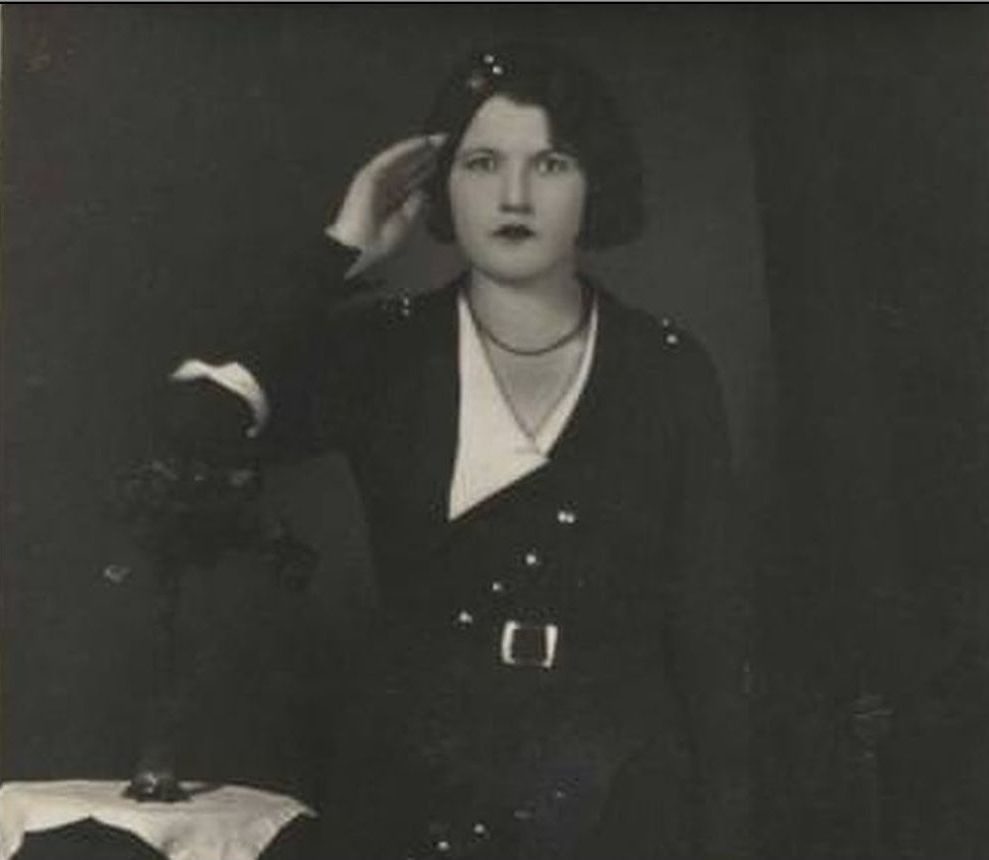
Otýlie Vranská was twenty-two, six months into a new life in Prague, when she walked out into the small hours of Friday, the first of September 1933, and did not come back. That same night two men carried two suitcases into two different Prague stations and left them on two trains, one running south to Bratislava, one running east to Košice.
I change my original statement.
Staff Sergeant-Major Josef Pěkný, opening his second statement to Dr Zdeněk Borkovec on 9 September 1933
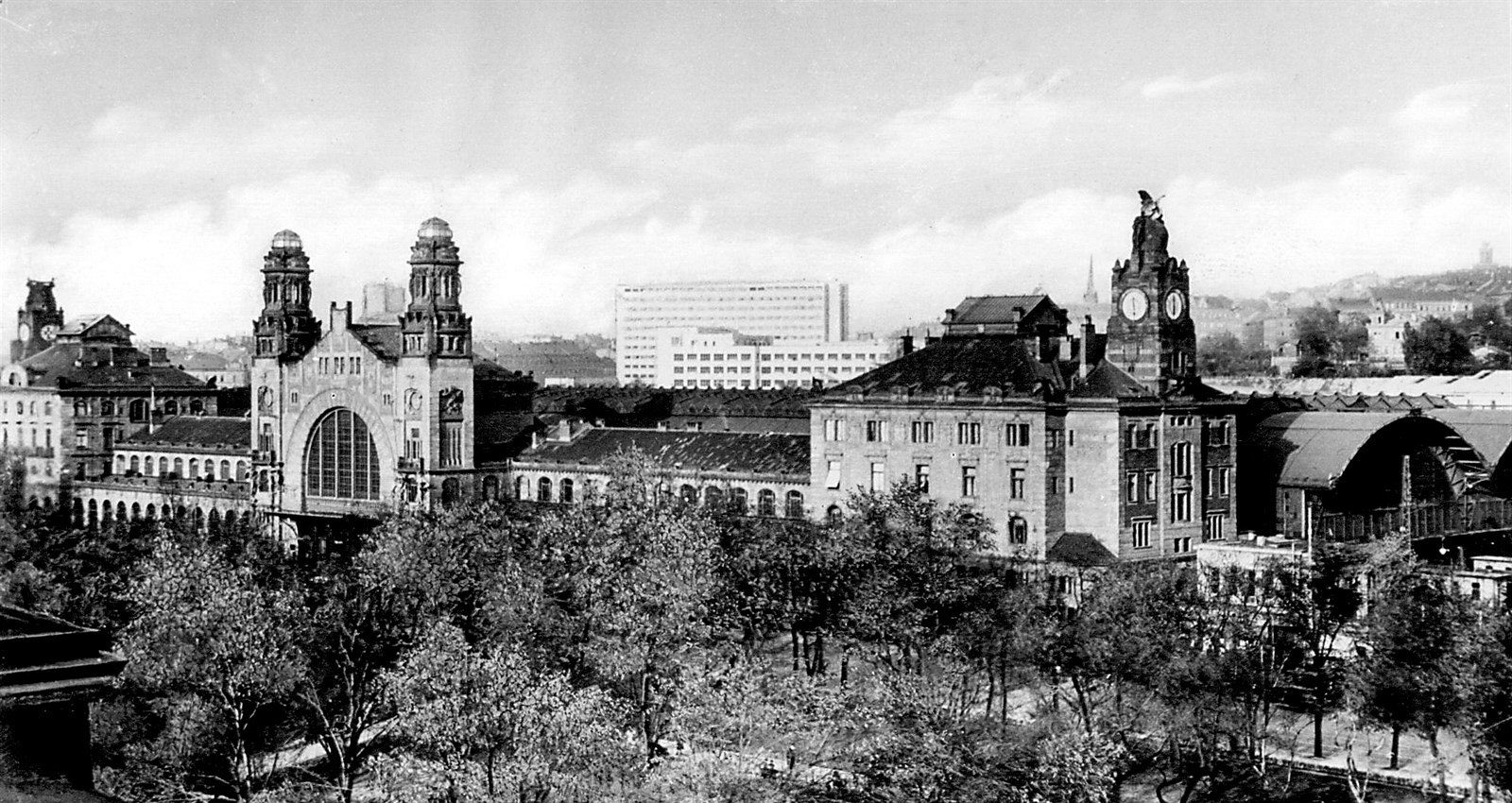
Wilson station, Prague. Unknown photographer, via Wikimedia Commons, Public domain (source)
The film
At a glance
- Period
- 1933 to 2023
- Country
- Czechoslovakia (today Czech Republic and Slovakia)
- Subject
- Otýlie Vranská, twenty-two, from Brezno in Slovakia
- Key locations
- Prague, Bratislava, Košice, Brezno, Jičín, Žilina, Lučenec
- Themes
- true crime, unsolved, cold case, otylie vranska, prague, czechoslovakia
- Status
- The Museum of the Police of the Czech Republic named Staff Sergeant-Major Josef Pěkný, with about eighty percent certainty, on 21 September 2023. Nobody was ever charged. Status as the episode left it, 28 August 2026.
- Episode
- EF-017 · 43 min · published 28 August 2026
Case overview
By Saturday morning both cases had been opened, and the Czechoslovak police had the case that would follow them for the rest of the century.
What followed was an investigation run in the middle of a newspaper war: three mothers who each said the face was their daughter's, thousands of denunciations from a city that was certain it knew, and a run of letters to a Prague afternoon paper signed by someone calling himself the Phantom of the Street. Then the case went quiet for ninety years. In 2023 a team at the Museum of the Police of the Czech Republic carried the cartons out of storage and read the whole file again, from the first page. This is the full story, told in English for the first time.
Twenty percent is the honest remainder, and the Museum names it. A woman's hair in the dead woman's hand that belongs to nobody in the file. A tall curly-haired blond who bought her an apple after midnight and was never identified, though the detectives' shorthand notes, still being deciphered, mention a gold tooth. Two witnesses who saw two different men carry two suitcases, and a theory, not a proof, about who those men were. The sergeant was never charged with anything. He died out in the country, and his daughter did not want the question asked.
Timeline
Otýlie Vranská was born in March 1911 in Brezno, where her father, a railwayman by trade, later worked for the town in his retirement, and where her mother raised three daughters and a son on very little.
Otýlie ran away from home at eleven. The authorities put her in a reform school at Jičín, in Bohemia, for two years. The one thing everyone later agreed she took from it was the language: she came out speaking Czech without a trace of Slovak, and she spoke Hungarian as well, which mattered in the towns along the Hron. She went into service in Žilina.
On the fourth of February 1926 a woman called Anna Kočová, a widow from Žižkov the street knew as Nanda the Gypsy, was found strangled with her own underwear on the drill ground at the Invalidovna in Karlín. A year later, on the first of February 1927, Růžena Petrová was found strangled with a belt on a rubbish dump beside the night shelter for the homeless in Vysočany, on the industrial edge of the city. On the sixteenth of July 1929 a dancer from the Babylon bar, Jana Janotová, called Red Žanda, got into a car on Příkopy with a man in a white coat and vanished.
Two mushroom pickers found her a fortnight later in the woods near Všenory, laid out on a stretcher of birch branches. The papers added other names, and counted that five of the seven women were Slovaks, and wrote of a yearly cycle. In December 1932, around Bratislava, a chambermaid named Anna Fibiová had been cut up and thrown from trains, and her head was found in April 1933.
In October 1929 she had been detained in the Slovak town of Kysucké Nové Mesto for vagrancy and prostitution, and fingerprinted.
The prints matched the dead woman's fingers. That record, and the word in it, would follow her through everything that came after.
Related documentsShe arrived in Prague on the first of March 1933, in the worst year the young republic had known. Czechoslovakia between the wars was the most industrial country in central Europe, and the Depression had reached it late and hard.
That year three quarters of a million people were out of work, families lived in shanty colonies on the edges of the city, and a servant girl from Slovakia had to take what she could find. Two of her sisters were already in Prague. One was married and lived in Balbínova street, in Vinohrady, and Otýlie slept there the first weeks. The other was in service in Klimentská street.
Related documentsOn the seventh and eighth of August the two of them quit. They took a room together at number twelve, Velehradská street, in the flat of an older landlady, and by the end of the month they owed her the rent.
She found a place in a lady's household in Revoluční street and kept it two and a half months. Then six weeks of nothing. Then, from July, a job as a maid at a restaurant in Vinohrady, U Kadeřábka, where she worked beside a woman three years older, Božena Velingerová, whom the police would later describe as the decisive influence on her.
On Thursday, the thirty-first of August, her landlady cooked plum dumplings at midday and gave her a warning with them. The landlady told her: if you mean to come home after midnight, do not come home at all. Otýlie told her landlady where she was going. She was meeting a sergeant, she said, who had promised to marry her and to get her a job in the army laundry. She put on a dark green dress.
At eight that evening she was in the Koruna passage at the foot of Wenceslas Square, with Velingerová, and a street photographer took the last picture of her alive, laughing among acquaintances. The sergeant arrived in uniform, and he was not alone. On his arm was a Slovak woman Otýlie knew from Žilina, Antonie Koklesová, a woman of the streets with two years of schooling, who signed her name Antony. There was a quarrel, Velingerová said later, and then the three of them went to a tavern in Štěpánská street, U Kupců, and stayed until eleven.
Related documentsAt midnight the three of them stood by the dairy kiosk on Karlovo náměstí and parted. The sergeant and Koklesová went to his flat in Michle, in the south of the city. Otýlie walked to a tavern in Křemencova street whose name translates as At the Political Corpse, U politické mrtvoly, where a Slovak band led by a man called Čonka played and she could talk Hungarian with him.
A tall, curly-haired blond man who came there on weekdays, always with a different girl, and who had already taken her there twice, bought her a glass of muscat wine. After midnight she wanted fruit, and he sent the food-runner for an apple and lent her his knife. She ate half of it and left the rest on the plate.
Some time after one in the morning a witness saw her on the corner of Melantrichova street, looking in through the door of the dance hall at U Šmelhausů, the witness said, as if she were searching for someone. The blond was not with her. Nothing after that.
She would never come back to Velehradská street, and her landlady never saw the rent.
On Friday, the first of September 1933, a student stood on a platform at Prague's Wilson station, waiting for the nine o'clock night express to the far east of the country. He watched a stocky man in light clothes heave a suitcase onto the rack of a third-class compartment and walk away without it. An hour later, at Masaryk station across the city, a postal clerk saw a man of about forty in a soft hat leave a brown suitcase by the turnstiles, come back for it, and carry it onto the ten o'clock train to Bratislava.
Related documentsBy Saturday morning both suitcases had been opened. The brown one, at Bratislava, held a woman's head and legs wrapped in bedding. At Košice the last two carriages of the express had been uncoupled by chance, and a railwayman found the second case in one of them. Together they weighed more than seventy kilos. Nobody in either city knew whose body it was.
The case found at Košice was pigskin, seventy by forty by twenty-two centimetres, hand-stitched, worth about a hundred and thirty crowns, with two brass locks. The case found at Bratislava was cheaper, dark brown vulcanised fibre, a little smaller, with two nickel locks. Both had the same English patent locks, a design registered in 1930. Both had been repaired, badly, more than once. Inside were newspapers of several different dates, a man's underwear, a woman's slip, a sponge, and a magazine called Proud with two marriage advertisements placed by women, both of whom the police traced, both alive.
Related documentsThe remains were brought to Prague, washed, and photographed, and on the Monday the police did something the city had never seen. In the shop window of police headquarters, at number four, Bartolomějská street, the building every Prague policeman called the Four, they put the photograph of the dead woman's face, the two suitcases, and the underwear that had been packed in with her, and they asked the city who she was.
The papers printed the photograph on their front pages. Crowds stood in Bartolomějská street all day. Within a week about seven hundred letters had come in, and after that they came by the dozen every day. The police did something else with them: on the Monday morning they put the cases and the bedding on public show at headquarters, and thousands came to look.
Related documentsOn Wednesday evening, the sixth of September, two young women from a mining town in Slovakia came to the Four and said a name. On Thursday morning the photograph came out of the window. The name was Otýlie Vranská. She was twenty-two, from Brezno, on the Hron river in central Slovakia, and she had been in Prague for six months.
Three mothers said the face was their daughter's. A woman from Olomouc named her daughter Jarmila, who was alive. A mother from Slatiňany wept over the window and said the dead girl was her Marie, twenty-one years old, and detectives took her by train to Pardubice, where they found Marie alive, feeding chickens, and the mother wept again. A third girl, from Olomouc, was recognised by her mother, by a friend, and by her own fiancé, and she was alive too. Her sisters recognised her, but it was the police who put the name on the file, and they did it with her own hands.
Related documentsThey found him through a witness who knew him by sight and not by name. Detectives walked her from barracks to barracks across Prague, and at the Karlín barracks the units were paraded in front of her, and she picked him out of the ranks. On the morning of the eighth of September the police had their man.
The man she picked out was Josef Pěkný, a staff sergeant-major in charge of stores and accounts at Karlín. He was thirty-nine, born in Michle, a fitter by trade, and a decorated veteran of the Czechoslovak Legion, the Czech and Slovak prisoners of war who had changed sides in Russia and fought their way across Siberia to come home. He was divorced, with a son, and he lived in Michle, in Táborská street, with his new companion, Antonie Koklesová.
Related documentsOn the eighth of September Dr Borkovec questioned him and Koklesová separately, and their accounts of what happened after the dairy kiosk on Karlovo náměstí did not agree. One said they took the tram to Michle. The other said they walked. The next day the sergeant came back to Dr Borkovec of his own accord and gave a second statement. It begins with the words: I change my original statement. The new version matched hers.
He added something nobody had asked him. At half past five on the afternoon of the first of September, he said, he had given notice to his landlord, a man named Doležal, and from half past eight that evening he had been out looking for new lodgings. Those were the hours in which two men carried two suitcases into two Prague stations. The alibi came from the woman who had shared his evening, and the headline in Venkov read: the sergeant's alibi given by a friend of Vranská's. The police did not search the flat in Michle. Nobody checked whether he moved out.
Related documentsOn the twelfth of September the Prague afternoon paper Polední list printed a letter. Its writer signed himself the Phantom of the Street, and he said he had killed Otýlie Vranská. He had first written to the criminal police, on paper hatched with pencil lines, and when the police kept it quiet he had written to the paper.
The letters kept coming, and the paper kept printing them. The police announced that one of his letters carried a fingerprint, and that every registered prostitute in Prague would now be fingerprinted for her own protection. The Phantom wrote back that it was pointless. He always wore gloves, he said, and he would cut the fingers off his next victim and pour acid over her head. Some of the letters he delivered to the newsroom by hand. A psychologist consulted by the paper concluded that the writer certainly owned a writing desk.
Related documentsOtýlie Vranská was buried on the fifteenth of September 1933, early in the morning, in the common grave of the poor at the Olšany cemeteries, in a plain black coffin donated by a burial society for the destitute. Venkov reported that three people followed her to the grave: her mother and two sisters. The public had not been told, and there was nobody else in the cemetery.
The grave was chosen, the paper added, so that she could be exhumed at any time, if the case required it. It never did.
A medium named Delfina Pop wrote to Councillor Vaňásek that she knew the killer, and was sent away. A swindler named Glaser was picked up at Břeclav, on the Austrian border, with suitcase keys in his pocket and no suitcases, and two railwaymen identified him as the man at the station. He could prove that on the night of the first of September he had been in Jihlava, a town more than a hundred kilometres from Prague, and the railwaymen were wrong.
For a few days at the end of September the Moravian papers had the gendarmes closing a ring around a gang of degenerates who had used the girl and disposed of her. A Hungarian named Kiss confessed, to a different murder, and was excluded. A suitcase repairer who had fitted those English locks was appealed to, and never came forward. On the second of November a Prague paper sold an extra edition announcing the murderer's arrest, and there had been no arrest. In October the Austrian papers printed something else: that the Prague police had identified the murderer and were keeping him under observation, without naming him and without arresting him. They did not say who.
Related documentsThe police registration slips of the city and the personnel file of the army both record where Josef Pěkný lived: at Táborská street in Michle from 1931 until 1934. He did not move out that autumn. He moved four years later, married again in 1935, had a child, and left Prague with his family in 1939.
The hours he had accounted for with a flat hunt were the hours the suitcases went into the trains, and the Museum's director says it plainly: he lied, and he lied in the one direction that would keep him away from two railway stations.
Related documentsIn 1951 Prague had the case again, or thought it did. A woman named Herta Černínová was killed and cut up the same way: the head packed with the limbs, the torso apart, seven stab wounds to the chest. Her suitcase was found at a weir on the Vltava. The new socialist police, under a chief criminal inspector named Miloslav Nečásek and a Prague chief named Kalivoda, had the killer in days, a young man called Šmíd.
Nobody asked him why he had copied the murder of 1933. He had been sixteen at the time. Kalivoda then wrote an essay for the police journal explaining that the bourgeois police of the First Republic could never have solved the Vranská case, while a socialist team, working together, had solved Černínová in twenty-four hours. In 1966, near the end of his career, he admitted in print that he would never crack it either.
The letters did not stop when the papers did. They came through the thirties, through the occupation, through the coup of 1948 and the years after it, and the Police Museum counts more than five thousand of them in the file, the last dated 1966.
In the sixties a man who signed himself comrade Durda, of the Tatra works in Smíchov, denounced a famous surgeon, Professor Arnold Jirásek, a friend of President Masaryk, dead a year, as the killer who had confessed in his will. The police obtained a certified copy of the will. The professor had left his library to the nation, and there was not a word in it about Otýlie Vranská. Comrade Durda, the file noted, was sleeping with a distant relative of the professor's.
In 1978 state television put it on the screen. The police series of the decade, thirty cases of Major Zeman, one for each year of the regime, gave its fifteenth episode the 1951 murder. On the desk of its fictional detective it placed the real file, labelled Vražda Vranské, the murder of Vranská, so that he could read the older case while he solved the new one.
The real file waited in a cabinet. The people who had read it were dead.
Radek Galaš, the Museum's director, and a team from the Museum began reading the file in 2017, and they did what the 1933 police could not. They sent the hairs for DNA analysis, to a specialist outside the interior ministry, so that nobody could say the Museum had produced its own result, and had the work checked again in the United States.
Covid put a year into the waiting. To compare the hairs with anyone, they needed living relatives of the people in the file, and they went looking for the descendants of the two people who had shared Otýlie's last evening: the sergeant and Antonie Koklesová. The sergeant's daughter, when they found her, said no.
Related documentsNo match. The hair in Otýlie's hand was not Antonie Koklesová's, and it was not her own, and after ninety years in an envelope the Museum could not rule out that it had come from a policeman's wife, or a laundress, or nobody who mattered at all. The one physical trace in the file led nowhere. What the file had instead was paper, and one sheet of it had never been read.
The original protocol, written by Professor Hájek and his assistant Dr Vlk in the week the body arrived, had never left the Institute of Forensic Medicine in Studničkova street, and in the file there was only the digest of it. The Museum's team went to the institute and found the original, and it said something the summary had not. She had died of a single deep cut to the throat, made from behind, with her head pulled back, a cut the protocol's readers at the Museum could only call almost military. The weapon that fitted the wounds was a heavy blade with weight behind it, a sabre, for instance, of the kind a sergeant of the period carried.
Related documentsOn the twenty-first of September 2023, ninety years to the month, Galaš presented the chain in the Museum's lecture hall, beside the two suitcases. With about eighty percent certainty, the team said, the killer of Otýlie Vranská was Staff Sergeant-Major Josef Pěkný, very probably with Antonie Koklesová present, in the flat in Michle, in the early hours of the first of September 1933.
The evidence was indirect, Galaš said, a chain of it, but a jury court of the day would have tried him on it. The city had hunted a surgeon; the wound was a soldier's.
Related documents
Key locations
Full mapDocuments and evidence
Sources
- Archive
Museum of the Police of the Czech Republic: the case file and the Museum's 2023 review of it Muzeum Policie České republiky, Prague.
Case exhibits, documents and the slides of the Museum's lecture of 21 September 2023, shown via Badatelé, Tajemno a záhady and Pražský deník (photographs Petr Holakovský).
- Archive
Archiv hlavního města Prahy: the Michle parish register of 1894 Archive of the City of Prague, matrika MCH N49 (Michle, births 1893 to 1894), scan 188, entry 108, 1894.
The police registration slips of the city and the personnel file of the army both record where Josef Pěkný lived: at Táborská street in Michle from 1931 until 1934.
- Archive
Čs. obec legionářská / VÚA-VHA Praha: legion record 91289 Československá obec legionářská, with data of the Military Central Archive, Prague.
His army file, which the Police Museum would read ninety years later, told the rest: taken prisoner in the Carpathians in April 1915, enrolled in the legion in 1916, the first battle at Zborov, Bachmač, Tarnopol, guard duty along the Trans-Siberian railway, a machine-gun company, and a spell as a scout.
- Archive
Period press pages shown as published, 1926 to 1938 Arcanum Digitheca (ADT) and the Museum's file.
The Prague, Brno, Bratislava and Košice press of 1933.
- Newspaper
Polední list 12 September 1933.
On the twelfth of September the Prague afternoon paper Polední list printed a letter. Its writer signed himself the Phantom of the Street, and he said he had killed Otýlie Vranská.
- Newspaper
Venkov 9 and 17 September 1933.
The next day's Venkov gave his explanation. / Venkov reported that three people followed her to the grave: her mother and two sisters.
- Newspaper
Nedělní list 1933.
Nedelni list: the funeral at Olsany.
- Newspaper
Národní listy 1926.
Narodni listy, 1926: the Kocova murder.
- Newspaper
Večerní České slovo 1933.
A newspaper's idea of the Phantom, 1933.
- Newspaper
Pražský list 6 September 1933.
Prazsky list, 6 September 1933: 'The man who saw the murderer'.
- Newspaper
Moravskoslezský deník 29 September 1933.
For a few days at the end of September the Moravian papers had the gendarmes closing a ring around a gang of degenerates who had used the girl and disposed of her.
- Newspaper
Prager Tagblatt 17 November 1933.
In the middle of November a man telephoned Dr Borkovec at the Four and said, in German: but you will not get me.
- Newspaper
Salzburger Volksblatt October 1933.
In October the Austrian papers printed something else: that the Prague police had identified the murderer and were keeping him under observation, without naming him and without arresting him.
- Newspaper
Slovák 1933.
- Newspaper
Slovenský východ 1933.
- Newspaper
Pražský deník 2023.
The Museum's case exhibits, documents and lecture slides, photographed at the Museum in 2023.
- Documentary
Badatelé, 2023, including archive material filmed at the Museum of the Police of the Czech Republic 2023.
In 2023 a team at the Museum of the Police of the Czech Republic carried the cartons out of storage and read the whole file again, from the first page.
- Documentary
Period police photographs of the case, filmed at the Museum of the Police of the Czech Republic.
- Documentary
Neobjasnená smrť kurtizány 2006.
- Documentary
30 případů majora Zemana, episode 15 Kvadratura ženy 1978.
On the desk of its fictional detective it placed the real file, labelled Vražda Vranské, the murder of Vranská, so that he could read the older case while he solved the new one.
- Documentary
Kolem světa s čs. legionáři 1920.
- Documentary
Žijeme v Praze 1934.
- Documentary
Praha 1933 1933.
- Documentary
Předválečná Praha 1935 1935.
What remains unresolved
- Who was she, and who had done this to her?
- Which of them carried the suitcases to the trains?
Related files
 The Masaryk FileThe same pathologist: Professor František Hájek, who examined the Vranská remains in 1933, later performed the autopsy on the foreign minister found dead under a window in 1948.
 He Was in a Cell When the Shots Were Fired: The Babice CaseAlso in Prague
 4 Men Who Never Arrived: The Strangest Disappearances of Eastern EuropeShared theme: cold case
 The Culianu CaseShared theme: cold case