Case fileEF-004Sofia, 1981
The Sealed Death of the Dictator's Daughter
In 1981, Lyudmila Zhivkova, the daughter of Bulgaria's communist dictator, his minister of culture and presumed heir, was found dead in her bath at 38. The official cause was a brain hemorrhage, but the autopsy was sealed, the doctors silenced, her body cremated, and the medical panel was chaired by her own uncle.
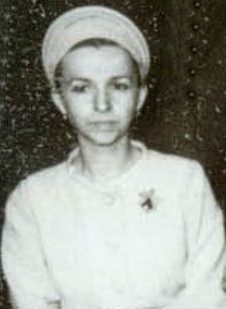
think of me as fire
Lyudmila Zhivkova, the saying she repeated to the very end
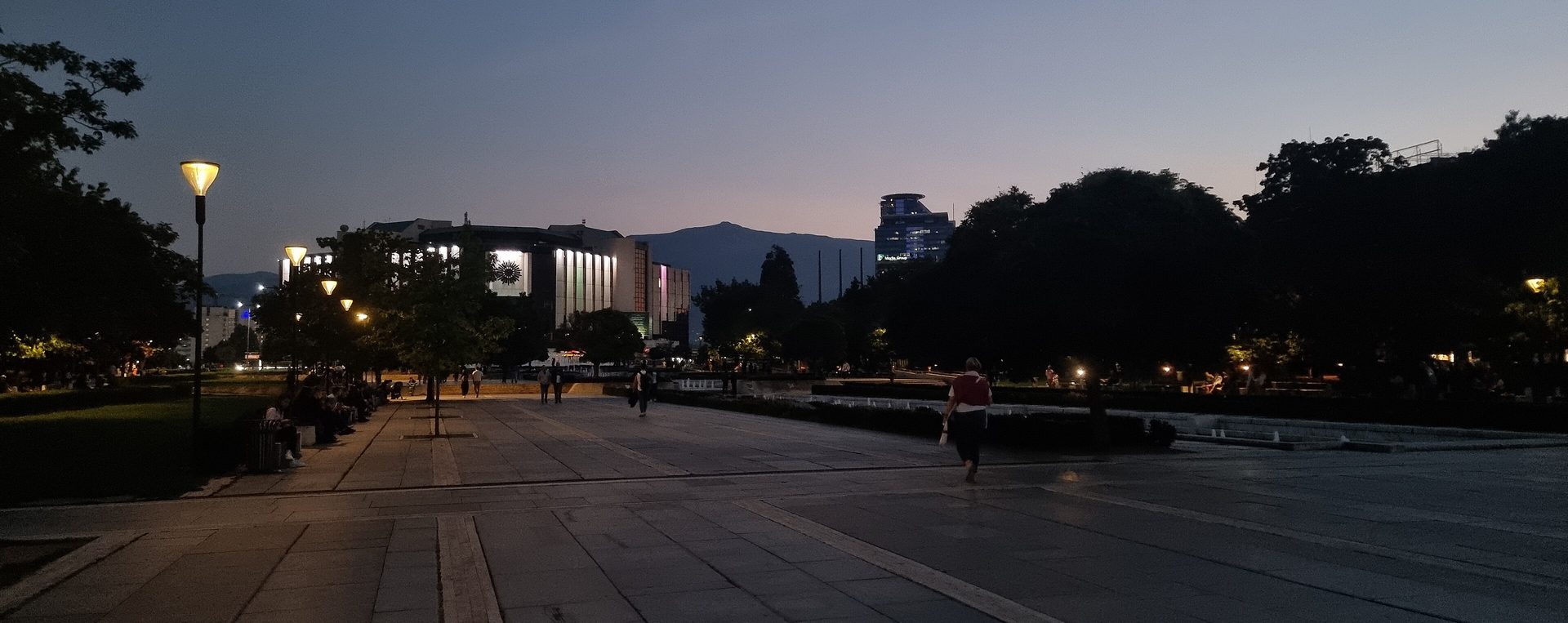
The National Palace of Culture in Sofia. SPARKY358, via Wikimedia Commons, CC0 (source)
The film
At a glance
- Period
- 1942 to 2025
- Countries
- People's Republic of Bulgaria (today Bulgaria), the Soviet Union (today Russia), United Kingdom
- Subject
- Lyudmila Zhivkova, minister of culture of Bulgaria
- Key locations
- Sofia, Borovets, Petrich, Moscow, Oxford
- Themes
- Lyudmila Zhivkova, Todor Zhivkov, Bulgaria, communist, true crime, cold war
- Episode
- EF-004 · 32 min · published 13 June 2026
Case overview
Decades later the one pathologist who ever spoke said there was no stroke at all, that she had drowned. This is the story of a death the state made unknowable, and of the strange, fire-obsessed woman at its center.
So when you hear the story of the dictator's daughter who died in her bath, hold on to the line between what is known and what was made unknowable. Her life is vivid and beyond dispute: the turban, the oracle, the fire, the enemies. Her death comes down to this: the man who examined her body said she drowned, the state said otherwise, and the proof was sealed away. The one thing a family and a country had every right to know, the people who knew made certain no one ever would, burning the answer along with the woman who said: think of me as fire.
Timeline
Her name was Lyudmila Zhivkova, and she was born in 1942.
For most of her childhood she was simply the great survivor's bookish daughter, a serious student of history who went on to study at Moscow, and then, remarkably for the child of a communist ruler, at Oxford.
In 1971, her mother died. And from that point, the daughter's rise was almost vertical.
Within four years she was minister of culture. Within eight she sat on the Politburo, the small circle of men who ran the country, one of only two women ever admitted to it. She controlled the arts, education, the nation's entire cultural life, and she filled its institutions with her own people.
Related documentsThe woman at the center of all this power lived, in private, like an ascetic.
She was a strict vegetarian who had wasted to barely a hundred pounds. She practiced yoga, rejected most conventional medicine, and gathered around her, on Friday evenings in her Sofia apartment, a salon of painters and poets and scholars, a pocket of strange, half-permitted freedom in a country that allowed very little of it.
Related documentsForeign diplomats and Bulgarian intellectuals alike began to assume the obvious: that Todor Zhivkov was grooming his daughter to one day take his place.
Asked directly whether she would succeed her father, she gave an answer that was remembered for years afterward. Everything, she said, comes to the one who waits. And I am very patient.
Related documentsIn the autumn of 1973, her government car was destroyed in a collision on the road. She was hurrying to see her father off at the airport.
What is not in dispute is that the injury was severe. Her secretary, years later, described a centimeter of skull chipped away, lacerations across her face, a nerve behind the eye that never fully recovered. For days, it was not certain she would live.
She turned away from the state's doctors and toward folk healers and herbal remedies. And she began making pilgrimages to the south of the country, to a blind woman named Vanga.
From a small house in the town of Petrich she became the most famous oracle the Eastern bloc would ever produce, and those who climbed her hill to ask her their questions ranged from grieving village mothers to generals and government ministers.
Related documentsIn 1978 she declared an official Year of Roerich, complete with exhibitions and a commemorative stamp, honoring the very man Moscow had spent decades trying to bury.
He was also, in the eyes of the Soviet Union, an anti-communist émigré whose mystical teachings were banned outright.
Related documentsShe appeared in public in a turban and flowing white, and schools across the country hung portraits of her dressed in white, surrounded by the children of the world.
Her favorite saying, the one she repeated to the very end, was an instruction for how to remember her: think of me as fire. Clad in the fire of the indestructible, she told an audience of primary school children, may consciousness embrace the infinity of the cosmos, where the vibration of electrons fills the iridescent spheres with their harmony and rhythm.
Related documentsInside her father's own party, the old guard had begun to complain to him directly that his daughter had deviated from Marxism, that she had fallen into mysticism, that she was building something perilously close to a cult of personality.
The British historian R.J. Crampton records that she is said to have remarked, in private, that the Bulgarians had made a terrible historical mistake when they aligned themselves with what she called the most uncivilized country in the world. She meant the Soviet Union.
According to a later investigation by the Bulgarian journalist Bogdana Lazarova, Zhivkova had come to understand that powerful men inside the Party and the security services were looting the country's archaeological treasures for private profit, and she set out to bring that trade under state control, creating an agency to track where the nation's heritage was going.
In practice, Lazarova writes, it struck at the interests of nearly every bureau of the secret services that had been feeding on that trade, and at the highest echelons of the Party. In trying to stop the looting, the investigation concluded, she made even more enemies for herself. By the start of 1981, the woman who would inherit Bulgaria had set herself against Moscow, against the old guard of her father's party, and against the secret police.
Related documentsIn 1981 the country would mark thirteen hundred years since the founding of its first state, and she built the celebration into something close to a national reawakening.
She drove the construction of an enormous National Palace of Culture in the heart of Sofia, a project meant to take twelve years, finished in about four, and at first it bore her name. She staged a great international assembly of children under that same Banner of Peace, the three-circled emblem the painter Roerich had drawn.
Related documentsShe drove herself through an exhausting final year, determined to see the great anniversary through. She traveled to India, where, at a reception in Delhi, she fainted. She went on to Mexico, and there she became so ill that a government plane was dispatched to carry her home.
The archaeologist Alexander Fol, one of her closest collaborators, was among those who later said she spoke, in her final weeks, as though she knew the end was near.
In the first weeks of July she withdrew to a government residence at the mountain resort of Borovets, and shut herself away.
Friends from this period describe a woman who seemed to be wasting away, paler and thinner even than her severe diet could explain.
Related documentsHer personal archive was being destroyed. The tape recordings of her many private conversations with the oracle Vanga, hours of a dictator's daughter speaking with a woman who claimed to see the future, were being erased.
To this day no one has said, on the record, who gave that order.
Related documentsShe was found in the water. A maid discovered the body and ran for her bodyguard, a man named Dimitar Murdzhev, who telephoned her father.
Todor Zhivkov came at once; the doctors already on the scene told the most powerful man in Bulgaria that he should not go into the room, and he listened to them, and he left. His daughter was thirty-eight years old.
A medical commission was convened to rule on the cause of death, and it concluded that she had died of a cerebral hemorrhage, a catastrophic bleed in the brain.
There was only one difficulty with it, and it was this: the man who chaired that commission, Professor Atanas Maleev, was Lyudmila Zhivkova's own uncle, her dead mother's brother. The verdict on how the dictator's daughter died was delivered, in other words, by her own family.
The full autopsy report was classified as a state secret and never released, not under communism, and not in the decades of freedom that followed. The doctors who had handled her body were instructed to say nothing.
Her body was cremated, which meant that no one would ever be able to examine it again. Even the timeline dissolved into contradiction: the national radio announced her death at midday, while the official certificate recorded the hour of death as two o'clock that morning, and the bodyguard's own account places the discovery later still.
Related documentsIn the summer of 1981, more than a hundred thousand people filled the streets of Sofia to bury a woman of thirty-eight.
In the entire history of modern Bulgaria, only three funerals had ever drawn a crowd like it. One was for a king. One was for the founder of the communist state. And the third was for her, the dictator's daughter, who had spent the last years of her life telling anyone who would listen to think of her, when she was gone, as fire.
Related documentsWithin months of her death, her father moved against everything she had built. Her protégés were stripped of their positions, one by one, and most never returned. Her name was taken down from the great palace of culture she had willed into being.
The secret proceedings against the circle of officials around her cultural projects, men who had been her allies, opened that very year and ground on, through convictions and quiet releases, for more than two decades.
Related documentsHis name was Professor Sivcho Sivchev, and he was the pathologist who had performed the autopsy on Lyudmila Zhivkova's body. But late in his life, in his only interview on the subject, he agreed to clear away at least some of the myths, and what he said did not match the official story at all.
Sivchev said plainly that he had found no such thing. There was no stroke, he said. What there was, was water. She had lost consciousness, he said, in the bath itself, and died there. There was water in her lungs. Asked for the immediate cause of death, the pathologist gave a single word. Drowning.
Related documentsOn the twenty-first of July, 2025, the anniversary of his mother's death, to the very day, Todor Slavkov took his own life.
Lyudmila Zhivkova had a son, Todor Slavkov, who bore the same name as the dictator himself. He was a boy when his mother died, and he grew up in the long shadow of her name and her unanswered death. The records note the date and say very little else.
Key locations
Full mapDocuments and evidence
Sources
- Web
От какво е починала Людмила Живкова? Патоанатомът разкрива... Fakti.bg, Sofia, 22 July 2021.
The pathologist's only interview on the subject: no stroke, water in the lungs, and a single word for the immediate cause of death.
- Newspaper
'Think of me as fire': the strange life and death of Lyudmila Zhivkova The Sofia Echo, Sofia, 4 February 2011.
The profile that carries the remark the British historian R.J. Crampton records, that the Bulgarians had made a terrible historical mistake when they aligned themselves with what she called the most uncivilized country in the world.
- Web
Illegal Antiques Channels and Lyudmila Zhivkova's Role, Part I Novinite.com, Sofia News Agency.
According to a later investigation by the Bulgarian journalist Bogdana Lazarova, Zhivkova had come to understand that powerful men inside the Party and the security services were looting the country's archaeological treasures for private profit.
- Web
Illegal Antiques' Channels and Lyudmila Zhivkova's Role Part II Novinite.com, Sofia News Agency.
The second instalment of the investigation into the state organised trade in antiquities and the agency she created to track where the nation's heritage was going.
- Web
Illegal Antiques' Channels and Lyudmila Zhivkova's Role, Part V Novinite.com, Sofia News Agency.
In practice, Lazarova writes, it struck at the interests of nearly every bureau of the secret services that had been feeding on that trade, and at the highest echelons of the Party.
- Book
Affair 2007.
The book in which the investigation into the antiquities trade was published, by the Darik Radio crime reporter and her colleague.
- Documentary
Последните седем години от живота на Людмила Живкова Bulgarian National Television, 2005.
The densest period footage of her: the palace of culture, the Banner of Peace, the podium, the archive shelves and the typed decision ordering a trial behind closed doors.
- Documentary
Феномен Bulgarian National Television, 1976.
The 1976 documentary on the oracle, the only film of Vanga the case could find.
- Documentary
Archival film of the funeral in Sofia, 1981 Bulgarian National Television, 1981.
In the summer of 1981, more than a hundred thousand people filled the streets of Sofia to bury a woman of thirty-eight.
- Documentary
Archival film of the 1979 visit to the United Nations Bulgarian National Television, 1979.
Newsreel of the 1979 visit, used in the episode for the world stage beats.
- Archive
Nova Broadcasting Group archival footage Nova Broadcasting Group.
Archival footage (excerpts, used as fair-use commentary): Bulgarian National Television (BNT) and Nova Broadcasting Group.
- Archive
The episode's photographs of people, places, monuments and objects are Creative Commons and public domain files from Wikimedia Commons, credited author by author in the published description.
- Archive
Bulgarian Archives State Agency
Public-domain images: Nicholas Roerich; Bulgarian Archives State Agency; and others.
What remains unresolved
- So what happened in that water?
- Why would a natural death need to disappear at all?
- What do you think really happened in that bath?