Case fileEF-006Katowice, 1964
He Never Confessed: The Vampire Trial That Hanged Two Brothers
For six years a killer stalked the coal towns of southern Poland, striking women from behind at dawn and dusk. Fourteen died.
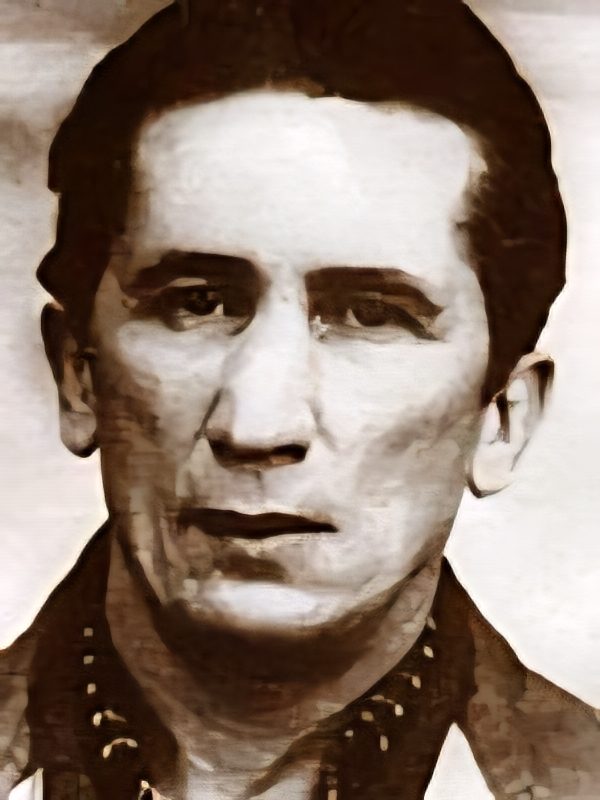
Well, I suppose so.
Zdzislaw Marchwicki, asked by the judge whether he was a murderer, Katowice, 1975
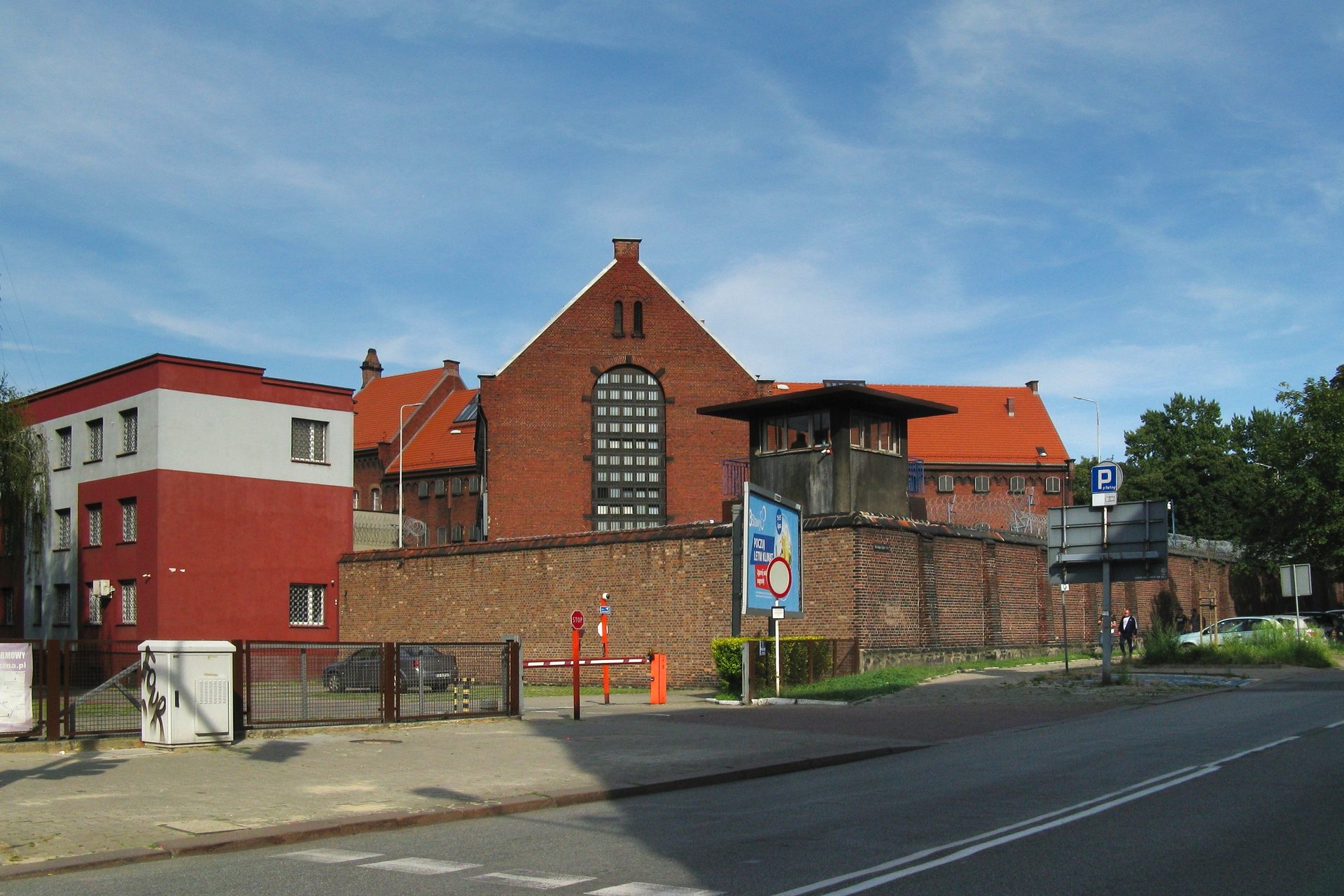
Katowice Detention Center. Adrian Tync, CC BY-SA 4.0 (source)
The film
At a glance
- Period
- 1964 to 1977
- Country
- communist Poland (today Poland)
- Subject
- Zdzislaw Marchwicki, the coal mine laborer hanged as the Vampire of Zaglebie
- Key locations
- Katowice, Będzin, Siemianowice, Sosnowiec, Tarnowskie Góry, Warsaw
- Themes
- Zdzislaw Marchwicki, Vampire of Zaglebie, Wampir z Zaglebia, Poland, communist Poland, true crime
- Episode
- EF-006 · 40 min · published 27 June 2026
Case overview
The press called him the Vampire of Zaglebie, and when a girl carrying the most powerful surname in Silesia was pulled from the river, the manhunt became the largest in the history of communist Poland: a million-zloty reward, a hundred policewomen as bait, a catalog of five hundred traits checked door to door. The man they finally hanged for it, a coal-mine worker arrested on a domestic complaint, never truly confessed. Pressed by the judge to say whether he was a murderer, he answered: well, I suppose so. His brother was hanged half an hour after him, in a garage, and Poland buried them at night in graves marked with no names. What the audience at their factory-hall show trial was never told: the fingerprints didn't match, the American profiler's report was locked away, the doubting officers were purged, and a man who had confessed to the murders had burned himself alive in his villa ten days after the killings stopped, forever. This is the story of the Vampire of Zaglebie, and of the question Poland still cannot answer: who really died in that garage?
In the cemetery at Panewniki, in Katowice, the burial book for the twenty-sixth of April 1977 records graves thirty-nine and forty, ordered dug for eight in the evening, filled by ten, paid for by the state. Where the names belong, the clerk wrote two letters: N.N. Person unknown. Today the cemetery office cannot say where that quarter of graves even was; it disappeared in a reorganization years later. The state hanged two men with absolute certainty, then buried them as men it could not identify, at night, in silence, with not a word in any newspaper. Certainty does not usually behave like that. The question the state was so anxious to bury is the one Poland still asks: who, really, was the Vampire of Zaglebie? And the answer lies in two graves that nobody can find.
Timeline
On the seventh of November 1964, beside a railway embankment on the edge of Katowice, a woman named Anna Mycek is found dead. She is fifty-eight. She has been struck on the back of the head with something blunt and heavy, and left where she fell. Her shopping has been gone through.
The militia, the police of communist Poland, did what police forces everywhere do first: they looked at the husband. He was arrested, and he sat in a cell for half a year while the case against him quietly fell apart. Then they let him go, because he had killed no one. He is the first man in this story to be locked up for the Vampire's work, and he will not be the last. The file on Anna Mycek went back on the shelf, unsolved.
Related documentsIn March 1965, in Bedzin, a thirty-four-year-old named Lidia Nowacka was killed late on a Wednesday night. The same blow, the same ransacked bag. In May, a woman in Grodziec survived an attack that left her gravely injured. In July there was another murder, and now the militia laid the files side by side and saw it: the same hand.
The blows always came from behind, to the back of the head, and always a little from the left, with a force that crushed bone. A special operational group was formed, and it took its codename from the first of the dead. They called it Group Anna.
Related documentsThrough 1965 the attacks came almost monthly. He hunted the hours when working women walk alone, the gray edges of the day: dawn shifts and late returns. He favored late summer. He liked Wednesdays. He never killed in winter. And the handbags were torn open, yet robbery never quite explained him. That, more than anything, was what frightened people.
The militia sent a hundred policewomen into the streets as bait, dressed as shift workers, walking the embankments at the killer's own hours. He never touched one of them. In Bedzin, in the summer of 1966, a man bolted at the sight of plainclothes officers; they chased him, passersby joined in, and by morning the whole basin was telling itself the Vampire was caught. He was a bystander who had panicked. Around this case, from the very beginning, innocent men kept almost drowning.
In October 1966, from the river Przemsza, where it runs between Bedzin and Sosnowiec, the militia recovered the body of an eighteen-year-old hairdresser, attacked like the others on her morning way. Her name was Jolanta Gierek. In Silesia, in 1966, there was no heavier surname. Edward Gierek was the First Secretary of the Party for the Katowice region, the master of Polish coal; four years later he would rule Poland itself.
The grapevine and the press called the dead girl his niece. Researchers, much later, would call the kinship distant. In October 1966 the distinction did not matter, because the name alone was enough. Within days, the case stopped being a regional file. An order from the chief of the militia in Warsaw created a national coordination team; some forty criminologists were pulled in; the hunt narrowed onto Bedzin and Dabrowa Gornicza.
Related documentsStill the killing went on, through the middle of the net. June 1967, Zofia Kawka. October 1967, Zofia Garbacz. October 1968, Jadwiga Sasiek, the woman with militia officers in her family. As late as August 1969, Irena Wladyka survived an attack in Siemianowice.
Five years of catalogs, decoys, rewards and door-to-door checks, and the women of the basin were still dying at the gray edges of the day, and the file did not hold a single name that fit.
What the state built next had no precedent in Polish police work. Criminologists assembled a catalog of the killer's probable characteristics, physical, psychological, biographical: nearly five hundred traits. Then the militia carried the catalog door to door, through every apartment in the Bedzin district, checking the men of the basin one by one against the profile of a phantom. Tens of thousands passed through the sieve; a shortlist of two hundred and fifty came out of it, and out of the shortlist, nothing.
By the end of 1968 the reward stood at one million zloty. The million did its own work: letters poured in, neighbors reporting neighbors, the odd, the solitary, the unlucky. The basin had become a region that informed on itself.
On the fourth of March 1970, in the woods at Bytkow, near the television center in Siemianowice, the Vampire killed for the last time. The victim was unlike the shift workers and shop girls of the earlier files. Doctor Jadwiga Kucianka was a scholar, a lecturer at the University of Silesia, a specialist in the literature of the region. She was struck from behind, like all the others.
Her name went into the file beside the thirteen before her. And then the file waited for the next one.
Related documentsA week after the murder, a letter with no signature, posted in the town of Tarnowskie Gory, north of Katowice, reached the militia. It said: this was already the last murder. There will be no more, and you will never catch me.
The militia had received thousands of letters in six years, confessions and accusations and ravings. This one they kept.
Related documentsOn the night of the fourteenth of March 1970, ten days after the Vampire's last murder, Piotr Olszowy killed his wife Anita, who was thirty-one, and their two children, eight and eleven. He drove four knife wounds into his own chest, poured gasoline through the rooms, and set the villa alight. The fire was noticed near six in the morning.
The bodies that came out of it were burned past the point where fingerprints could be taken, and so the one comparison that could have settled everything, his hands against the prints from the Vampire's scenes, was never possible. The regional weekly was permitted one short item, sharing a page with a carbon monoxide accident. Nothing more was ever printed.
Related documentsMarch passed. April passed. The summer of 1970 came, the season he had always favored, and no one died. From October, a traveling exhibition moved through the towns of the basin: glass cases of recovered objects, combs and purses and watches taken from the dead, hoping a visitor would recognize something. Crowds came. The thread never appeared.
A year passed, then another. The Vampire of Zaglebie had simply stopped, and in its own way that was worse. A monster in the dark is a terror. A monster who vanishes is a question with no bottom: where is he, and what is he waiting for?
The thread that ended the manhunt was not the catalog, not the million, not the American. It was a marriage. Zdzislaw Marchwicki was a forty-four-year-old laborer, a convoy escort at the Siemianowice coal mine, a man with a few grades of school, a crowded household and a long, ugly history of family rows.
His wife Maria had left him and come back more than once. In the last weeks of 1971, accounts describe her going to the militia and denouncing him, as a violent husband, and as something more. No paper trace of that denunciation survives. What survives is everything that followed it.
At the very end of 1971, the state did something almost unthinkable for a country behind the Iron Curtain: it quietly flew in an American. James A. Brussel of New York was the most famous criminal psychiatrist in the West, the man who had profiled the Mad Bomber for the New York police and consulted on the hunt for the Boston Strangler. For two days, the twenty-seventh and twenty-eighth of December 1971, he worked through the Vampire file in Poland.
The conversations were recorded on tape. Then he flew home, and his opinion was typed, translated, and locked away. What the American concluded, the public would not learn for decades, and neither would any court. At the end of 1971 the file held a portrait of the killer drawn by the best-known profiler alive, and the portrait went into a drawer.
Related documentsOn the sixth of January 1972, at seven in the morning, militiamen stopped Marchwicki in Siemianowice and took him into custody. The arrest report is a single typed page, signed by a lieutenant. The charge on it is not murder. It is the mistreatment of his family: a small, domestic charge, the kind that fills provincial dockets by the hundred.
But the man was now inside the machine. The investigators ran their new prisoner against the catalog of nearly five hundred traits the manhunt had spent years assembling. He matched fifty-six of them.
Related documentsBy the end of March, before any confession existed, the commander of Group Anna stood before journalists and presented his prisoner, not as a suspect, but as the Vampire. Crime scene photographs were passed around; film was screened. The word went out through the whole country's press: caught.
One of the case's own officers would put it simply, years later: once it was reported that the Vampire was caught, there was no backing out. In May, Zdzislaw's brothers Jan and Henryk were arrested. The case had stopped being about one man. It was becoming a family.
In May 1972, four months in, Zdzislaw Marchwicki confessed. Within a day, he took it back. He would confess and retract again, write on the protocols that it was all a lie, and more than once try to destroy the pages, even to swallow them. The confession always returned. It was the only thing the file could no longer do without.
What happened over the next two years happened out of sight, in the remand cells, and the file itself recorded the method. Interrogations at irregular hours, day and night. Informers planted in the cells, their reports going into the dossier. Encounters between the arrested relatives staged in corridors, a face shown at the right moment, a sentence let drop.
In May 1973 the prosecutor asked him to write out, in his own hand, a list of the murders he had admitted to. He wrote a column of place names. Days later he was asked to write it again, and the militia's own note, signed by Gruba himself, records what happened.
The prisoner objected that it had come out too many cases. He had meant to admit to six or eight. In Warsaw it had somehow become twelve. Now the list came out at sixteen, and he announced he would explain nothing further, because he was getting lost. The note went into the file with everything else, and the case rolled on.
Related documentsThe trial opened on the eighteenth of September 1974, and it did not open in a courtroom. The venue was the culture hall of a zinc works in Katowice, a factory stage with seats for several hundred, chosen by the provincial committee of the Party. Demand was so fierce that crowds besieged the court secretariat for passes, and the touts who normally scalped cinema tickets moved in on the trade, until the militia began checking identity cards at the door.
Thirty journalists were accredited, the stars of Warsaw court reporting among them, and a newsreel crew filmed for the cinemas. On the first morning, the judge collected his robe and chain of office and was driven to the factory in a militia van. Inside, it ran like theater. Six members and intimates of one family in the dock. Survivors were called to identify a man they had glimpsed for a second, at dawn, eight or nine years earlier; some fainted on the stand.
Related documentsThe judge asked the question directly. Is the accused a murderer? And the record gives the answer: well, from what I have heard, and what I have learned, then yes. The judge pressed once more. Not what the accused has heard. What the accused himself believes. Is the accused a murderer? And the most famous serial killer in the history of communist Poland answered the question of his own guilt with three words: well, I suppose so.
Near the end, the judge asked the man in the dock to speak about the charges: fourteen murders, six attempted. The stenographers took down what came back, and it survives in the record. I have nothing to say, Your Honor. I ask to be taken where I am supposed to go, and that is the end of it. Pressed again, he gave the sentence that contains this whole case: well, what can I say, Your Honor? A murderer has been made of me, and that is that. So I confessed to it.
Related documentsThe verdicts came on the twenty-eighth of July 1975. Zdzislaw Marchwicki: death, for fourteen murders and six attempted. Jan Marchwicki: death, and not for killing anyone with his own hands.
The prosecution's theory, built on the withdrawn statements of his former lover, held that Doctor Kucianka, the last victim, had known too much about Jan's dealings at the university, and that Jan had directed his brother to kill her. Henryk: twenty-five years, for aiding. Their sister Halina: four years. Her son Flak: four years, for handling the victims' belongings. Klimczak: twelve. The hall emptied, the appeals failed, and mercy was refused.
Related documentsThree or four weeks before the hanging, two officers of Group Anna had visited the condemned man in his cell. One of them told the story decades later. The commander, he said, had sent them with simple instructions: write it up, he will sign, and once they hang him the prosecutor will discontinue the files, and we will have our unsolved cases cleared.
The officer did not even bring a protocol. He offered the prisoner a cigarette; the prisoner took it, did not light it, set it aside. Whatever murder they named, he answered yes. It was lunchtime, and the corridor rang with the orderlies banging the lids of the dinner pots. The officer asked: and what did you kill that woman with? And Zdzislaw Marchwicki, who had said yes to everything, answered: with food. He had no idea what was being said to him, the officer recalled. He would have confirmed anything. The officer refused to attend the execution. He had become convinced the man was innocent.
And so, on the evening of the twenty-sixth of April 1977, this story arrives back at the garage. The protocol of execution lists the witnesses: a prosecutor from the trial, a captain, the warden, and a prison chaplain who held the rank of major. Colonel Jerzy Gruba attended in person; his signature appears nowhere on the document.
The record notes that Jan, before the rope, asked for a prayer, and said that he forgave everyone. Those who passed the story on preserved the rest of his sentence: that he forgave even this contemporary Nero. The men in the garage understood who was meant. The last recorded words of the condemned pointed not at his brother, and not at himself, but at the commander of the manhunt.
Related documentsIn the cemetery at Panewniki, in Katowice, the burial book for the twenty-sixth of April 1977 records graves thirty-nine and forty, ordered dug for eight in the evening, filled by ten, paid for by the state. Where the names belong, the clerk wrote two letters: N.N. Person unknown.
Today the cemetery office cannot say where that quarter of graves even was; it disappeared in a reorganization years later. The state hanged two men with absolute certainty, then buried them as men it could not identify, at night, in silence, with not a word in any newspaper. Certainty does not usually behave like that.
The state told the story once more, on film. In 1981 a feature called Anna and the Vampire reached the cinemas: the militia's version, a heroic captain against a degenerate. It handed Poland two legends that survive to this day.
That a computer picked Marchwicki out of the data: the computer, an officer said flatly, never existed; there were two rooms of paper, forty thousand folders, later pulped. A fable for propaganda, he called it. And that at his arrest the Vampire smiled and said: at last. The arrest report says seven in the morning, a lieutenant, handcuffs, and no famous words at all. The legend came from the film, and the film outlived the files.
Related documentsJerzy Gruba rose to command the militia of the Katowice region. In December 1981, under martial law, the riot units under his command moved against striking coal miners at the Wujek mine, and nine miners were shot dead.
The following autumn, he was promoted to brigadier general. He finished as a deputy chief of the militia for all of Poland, and died in 1991, in a free country that had not yet gotten around to asking him questions.
Related documentsHenryk Marchwicki served twenty years of his twenty-five, came out in 1992, and demanded the case be annulled. He died in 1998, and the official account reads like the file's last piece of fiction: he fell down a staircase, broke his spine, got up, walked back to his bed, lay down and died. The autopsy noted he was drunk. The case was closed.
The nephew, Flak, changed his name and lives under it still, calling himself the case's victim. Klimczak was released in 1982, gave one interview, and vanished into the north. Maria Marchwicka stood by her account of her husband to the end.
Key locations
Full mapDocuments and evidence
Sources
- Book
Wampir z Zagłębia Społeczny Instytut Wydawniczy Znak, Kraków; ISBN 978-83-240-4110-7, 2016.
It took a different Poland to answer it: a documentary in 1998, an award-winning feature in 2016, and a journalist's book that finally assembled the second file.
- Web
Tajemnice Marchwickiego 2011.
The Brussel report and its suppression, the trial dialogue, the purged officers and the coercion of the young witness.
- Web
Wampir z Zagłębia: czy był winny?
The doubt in the case, Piotr Olszowy, and what became of the family.
- Web
Wampir z Zagłębia. Zdzisław Marchwicki został powieszony za zabójstwo 14 kobiet
The decoys, the alert, the reward and the catalogue of traits.
- Newspaper
Dziennik Zachodni 12 August 2012.
Wampir z Zagłębia. Zdzisław Marchwicki najchętniej polował na będzinianki: the feature and its reader comments on the contested Gierek kinship.
- Documentary
Anna i wampir (Anna and the Vampire) 1981.
The state told the story once more, on film. In 1981 a feature called Anna and the Vampire reached the cinemas: the militia's version, a heroic captain against a degenerate.
- Documentary
Jestem mordercą (I am a Murderer), documentary 1998.
The 1998 documentary that put the case for the condemned man's innocence.
- Documentary
Jestem mordercą (I'm a Killer), feature film 2016.
The award-winning 2016 feature drawn from the case.
- Documentary
Polscy seryjni: the trial photographs and archive sequences Polish press and TVP archive material, via YouTube.
Period trial photographs and archival footage, used in the episode as excerpts under commentary.
- Documentary
Katowice w kolorze w 1974 roku archival reel via YouTube, 1974.
Katowice in 1974 in colour: the streets, the red trams, the miners, the smokestacks and the city panorama.
- Documentary
Śląsk w 1974 roku archival reel via YouTube, 1974.
Silesia in 1974 in colour: women walking, the street by the station.
- Documentary
Katowice 1970: the new city from the air archival reel via YouTube, 1970.
The roundabout and the trams of Katowice in 1970, in black and white.
- Archive
Narodowe Archiwum Cyfrowe (NAC) and the Polish state archives Narodowe Archiwum Cyfrowe.
Public-domain images: Narodowe Archiwum Cyfrowe (NAC), Polish state archives, period photographs via Wikimedia Commons.
- Archive
Wikimedia Commons: the free-licensed photographs the episode used Wikimedia Commons.
Image credits (via Wikimedia Commons, reused with attribution): Abraham, Adrian Tync, Ahorcado, Andrzej Otrębski, Dada1960, Felix O, Gabriel Wilk, Gennady Grachev, Hiuppo, John VanderHaagen, Kamil Czaiński, Klaumich49, Krzysztof Popławski, Mateusz Banaś, Roger W, artisan2007.
What remains unresolved
- Who, really, was the Vampire of Zaglebie?
- Where is he, and what is he waiting for?
- When the fire on Odrodzenia Street burned out, ten days after the last murder, did the Vampire of Zaglebie die in it?