Case fileEF-012Martfű, 1957
The Martfu Case
July 1957. A young worker from the Tisza Shoe Factory in Martfu, Hungary, is murdered on her walk home from the second shift. Within weeks the police have a confession. Within months, a death sentence. The case is closed.
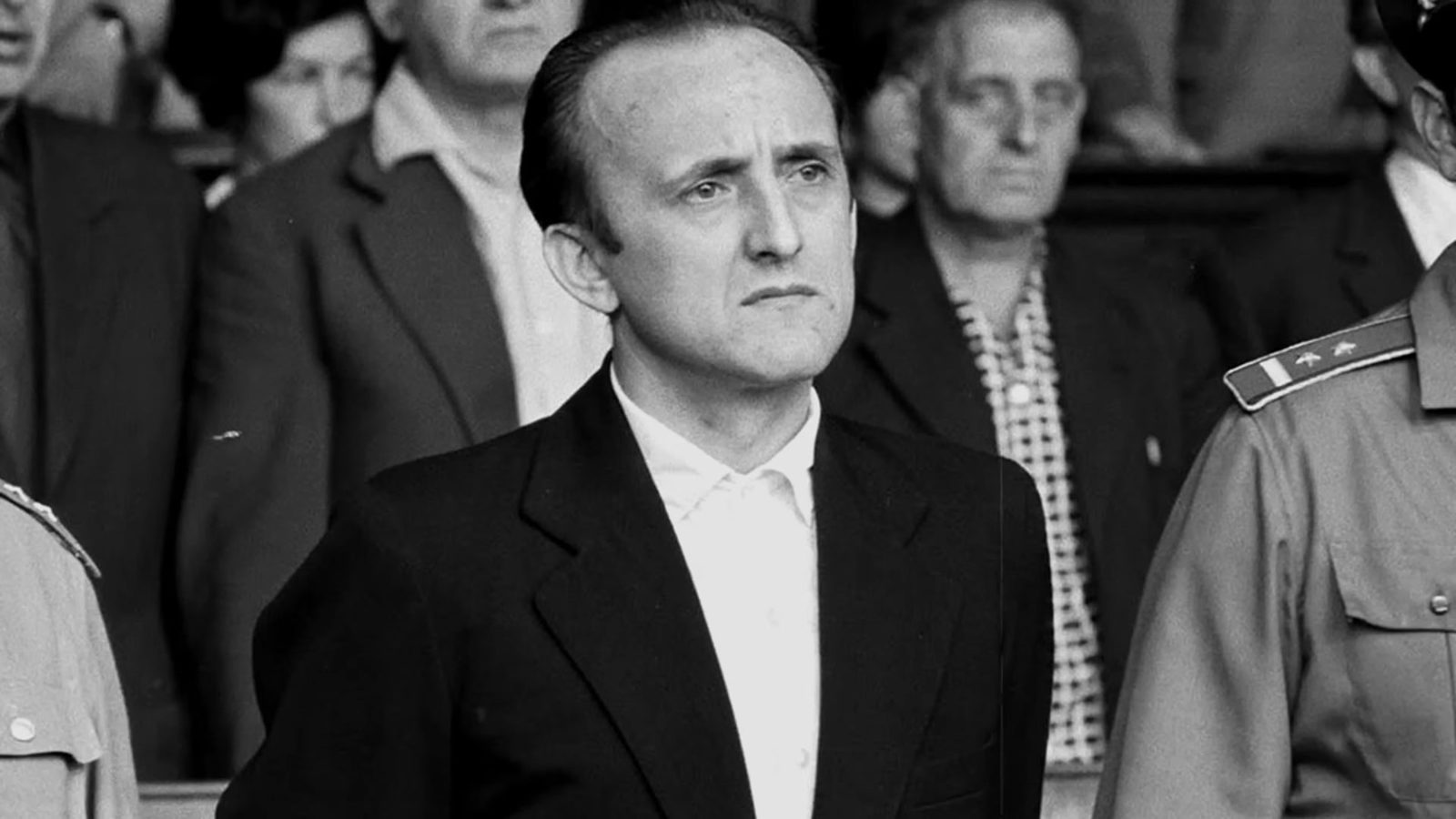
They confused me. I believed that I had killed.
Janos Kirjak, the one sentence of his that survives about the eleven years
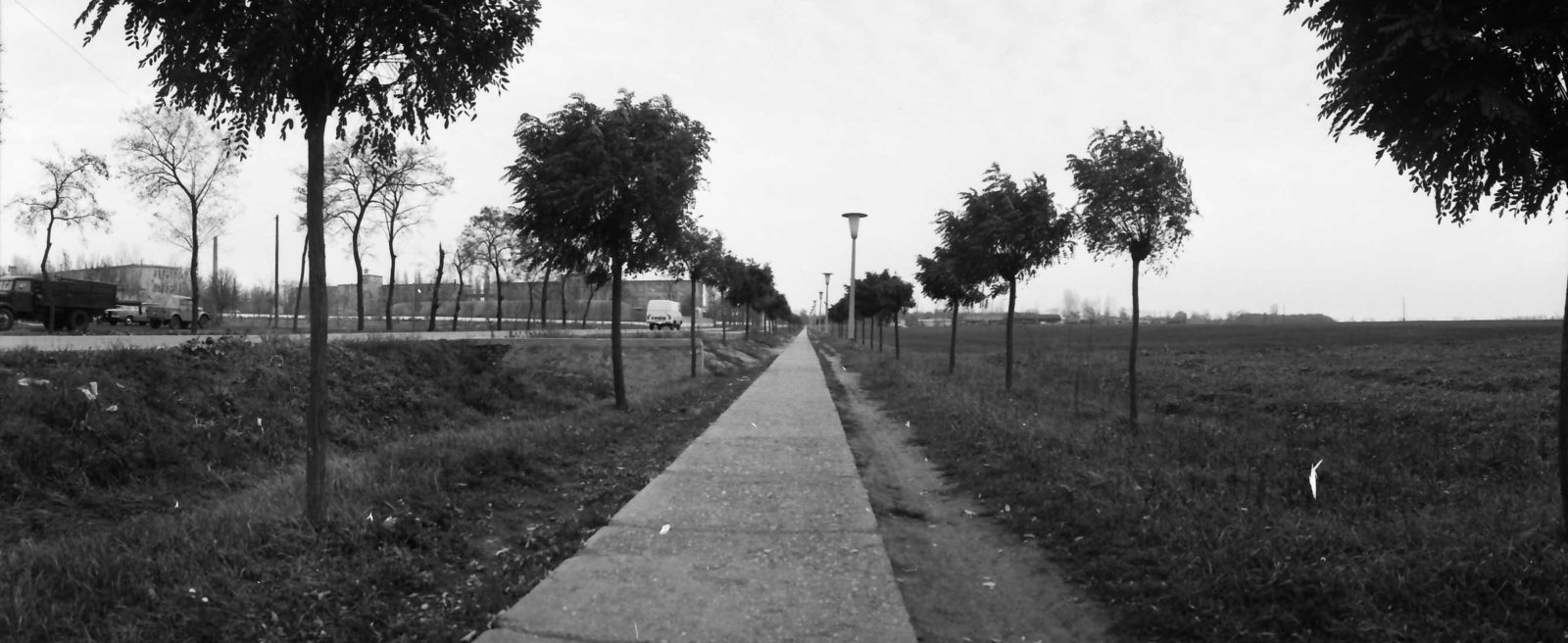
Martfu, the road to the shoe factory (photo 1977). Fortepan / Kende Janos, CC BY-SA 3.0 (source)
The film
At a glance
- Period
- 1957 to 1968
- Country
- Hungarian People's Republic (today Hungary)
- Subject
- The Martfu murders, and the eleven years Janos Kirjak served for the first of them
- Key locations
- Martfű, Tiszaföldvár, Öcsöd, Nagyrév, Tiszakécske, Szolnok, Szeged, Budapest
- Themes
- true crime, martfu, hungary, serial killer, wrongful conviction, kovacs peter
- Episode
- EF-012 · 42 min · published 1 August 2026
Case overview
Then, five years later, women start going into the river again, and the files that could say why stay shut, because officially the killer of 1957 is already behind bars.
This is the Martfu case as socialist Hungary's own newspapers, court records and prosecutors tell it: eleven years, four murdered women and two who lived, a detective who said "one hand" and was moved aside, a state study that called the convicted man innocent months before the last murder, and the year the era's own press finally printed the headline: after all, he was not the murderer.
This is the story of a company town on the Tisza and the ten years its women were hunted while the state guarded the wrong verdict. Four women were murdered. Two survived. One man lost eleven years to a confession that was beaten into him, and the record of what he got back cannot even agree on the year he died. It begins, like everything in Martfu, with shoes.
Timeline
Martfu was not a town that grew. It was a town that was decided. Around 1940 the Bata shoe empire, the Czech giant that planted factory towns across the world the way other companies opened shops, put one down on the left bank of the Tisza: a plant, straight streets, neat workers' houses, all of it at right angles, all of it new.
The main street is called Bata street to this day. After the war the state took the factory, and the sign came to say Tisza Shoe Factory, and under both flags the town had exactly one reason to exist, and everyone in it walked to the same gates. Many of the workers were never Martfu people at all. They came from Tiszafoldvar, the old town a few kilometers off, with its church towers and its dirt lanes running out into farm country. Three shifts a day crossed that emptiness on foot and on bicycles, and the second shift crossed it at ten at night, in the dark.
Related documentsIn 1955, two years before Margit Szegedi, a nineteen-year-old named Erzsebet Nemes was strangled near the Szolnok railway station.
Zoltan Szabo, the prosecutor who first wrote the words Kirjak is innocent, counted her into the series until the end of his life. Peter Kovacs denied her to the end of his. She is in no verdict, and her family, the retellings say, remain certain of what they lost and to whom.
Related documentsMargit Szegedi worked in workshop forty-seven. She was twenty-three, a farm family's daughter; home was a smallholding out in the scatter of farmsteads beyond the village edge, past the little wood. On the twenty-second of July, 1957, the shift ended at ten and she set out the usual way, along the dark road with the corn standing high on both sides.
A man was behind her. By the narrow-gauge track he picked up a length of scrap iron, and past the last lights he closed the distance and struck her down. He dragged her off the road into the corn. He beat her, he pulled the clothes from her, he choked her until she stopped moving, and then he put her, unconscious, face down into the water of the roadside drainage canal, a ditch the files call the Csesz-arok, and the water finished what his hands had started. The next morning her brother-in-law, out searching, found her there by the little wood. She had been perhaps four hundred meters from her door.
Related documentsThe county paper told the county. A young Martfu girl has fallen victim to a depraved murder, said the report, and it guessed at the weapon: a sharp object, probably an axe.
Further down the same page, the editorial named the kind of enemy the year required. We hope, it wrote, that the human beast, the depraved murderer, will duly pay for his deed, and that our authorities will round up the dregs of society whom the counter-revolutionaries let loose upon the populace in October. Nine months after the tanks, even a murdered factory girl was politics first. A beast had been announced. All that was missing was a face to hang on it.
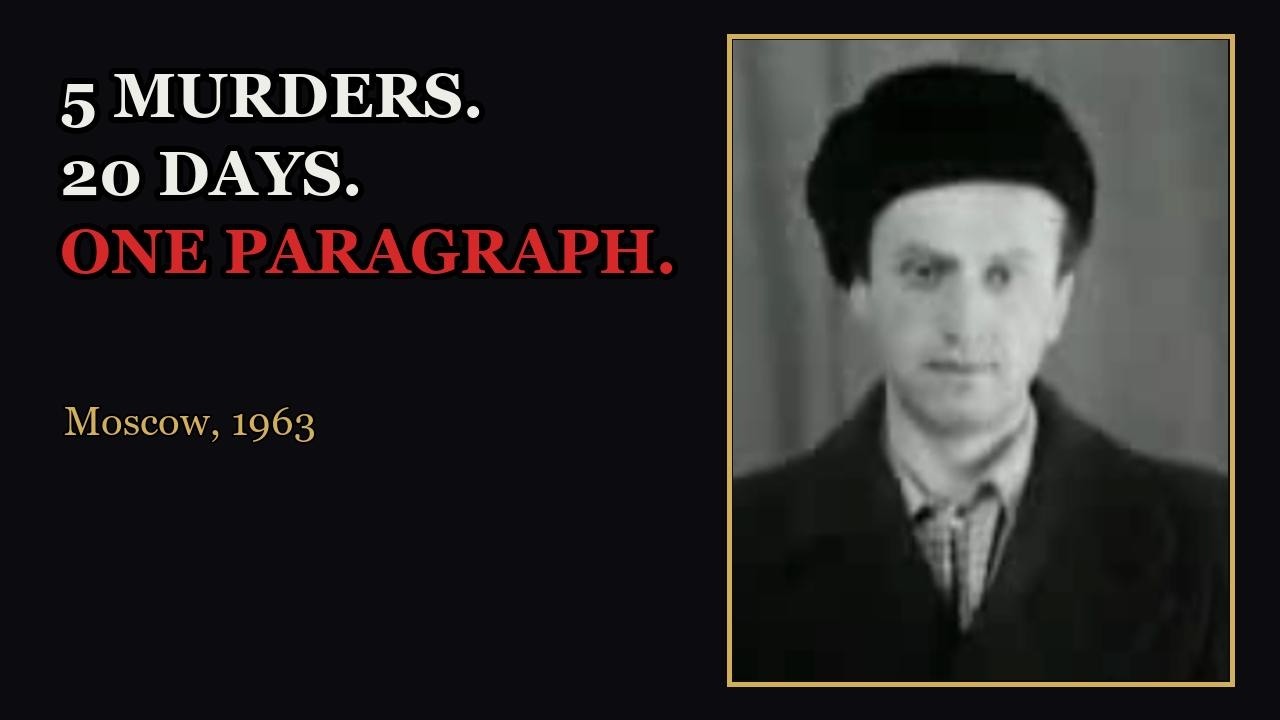
Related documentsWithin weeks the investigators, men of a force the county archive's own series would later describe with the words dilettantism and violence, had pulled in three local men and gone to work on them. The one who broke was from workshop forty-seven. Janos Kirjak was in his early thirties, a semi-skilled worker on Margit's shift, a divorced man with a son. He had courted Margit Szegedi, and she had turned him down; she wanted a bachelor, the file preserves the phrase, not a divorced man.
When the detectives came asking where he had been that Monday night, he panicked and reached for the nearest respectable answer: he had eaten dinner at his mother's. They walked to his mother's farmhouse and asked her. The old woman told them the truth. My son rarely comes to see me, she said. I have not seen him in two weeks. It was an honest sentence, and it closed on her son like a trap. What happened next in that building stayed officially unsaid for sixty years, until the prosecutor who eventually reopened everything put it in one sentence: it was proven, he said, that they beat him. A woman who lived with Kirjak as his wife told the interrogators he had come home at dawn. His alibi was gone, his face was marked, and at the end of it Janos Kirjak signed a confession in the first person, rich in detail, and wrong in almost every particular that could later be checked. The scrap iron was gone. In its place was the axe from the newspaper's guess, carried to the murder in his waistband, prepared in advance.
Related documentsBy the end of August the county paper had already published the whole story as settled fact, six weeks after the killing and two months before any court sat. The Martfu murderer has been caught, ran the headline. The article knew everything.
It knew he had decided that either the girl would be his wife or she would die. It knew about the axe prepared in advance. It knew, and printed, that he had defiled her as she lay dying. And it ended on the detail that made readers shiver: afterward he mounted his bicycle and rode home, in the paper's words, like a man who had done his job well. Two months before the trial, the story was finished. All that remained was to make it legal.
Related documentsIn the autumn they took him out to the canal to perform it. A staged reconstruction, investigators and cameras at the Csesz-arok, and Janos Kirjak walking through another man's crime with an axe that had never existed. It went badly in ways nobody in charge chose to notice. Sent off to retrace the route, he set out the wrong way; the tracking dog, on the morning after the murder, had followed a different path entirely. He did not know where to go, because he had never been there.
And around the whole performance, at the edge of the field, stood the onlookers. Villages this size turn out for everything; a murderer demonstrating his murder was the event of the decade. The retellings of this case, the prosecutor's among them, agree on who else was standing at that canal. In the crowd of onlookers, unremarkable among his neighbors, stood Peter Kovacs, twenty-three years old, watching another man confess to his murder. The researcher who has spent the most years in these files, Peter Dulai, draws one straight line through everything that followed: Kovacs could become a serial killer, he concluded, because after his first murder an innocent man was convicted. It emboldened him.
Related documentsThe trial opened in Szolnok that October, and for a day it went the way the script said. The accused admitted his guilt. Then the presiding judge asked him to describe the deed, step by step, and the script fell apart in open court. He could not do it.
The county paper, to its credit, printed what the room saw: to the astonishment of the audience, the defendant could give no adequate account of his own crime, so much so that the court itself found the confession unfounded. He only stammered, the reporter wrote. Asked why he had walked the wrong way at the reconstruction, he answered like a man reading his own case file for the first time: I do not know which way to go, I do not know what to do, because I was asleep at home. The paper's next headline said it outright: Janos Kirjak has retracted his confession. And under it, a question the whole county would have done well to sit with: is it conceivable that he is not the murderer, when the evidence still speaks against him?
Related documentsIt was conceivable. It was not convenient. His mother came before the bench and testified, torn, whispering. The prosecutor, Geza Garai, the same office that had fed the finished story to the paper in August, pressed on. On the twenty-sixth of October, 1957, the court pronounced the formula: in the name of the Hungarian People's Republic, death.
The Supreme Court looked at the file and blinked. The verdict was quashed; the case went back down with instructions to gather every piece of evidence that could be found. The county court heard it all again, and sentenced him to death again. Under the shadow of the rope, Kirjak confessed once more; the law of the day counted a sincere confession toward mercy, and one retelling of this case puts the arithmetic plainly: by confessing to a murder he did not commit, he fought for his life, and won. The final sentence was life. The record preserved of that last panel has the judges doubting his guilt outright, and leaving the conviction standing anyway. Janos Kirjak went to the Csillag at Szeged as a man who had violated and murdered a girl, and the prison yard has its own law for that kind. Eleven years. The file shows no visitor and no letter.
Related documentsFor four years, nothing. Whatever had come out of the dark along that road in 1957 kept still, and the town filed the fear away. Then, on the fifth of March, 1962, a twenty-year-old from Tiszafoldvar named Ilona Sipos vanished on her way home.
She was a lively girl; she knew how to laugh with men and how to shrug them off, and a court file of that era would hold even that against her. Her family went to the police. Whoever took the report never opened a file. There is no protocol of it at all.
On the fourth of May the Tisza gave her back downstream, at Nagyrev. The autopsy said drowning, and the file was closed with a single word: suicide. The same file records what was found on the body. A torn strip of her own bra had been forced three quarters of the way down her throat. Twine was knotted around her neck, and tied to the twine, a stone.
The file says she did it to herself. It says that about a woman who went into the river gagged with a piece of her own clothing and weighted like a sack. The file says she did it to herself, and for years, whenever the crime-scene photographs might have said otherwise, they could not be consulted, because a laboratory technician had destroyed the negatives. One more line in the record of that spring. Among the people questioned and released was a truck driver from her own town who had sometimes given her rides on his motorbike. His name went back into the drawer with everything else.
Related documentsOn the thirteenth of November, 1963, a thirty-three-year-old woman was walking home from the ten o'clock train at Homok, on the edge of Tiszafoldvar. The records of the era keep married women under their husbands' names, so in every file she is Mrs. Istvan Szabo. A hammer came down on her head, meters from her own door. Neighbors heard, lights came on, help reached her fast, and the surgeons kept her alive under a fractured skull. In March of 1964, on Martyrs street in Tiszafoldvar, a heavy blow glanced off the head of a forty-two-year-old, Mrs. Jozsef Sinka, in the dark; she screamed; her attacker ran. She lived too.
Two women struck down at night, on the same few kilometers of ground, by the same kind of blow, within a bicycle ride of a murder and a drowning. No detective stood up and said the word series, because in the Hungary of 1964 the word did not officially exist. Crime was a disease of capitalism; a serial killer stalking a socialist factory town was not a police theory, it was an ideological impossibility, and the papers were not in the business of printing impossibilities. The county's own retrospectives grant that not every attacked woman even filed a report; how many more there were is a number nobody owns. The road from the factory emptied earlier and earlier.
The youngest was a child. Eva Mehesz, Evike to everyone, was fourteen years old and already working at the shoe factory; in 1965 that was legal and it was ordinary. On the twentieth of March she did not come home.
For nearly a month there was nothing, and then the flat country began to give up its pieces: her bicycle and her clothes near the water in mid-April, and on the twenty-second, far downstream at Tiszakecske, the river let her go. She had been offered a lift in a truck by a man she knew. Everyone knew everyone. Her wristwatch had stopped when the water reached it. A technician destroyed the watch itself, this case keeps doing that, but the position of its hands had been written into the file first, and that one reading survived, waiting. The official ruling on Eva Mehesz, fourteen, found in a river a month after she vanished, was that suicide could not be excluded. The file closed.
One detective refused to swallow it. Laszlo Kaszab of the Szolnok county police laid the cases side by side, 1957, 1963, 1964, 1965, and said they were one hand, one man hunting women on the same ground, which meant, he spelled it out, that the man in the Csillag was not that man. By his own later account he had been ordered to close the file on Eva Mehesz that way, and when he would not stop talking, he was moved aside.
The machine did produce one thing that year: a list of thirty-eight local men worth a look. One of the thirty-eight was a truck driver from Tiszafoldvar. Married, a small daughter, building his own house, well spoken of at the depot. He had been questioned when Ilona Sipos went into the river, and let go. He was looked at now, and let go now. The analysts' phrase for men like him, preserved in the record, was orderly circumstances.
In early 1967 Zoltan Szabo put his conclusion in writing, in a study that would later run in the interior ministry's own restricted journal, a publication ordinary Hungarians could not so much as borrow. The words on the paper were these: Janos Kirjak is innocent. A serial killer is taking victims around Tiszafoldvar. A state officer, in a state document, in early 1967.
The men who finally did the arithmetic were not policemen. Zoltan Szabo ran the investigation office of the county prosecution in Szolnok; Balint Barna was his younger colleague; and no relation, in passing, to the survivor Mrs. Szabo, the name is as common in Hungary as Smith. What they did, they did off the books, as close to a hobby as their offices allowed: they pulled every unsolved attack on a woman in the county going back years and read them as one stack. The hour, always the late shift. The ground, always the same few kilometers of dark between Martfu and Tiszafoldvar. The method, always the head, always the water. Nothing happened. No retrial opened, nobody drove to the Csillag, nobody posted a watch on the second-shift road.
Related documentsThat morning, at the factory, a truck clipped the barrier chain at the gate, and the glass of the cab's side window burst over the seat. It was a small workday accident. The driver got the pane's remains knocked out and drove his route. The evening before, at a table in Tiszafoldvar, that same driver and his brother-in-law had been drinking with a woman they both knew: Terez Penzes, twenty-eight, married, in the files, by the custom of the age, Mrs. Karoly Szekeres.
That evening the truck stood waiting at gate two of the shoe factory. A known face leaned across and offered a lift home; it was dark, it was several kilometers, she climbed in. He drove her into the empty country and strangled her in the cab. What was done to her afterward gets one sentence, because one is enough: he cut away her breasts, and they were never found. Then he drove south to the bridge at Ocsod and put her over the railing into the Koros. There was blood on the pavement. There was more on the railing, dried brown, and caught in the joints of the concrete lay six fragments of shattered safety glass, none of them bigger than a pea. The river gave her up quickly, and this time the dead woman came back armed: under her fingernails and toenails the pathologists found slivers of safety glass, the same glass as the bridge, the same glass as a certain cab, and pressed under one nail, a single fiber from a truck seat.
Eight weeks after the bridge, on the eleventh of August, 1967, they arrested him. The driver's name was Peter Kovacs. He was thirty-three. Born in Szolnok, raised in Tiszafoldvar, his father taken by the war; a driver for the state haulage company on the shoe-factory run, twice an employee inside the factory itself; married since 1962, a daughter and a stepson at home, a half-built house rising on his plot; his work file said obliging, got on well with his workmates.
Nothing about him was hidden. That is the point of him. He was the man from the old files: questioned in 1962 over Ilona Sipos, questioned again in 1965, one name among the thirty-eight, examined by the analysts and excluded, in the record's own words, for his orderly circumstances. The truck's cab, conveniently scrapped in the meantime, was tracked to a breaker's yard near Budapest, and inside the door panel, on the glass of the rolled-up window, there was still human blood. The bridge glass, the fingernail glass, and the cab glass agreed. The seat fiber agreed. Within days, Peter Kovacs confessed to the woman on the bridge.
Related documentsOn the twenty-eighth of August, he kept going. He confessed to Ilona Sipos, whose file said she had done it to herself. He confessed to Eva Mehesz, whose file said it could not be excluded, and the one reading saved from her destroyed wristwatch fit the known movements of his truck on the evening she vanished.
Two closed files, two deaths the paperwork had explained away, had been murders all along, and the man who finally said so out loud was the man who had done them. For the police, that was the end of it: three murders, solved, a monster in a cell. The fourth murder in the county's living memory, Martfu, 1957, was not on the list, because Martfu 1957 was already solved. That December, state television's crime program Kek Feny, Blue Light, showed the country its captured monster, and the police weekly printed the studio photograph: a slight, balding, hollow-faced man under the lights. The caption called him the Martfu monster, the beastly killer of three women. Three. The state's own arithmetic, typeset under his face, while Janos Kirjak sat in the Star beginning his eleventh year.
Related documentsAt the end of February, 1968, Peter Kovacs confessed to the murder of Margit Szegedi, on the twenty-second of July, 1957. He knew the road. He knew the iron. In one session he spoke, unprompted, of the dead girl's great loose fall of hair, and a witness line in the 1957 file says the same thing in almost the same words.
The police were finished. Two prosecutors were not. Zoltan Szabo and Balint Barna, the men of the hobby file, took the case away, and Barna, decades later, described the maneuver with a bluntness prosecutors rarely allow themselves: we formally stole this case from the police. They had a theory ten years deep and a killer in custody who had stopped at three, and they had noticed what he was afraid of. Peter Kovacs was afraid of the rope. So they let him find a hope: that a man who had killed not three times but four, across a whole decade, might read to the doctors as mad, and the mad are not hanged. On the strength of the new confession, the chief prosecutor of Hungary petitioned the Supreme Court; the Supreme Court ordered a retrial and handed it, this time, to the Metropolitan Court in Budapest.
Related documentsOn the twelfth of June, 1968, the county paper that had once printed the axe, the motive, and the ride home like a man who had done his job well, carried a different headline: After all, he was not the murderer. The Metropolitan Court in Budapest, the panel of Judge Tibor Lukacs, had acquitted Janos Kirjak of everything, finally and completely.
And it printed the court's autopsy of 1957: a confession ascribed to the accused's nervous state; witness testimony full of contradictions nobody had resolved; expert examinations that satisfied no one; physical evidence handled so loosely that the court paused on one item, in its own words, an allegedly bloody jacket. Eleven years of a man's life, and at the bottom of the file, an allegedly bloody jacket. Janos Kirjak walked out of the Star into the summer of 1968, in his early forties, with everything and nothing settled.
Related documentsJanos Kirjak came home to Tiszafoldvar in the summer of 1968 and did the only thing there was to do: he went back to the factory, among neighbors who remembered everything, and worked until his health gave out and a disability pension took him. He lived alone.
The woman whose dawn testimony had helped bury him was driven out by the village's contempt once the truth landed; the county series records her leaving with a single suitcase. About the eleven years, exactly one sentence of his survives anywhere, and it is this: they confused me. I believed that I had killed. What the state paid him is told two ways. His old prison physician remembered compensation of about two million forints, and remembered him quietly giving it away among his relatives. His son says the family never saw a penny of any such thing. Both sentences sit in the record and do not fit together.
Related documentsA month later, in the same city, in the same institution, the other file opened. Peter Kovacs stood before the Metropolitan Court behind closed doors, charged with four murders and two attempted murders, and on the first day he admitted every count. Across the sittings the court heard more than fifty witnesses. Two of them were the women who had lived; the headline in a Pest county paper counted them plainly: testimony of two attacked women.
Mrs. Szabo and Mrs. Sinka had waited five years to be believed about the hand that had come out of the dark. The doctors, for their part, closed the one door left: he had known exactly what he was doing, at every canal and every bridge. Fully responsible. Even the shoe factory kept its own minutes on the catastrophe: its little house paper, the Party committee's mimeographed organ, reported between production items that the trial of Peter Kovacs was under way in Budapest, and noted, in the deadpan of company news, the verdict will not be delivered today. The factory that had employed most of the dead, and the killer, and the wrong man, was following its own case in its own pages.
Related documentsThe verdict came on the tenth of August, 1968: death for the quadruple killer, as the era's headlines counted him. The wire description that went around the country was five words long: a short, slightly balding man. In November the Supreme Court upheld it; clemency was refused.
Laszlo Kaszab, the detective who had said one hand back when saying it cost him his place, died on the twentieth of August, 1968, ten days after the death sentence, when the sport plane he was flying went down; the inquiry ruled pilot error, the villages muttered darker and proved nothing. He lived long enough to see the acquittal and the verdict, and not long enough to see the credit, which went, as credit does, to the institutions. As for the men of 1957: the county's retrospectives record that the officers of the beaten confession were slowly phased out of the force, and that Geza Garai, the prosecutor of the printed story, left the corps. No trial, no sanction, no name ever attached, in any document, to the word responsible.
Related documentsOn the first of December, 1968, Peter Kovacs was hanged. The notice ran in the national press days later, and its headline filed him, as the era always had, under the town he came from: the Tiszafoldvar quadruple murderer has been executed.
From a June acquittal to a December rope, 1968 spent six months unmaking what 1957 had built in three. The ledger of the mistake, though, is short and exact. After the wrong man was locked up, three more women were murdered and two barely lived. That is what the verdict of 1957 cost, on top of the eleven years.
Related documentsThe end is told two ways as well. The physician, doctor Endre Vegh, gave it this shape: about two years after walking free, alone in his house, Janos Kirjak had a stroke and died with nobody watching. And he added one more thing he had from the man himself, that he had wanted to end his own life, and did not dare. His son remembers it later and differently, some year in the eighties, no cause attached.
A record that convicted a man twice, acquitted him once, and hanged another could not manage to agree on the year the wronged man died.
Related documents
Key locations
Full mapDocuments and evidence
Sources
- Archive
Arcanum Digitheca (ADT): the county and national press of 1957 to 1968 Arcanum Adatbazis Kft..
Told from the primary documents: the county and national press of 1957 to 1968, the court record, and the words of the men who reopened the case.
- Newspaper
Tiszavidek 25 July 1957.
A young Martfu girl has fallen victim to a depraved murder, said the report, and it guessed at the weapon: a sharp object, probably an axe. The editorial on the same page named the human beast and the dregs of society.
- Newspaper
Tiszavidek 31 August 1957.
The Martfu murderer has been caught, ran the headline. The article knew everything. The page also carries the portrait of Margit Szegedi and the prosecutor's own byline.
- Newspaper
Tiszavidek 18 October 1957.
The paper's next headline said it outright: Janos Kirjak has retracted his confession.
- Newspaper
Magyar Rendor 28 December 1967.
The police weekly printed the studio photograph: a slight, balding, hollow-faced man under the lights. The caption called him the Martfu monster, the beastly killer of three women.
- Newspaper
Szolnok Megyei Neplap 12 June 1968.
After all, he was not the murderer. The notice began, without any visible flinch, with the paper citing its own decade-old coverage: as we reported in detail more than ten years ago.
- Newspaper
Pest Megyei Hirlap 1968.
The headline in a Pest county paper counted them plainly: testimony of two attacked women.
- Newspaper
Tisza Cipo, the shoe factory's own paper 9 August 1968.
Its little house paper, the Party committee's mimeographed organ, reported between production items that the trial of Peter Kovacs was under way in Budapest, and noted, in the deadpan of company news, the verdict will not be delivered today.
- Newspaper
Nepszava 5 December 1968.
Its headline filed him, as the era always had, under the town he came from: the Tiszafoldvar quadruple murderer has been executed.
- Academic
Zoltan Szabo's study of the Tiszafoldvar series Belugyi Szemle, the interior ministry's restricted journal, 1967.
In early 1967 Zoltan Szabo put his conclusion in writing, in a study that would later run in the interior ministry's own restricted journal, a publication ordinary Hungarians could not so much as borrow. The words on the paper were these: Janos Kirjak is innocent. A serial killer is taking victims around Tiszafoldvar.
- Archive
Fortepan: archival photography, CC BY-SA 3.0, credited donors Fortepan.
The archival photographs of the town, the factory, Szolnok and the rivers that the episode used for its period layer.
- Documentary
Magyar Filmhirado 1961/51: rubber boot production at the Tisza Shoe Factory, Martfu December 1961.
A newsreel story shot inside the Martfu plant in December 1961, quoted in three short silent excerpts under the user's fair-use ruling.
- Documentary
A martfui rem, RTL Klub, XXI. szazad 2017.
The programme in which the retired prosecutor Balint Barna says it was proven that Janos Kirjak was beaten.
- Documentary
Nyomon vagyunk!: a martfui rem nyomaba eredt a Blikk 19 October 2023.
The interview in which doctor Endre Vegh, who was Janos Kirjak's physician, gives his account of how Kirjak died.
- Documentary
Aki leleplezte a martfui remet 27 May 2025.
The long interview with Balint Barna, the prosecutor who is still alive to tell it.
- Documentary
Kovacs Peter, avagy a Martfui kejgyilkos tortenete 30 April 2025.
A Hungarian case retelling, used for the period trial and town photographs it reproduces.
- Web
szoljon.hu, July 2018: the six part county series on the Martfu case, from the county archive files July 2018.
Within weeks the investigators, men of a force the county archive's own series would later describe with the words dilettantism and violence, had pulled in three local men and gone to work on them.
- Web
szoljon.hu, November 2024: the criminalist Peter Dulai on the original case files November 2024.
The researcher who has spent the most years in these files, Peter Dulai, draws one straight line through everything that followed: Kovacs could become a serial killer, he concluded, because after his first murder an innocent man was convicted. It emboldened him.
- Web
magyarnemzet.hu, May 2020: new information on the Martfu monster May 2020.
His old prison physician remembered compensation of about two million forints, and remembered him quietly giving it away among his relatives. The same account carries the detective Laszlo Kaszab's thread and Kirjak's one surviving sentence.
- Web
magyarnemzet.hu, May 2016: the long interview with the prosecutor Balint Barna May 2016.
The interview in which Barna says it was proven that Kirjak was beaten, and describes how the prosecutors took the case from the police.
- Web
borsonline.hu, 6 October 2018: Peter Dulai's interview with the 85 year old Balint Barna 6 October 2018.
The prosecutor's own account of the beaten confession, the retrial motion, the scrapped cab tracked to the breaker's yard, and the hope of a madness finding that bought the fourth confession.
What remains unresolved
- Was Erzsebet Nemes the first victim, as the man who solved this case believed to his grave?
- Of everything that kept the wrong man in the Star for eleven years, the beating, the two suicide rulings, the shelved study, which one do you find hardest to forgive?
- What does a state owe a man when even the year of his death is more than it bothered to keep?