Case fileEF-011Moscow, 1963
The City That Stopped Opening Its Doors: The Mosgaz Panic of 1963
In December 1963, a young man in a fur hat began knocking on Moscow doors and saying one word: Mosgaz, the gas service. It was the most ordinary knock in the city, and people opened, because back then people opened their doors to everyone.
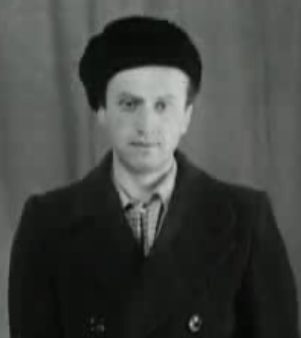
Someone rings at apartments, and if he finds only children and a woman inside, he enters, calls himself a Mosgaz repairman, and kills them with a hunting hatchet.
A Muscovite's private diary, the winter of 1963
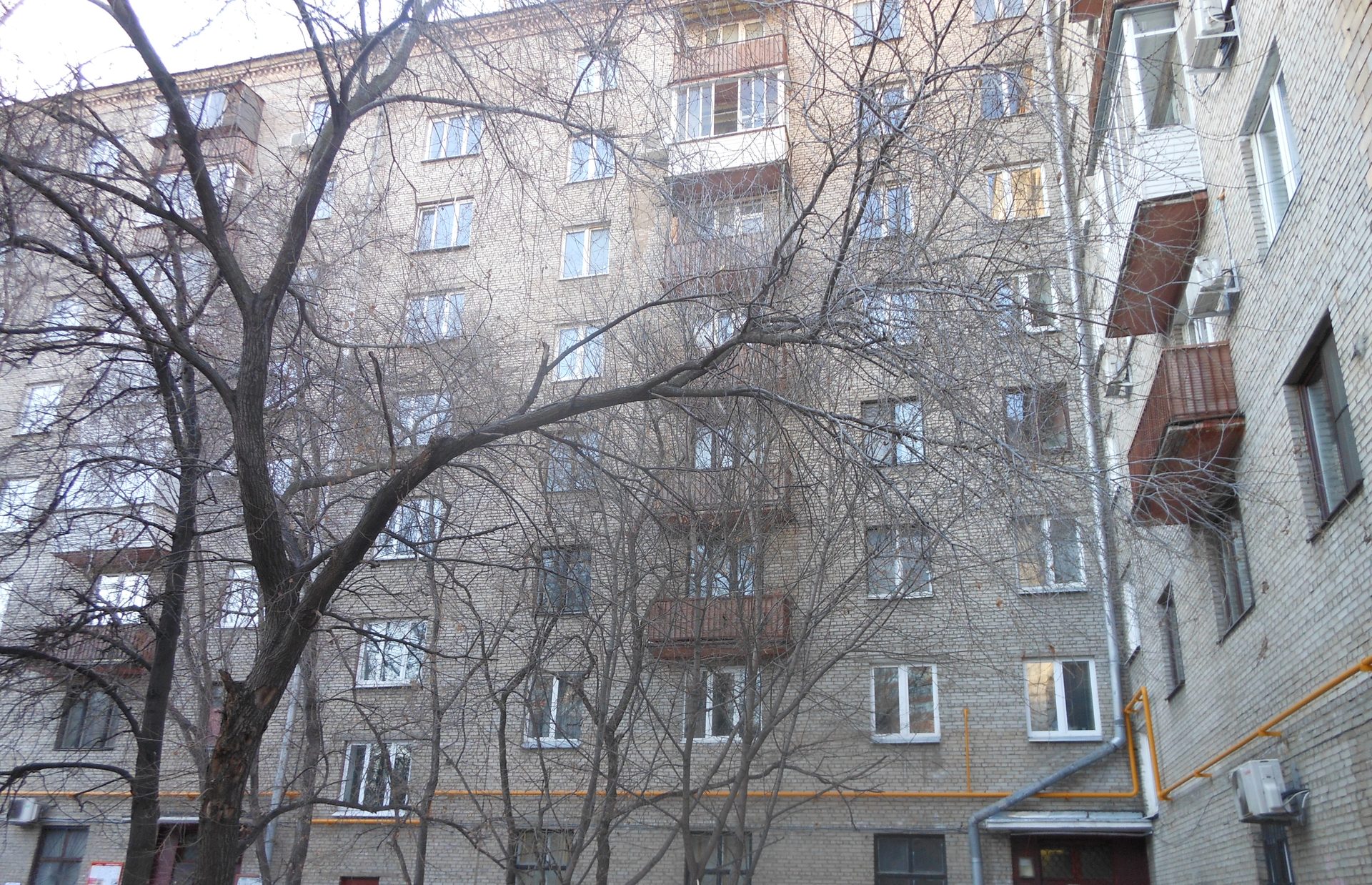
Baltiyskaya Street, Moscow. Leonrid, ru.wikipedia, GFDL 1.2 or later (source)
The film
At a glance
- Period
- 1963 to 1964
- Country
- Soviet Union (today Russia and Georgia)
- Subject
- Vladimir Ionesyan, the man Moscow called Mosgaz
- Key locations
- Moscow, Ivanovo, Orenburg, Kazan, Tbilisi, Gori
- Themes
- Mosgaz, Ionesyan, Soviet Union, Moscow, true crime, serial killer
- Episode
- EF-011 · 48 min · published 15 August 2026
Case overview
What followed broke that habit for a generation. Chains and bolts sold out, families invented knock codes, parents drilled children never to open the door, and thousands of volunteer patrolmen swept the streets for a manhunt the newspapers were not allowed to mention. This is the story of the panic the Soviet state could not hide, of the man they finally stopped on a train platform, and of the young woman the state condemned in print before her trial had even begun.
The fear outlived the man by a generation. Fifteen years after the cremation, grandmothers were still invoking the terrible man from Mosgaz to make children ask who's there; the phrase settled into the same nursery-fear shelf as the Black Hand. Sixty years on, a television franchise still mines the case, and real gas inspectors in Russian cities still occasionally meet a joke older than their grandparents. The chains went onto Moscow's doors in the winter of 1963. In a sense, they never came off.
Timeline
A boy from Tbilisi with a genuinely fine voice and parents who told him, at every opportunity, that world fame was his destiny.
A conservatory that admitted him without examinations and lost him in the second year. A draft-evasion conviction that ended in a light-regime camp in Gori, Stalin's hometown, where the failed singer served as the camp's culture organizer; even his prison job was show business. Then a group theft, and a court that gave him five years suspended, sparing him because he had just become a father.
Related documentsThe union-level interior ministry had been abolished in 1960; the republic ministries were renamed ministries of public order; the doctrine of the day said the state's functions would pass, step by step, to the public itself, to volunteer patrols with red armbands.
Historians of the era describe experienced detectives squeezed out, pensioned off or reassigned. The country heading into the winter of 1963 had, officially, no word for what was coming.
From the Party's highest platform, Nikita Khrushchev had promised that the current generation of Soviet people would live under communism.
The timetable said twenty years. Crime had a place in that timetable too: it was a leftover of capitalism, and it was expected to die out with the system that bred it. The newspapers, which did not report murders, were in that sense already living in the future.
Related documentsTwenty-one years old, a dancer from Kazan, a choreography-school graduate who had arrived in Orenburg in November 1963 and been assigned, with a touring couple, to the same theater-owned communal flat as the Ionesyan family.
The theater tried her for a month and let her go: not strong enough for the corps. A provincial girl, jobless in a strange city, too ashamed to go home. That is the moment the married tenor from across the communal kitchen chose to tell her who he really was.
Related documentsOn December 13, 1963, Ionesyan simply failed to appear at rehearsal. On December 17 he went to GUM and bought a small camping hatchet, the kind Soviet shops sold as a tourist axe.
He did not resign; he did not say goodbye to his wife and son. One week later came the knock on Baltiyskaya Street. Three days later, with money enough for exactly one train ticket to Ivanovo, hers, he told her not to worry: he would stop by the office and draw what was needed. The office, that morning, was Baltiyskaya Street.
Related documentsIn apartment 95, a schoolboy named Kostya Sobolev was dead, struck again and again with a small axe.
A knock at the door of apartment 86, and one word through the wood: "Mosgaz." The gas service. A nine-year-old boy named Volodya Teplov opened the door, because in that city, in that year, everyone opened the door. His mother had stepped out for less than an hour, to hold her place in a furniture-store queue. What the killer carried away from the flat was this: sixty rubles, a child's sweater, a bottle of cheap cologne, and a pair of beach goggles. In December.
Related documentsThe work then moved to Petrovka 38, police headquarters, where the method had a name: photo-applique. Four hundred photographs of men, cut into pieces.
The boy shook his head at assembly after assembly and was close to tears, and Fainshtein close to the end of her patience, when a MUR officer walked into the office mid-session with some routine question. The boy went pale, leaned to the criminalist's ear, and whispered: that's him. So they sat him down, made him up, photographed him, and the wanted face that went out across the militia was a disguised policeman. It was only the second composite portrait in Soviet practice, and the first ever used to hunt a killer.
Related documentsDecember 25. Ivanovo, the old textile capital northeast of Moscow, a city of weavers with no reason to be afraid. The same knock, the same words, only now it was the local gas service.
On Kalinina Street, Misha Kuleshov, twelve, home alone in the school holidays, let the inspector in. Within about an hour, on Oktyabrskaya Street, a pensioner of seventy-four let him in too. From her flat the man took a pocket flashlight and seventy kopecks. That was the price at which he valued what he did there. Then a third door, back on Kalinina Street. Galina Petropavlovskaya was fifteen, waiting for her parents to come home.
Galina Petropavlovskaya woke in a hospital bed and gave the investigators something no adult in Moscow had managed: his hands.
Groomed, she said. Long fingers, no calluses. The hands of a man who had never done manual work. And in the girl's flat, on the table, a dropped page of apartment numbers in the killer's handwriting. He was not wandering. He was working through addresses, door by door, like a meter reader on his route. When they brought the composite portrait to the hospital and held it up, Galina fainted. The identification was the collapse.
Related documentsAfter Ivanovo, the case went to the top of the state. Vadim Tikunov, interior minister of the Russian republic, took it under personal control.
Now he ran the biggest manhunt his ministry had ever mounted. The composite flew to Orenburg, to Tbilisi, to Kazan, to Ivanovo. Detectives moved between cities by aircraft. Around one thousand trucks would be checked before it was over, and that number is one of the few the record actually supports.
Related documentsThe city armed its doorways. Chains and bolts sold out. Men took to keeping hammers and axes in the hallway, beside the keys.
Mothers discovered illnesses that kept them home from work; families agreed on knock codes, so a child would know a parent's hand from a stranger's. Jokers who boomed the dreaded word through doors and ran were beaten bloody when caught. Real gas fitters were attacked at thresholds; one war veteran met his with a hammer, shouting that he had seen worse at the front. It ended with the real Mosgaz surrendering: the company ordered its home inspections stopped across the city. One man with a hatchet had shut down the utility he was impersonating.
Related documentsDecember 28, Leningradsky Prospect. An old woman opened her door on the chain and asked the man on the landing, straight out: you would not be that Mosgaz, would you? The man smiled. No, he said, housing office, and wrote something in a notebook.
Sasha Lisovets, eleven, was alone. The boy understood, and ran, and was caught at the toilet door. From that flat the man took nothing at all: the room with the family's things was locked, and he could not force it. He killed the child anyway. It is a fact worth holding on to, quietly, for later.
At the Kremlin the great holiday tree went up; children sledded the hills of the Taynitsky Garden; the mannequins in GUM's windows wore fur hats. The photographs from those weeks show a city celebrating. The doorways of that same city had stopped opening.
For eleven days there was nothing: schools out, parents home, no flat in Moscow with a child alone in it. The knocking stopped, and the militia understood the arithmetic of the lull perfectly. The holidays would end. The mornings would empty again. Somewhere in the city, a man was waiting for the working day to come back.
Related documentsJanuary 8. Sheremetyevskaya Street, in Maryina Roshcha. A call reached the city duty desk from a woman whose voice the operators remembered afterward: blood is dripping from my ceiling.
In the flat upstairs, Maria Ermakova, forty-six, a chemical plant worker, was at her kitchen table. She had let in a man from the housing office who was collecting complaints about the new building's defects, and there were defects enough; he suggested she write hers down. By one retelling she had written a single word, Application, when he struck her from behind, at her own table, over her own paperwork.
Related documentsThe television: a Start-3, the set half the country stood in line for. Two hundred thirty-four rubles new, twelve channels, and a serial number on the back panel that matched the technical passport in Ermakova's desk drawer.
A beat officer named Malyshev, walking to lunch, watched the little scene: a man loading a sheet-wrapped television into a truck. Nothing illegal in it. But the professional eye filed two digits of the number plate, nine six, and walked on. That evening Malyshev heard what had been found on Sheremetyevskaya Street, remembered the television, and picked up the telephone to Petrovka. The whole case now hung on two digits and a bedsheet.
The truck fleets of Moscow were swept for plates carrying ninety-six, roughly a thousand vehicles, and the sweep found it: ninety-six, twenty-six.
The rented room, searched, was a small warehouse of dead people's belongings. Yarn. A flashlight. Children's sweaters. Beach goggles. About one hundred eighty rubles in cash, all told. A month and a half of an average wage. The lodgers were gone. The man had left the city days earlier. The woman was expected back at any hour.
Related documentsNear midnight, the key turned. A young woman stepped in alone, small, graceful, well dressed, and froze in the dark doorway full of men. Then she gathered herself, and gave them a sentence nobody in the room had imagined: my husband is an officer of the KGB.
The interior minister telephoned the chairman of the KGB, Vladimir Semichastny, and the state security service of the Soviet Union spent the small hours checking its own registers for an axe murderer. By morning the answer was flat: no such officer existed, and never had. And before dawn, a courier reached the stakeout from the fingerprint archive. The prints from the stove handle and the route page had found their man in the card files. Twice convicted. Born Tbilisi, 1937. Name: Vladimir Ionesyan. Occupation, and here the file stopped reading like a police record: soloist of the Orenburg musical comedy theater.
Related documentsKazan station, the morning of January 12, 1964. Plainclothes men thick along the platform; among them, personally, the interior minister of the Tatar republic, Salikh Yapeev.
There was one more problem, hard to believe of a national manhunt: the militia had never seen the man's face. Not once. On the platform a young man in a heavy coat waved, joyfully, like any man meeting the woman he loves, and ran for the door, and took the handrail. The handcuffs closed on his wrists in mid-step. He was wearing the coat with the blood on it. The hatchet hung at his belt. He announced to the men holding him: I am a major of the KGB.
Related documentsThe most remarkable document in the case is dated the day of the arrest itself, before a single interrogation. Tikunov, to the Central Committee: in view of the public outrage, finish the investigation in the shortest possible time and hold an open trial, sentencing him to be shot.
The Central Committee's answer came back from its administrative department, signed Mironov and Laputin: the desire to give the coming trial a sensational character is in no way justified. Try him, in accordance with jurisdiction, at the Supreme Court of the Russian republic. Do not cover the proceedings in print, on radio, or on television. Limit coverage to a brief notice of the verdict in the central press. In the margins, the endorsements: the procuracy, comrade Rudenko; the USSR Supreme Court, comrade Kulikov. And across the memo, in Brezhnev's hand, one word: Agreed.
Related documentsThe next day, January 13, Moscow Radio read the capital one paragraph: a series of grave crimes had been committed in Moscow and Ivanovo; the criminal had been found and arrested; Ionesyan, Vladimir Mikhailovich, born 1937.
The papers added a few paragraphs. It was enough. The city exhaled. The kitchen knives went back into the drawers. What the city did not know was that the sentence had, in a sense, already been written, and not by a court.
Related documentsThe day after his arrest, Ionesyan sat across from the republic's interior minister, Tikunov himself, and its chief procurator, Blinov, a man six weeks in office, and answered their questions in a small, cooperative voice.
Say it plainly, they told him, when he circled the word. Murder, he said. On motive: my money was running out. But that is no excuse. On why he continued when money was no longer short: no. It was not necessary. On his mind: I am not a psychotic. It is an illness of the imagination. And once, unprompted: now I am a very terrible person. In the past I was a very good person. The protocol of that interrogation went up, and up, and up: initialed by Brezhnev, by Andropov, by Suslov, by Podgorny.
Related documentsThe trial took one day, January 30, behind closed doors at the court building on Povarskaya Street.
The boy from Baltiyskaya Street testified under a name the investigators had built to protect him, from his own grandmother's maiden name: Artyom Frolov. The alias held, in documents and films, for fifty-one years. His mother sat in the hall to the end, and carried the final formula home to the family, where it was repeated for decades like a proverb: the sentence is final and not subject to appeal. In that country, in those years, a condemned man ordinarily waited two or three years between verdict and execution. Ionesyan waited about a day.
January 31, 1964, eleven at night, Butyrka prison. The minister's report to the Central Committee closed the file in the machine's own language.
Before the sentence was carried out, the condemned acknowledged that he had ceased to be a human being and that he deserved death. To the last, he sought to exculpate his companion, insisting she knew nothing. He offered no resistance. The report's last line reads: the corpse was consigned to cremation. No grave, no marker, no place. Forty-three days after the first knock, there was nothing left of the man at all, except the question the state had chosen never to ask.
Related documentsAlevtina Dmitrieva was sentenced to fifteen years as his accomplice, and what she actually was is told three ways to this day.
Her term was cut to about eight years on review. She left the camps in the early nineteen-seventies and vanished so completely that no interview, no later photograph, and no date of death has ever surfaced. The country that never printed her story never heard her version of it either.
Related documentsThe boy witness grew up to be an engineer at a Moscow maternity hospital, and his real name reached print only in 2015, in an article written by his own nephew, the ten-month-old who had been asleep in the far room while a killer stood in the kitchen deciding.
The punishment radiated outward from the axe in every direction. The pensioner who had rented the couple a room was charged as an accomplice and expelled from Moscow. Medeya and the boy, the family abandoned without a word, disappear from the record entirely.
Key locations
Full mapDocuments and evidence
Sources
- Documentary
Delo soyuznogo znacheniya: Mosgaz Tsentralnoe Televidenie.
The programme that reproduces the case paperwork: the personal file pages, the ministry's covering letter to the Central Committee, the interrogation extract, the inventory of stolen property and the printed arrest notice.
- Documentary
Legendy prestupnogo mira: V glavnoy roli, Mosgaz DTV.
The programme that carries the manhunt material: the drawn wanted portrait, the fingerprint archive, the route list page and the period street footage.
- Documentary
Zvonyat, zakroyte dver Channel One, 2012.
The 2012 programme with the later interviews and the museum material, including Sofia Fainshtein on camera and the gas service exhibits.
- Archive
The Central Committee file on the Ionesyan case, January 1964 Central Committee of the Communist Party of the Soviet Union, January 1964.
What happened next stayed sealed for half a century, and it is the part no legend improved on. The memoranda, the endorsements and the interrogation protocol the episode reads are from this file.
- Book
Zaputannyy sled, in Nevydumannye rasskazy Moskovskiy rabochiy, Moscow, 1972.
The militia chief of that Moscow, in his own published memoir, records one more detail: under interrogation, the failed tenor tried to talk about Raskolnikov.
- Newspaper
Prestupnika vzyali na vokzale Moskovskiy zheleznodorozhnik, number 2, 23 to 30 January 2015.
The boy witness grew up to be an engineer at a Moscow maternity hospital, and his real name reached print only in 2015, in an article written by his own nephew, the ten-month-old who had been asleep in the far room while a killer stood in the kitchen deciding.
- Web
Filipp Bobkov on the letters to the Central Committee, interviewed in 2001 2001.
The KGB's first deputy chairman, Filipp Bobkov, would recall those letters decades later in an interview. The letters demanded worse than a bullet: public hanging, quartering on the old execution ground of Red Square.
- Book
Opasnye sovetskie veshchi: Gorodskie legendy i strakhi v SSSR Novoe literaturnoe obozrenie, Moscow, 2020.
The study of Soviet rumour that preserves the 1963 diary entry the episode quotes: one Muscovite wrote the street version into a private diary that winter, and the entry survives.
- Book
The Vainer brothers' novels
Vladimir Arapov, whom colleagues called the Black Colonel, a detective so storied he is said to have partly inspired Sharapov, the hero of the Vainer brothers' novels; one of the brothers had served alongside him.
- Archive
Wikimedia Commons
The freely licensed photographs the episode used, credited file by file in the published description: A.Savin, Cybersky, Shakko, Stanislav Kozlovskiy, V. Malyshev and others.
- Archive
The Moscow city archive photographs of the winter of 1963 and 1964: the Taynitsky Garden slide, the GUM galleries in January 1964, the Bolshoi and the railway pictures.
- Archive
Fortepan and the Thomas T. Hammond slides
The colour photographs of Moscow in 1963 and 1964 that carry the episode's street and terminal views: Fortepan donations by Lencse Zoltan, and the Moscow slides of Thomas Taylor Hammond.
- Archive
Bundesarchiv
The 1963 photographs of Khrushchev at the party congress in Berlin, credited in the published description to Peter Heinz Junge and Walter Heilig.
What remains unresolved
- Was Alevtina Dmitrieva a dupe, an accomplice, or a scapegoat with a fifteen-year sentence?
- Was the man with the hatchet a robber who killed, or something the state he died in had no word for?
- If your people lived in a Soviet city in the sixties, did your grandparents have a Mosgaz story?