Case fileEF-014Veliki Beckerek, 1925
The Real Story of the Black Widow: Vera Renczi and the 35 Zinc Coffins
The story says that in a town near the edge of Yugoslavia, police broke down three iron doors and raised their torches over thirty-five zinc coffins, arranged around a cellar, each labeled with a man's name, his age, and how long he had been hers. Vera Renczi, the Black Widow, confessed to all of it.
Vera Renczi is invented.
Simon Djarmati, chemistry professor at the University of Belgrade, in the Belgrade daily Danas
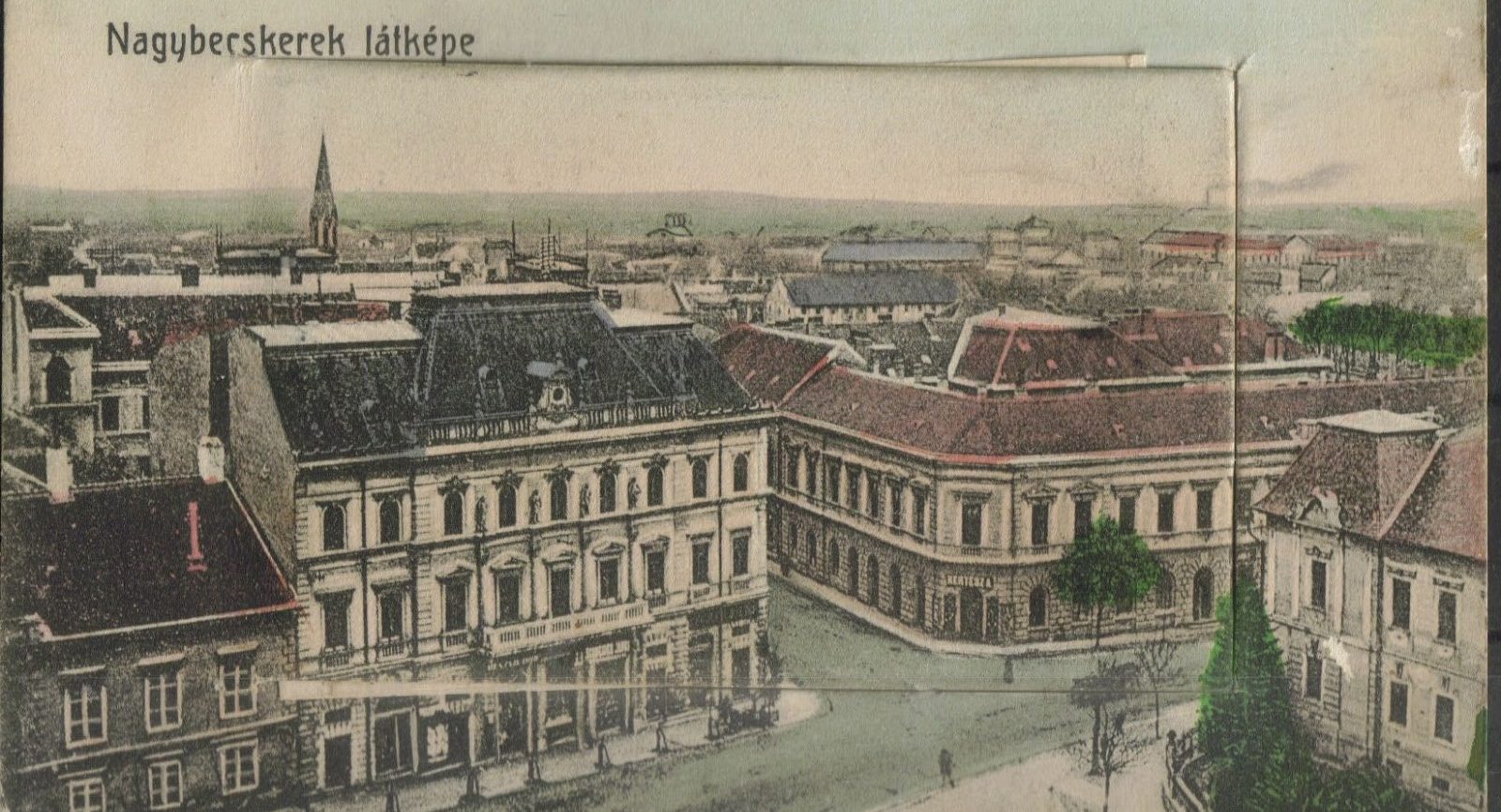
Veliki Beckerek, around 1900. Unknown author, via Wikimedia Commons, Public domain (source)
The film
At a glance
- Period
- 1924 to 1935
- Countries
- Yugoslavia (today Serbia), Serbia, Germany, Romania
- Subject
- Vera Renczi, the Black Widow, and Julka Relic of Beckerek
- Key locations
- Veliki Beckerek, Perlez, Novi Sad, Požarevac, Berlin, Temesvar, Belgrade, Vladimirovac
- Themes
- true crime, vera renczi, black widow, female serial killer, arsenic, banat
- Episode
- EF-014 · 52 min · published 22 August 2026
Case overview
This is the full story of the most famous female serial killer of the twentieth century, told from the documents: the 1925 front pages where her story enters the world; the Hearst Sunday supplement that gave her a name, a chateau and a cellar; the five contradictory endings; the photographs that belonged to other women; and the archives of the region where it was all supposed to have happened, which have something very different to say.
It is also the story of a real widow from that same town: a real investigation, a courtroom with three thousand ticket requests for three hundred seats, a real death sentence read into grave-like silence, and a name that crossed a continent one border and one letter at a time. No English telling has ever traced it.
That is the autopsy. The cellar, the thirty-five coffins, the armchair among the dead: paper, printed in 1925, refuted on the day it was born, and repeated for a century. Behind the paper, a real courtroom, a real crowd applauding, a real crypt with a child's body missing, a real woman in black silk who told every reporter, every judge, and every guard, for eleven years, that she was innocent. The court did not believe her. The wire did not care. It took her town, her arsenic, her dead husbands and her dead children, made her thirty and beautiful and rich, and gave her a name she had never worn so completely that no one could ever find her again.
Timeline
Julka was born around 1883 in a Banat village, and orphaned at ten.
She was not thirty, and there was no chateau. She was a working townswoman in a two-story world of shops, debts, and inheritances.
She married an innkeeper named Keglevic in the village of Perlez, bore a daughter, Sofia, and was widowed at the start of 1914.
She moved to Beckerek and, in time, became the third wife of a widowed tradesman named Nikola Relic, a man with two half-grown sons of his own, Milivoj and Borivoj.
In July 1915, someone in the Relic household set out milk for the two stepsons. The boys did not drink it that morning. Julka's own daughter did.
Sofia Keglevic was ten years old. She fell ill before noon and was dead by evening. The death was recorded as illness, and a marble cross went up in the Catholic cemetery, with the girl's photograph set into the stone and an inscription that ends: this monument was raised by her mother.
In December 1922, Nikola Relic quarreled with his wife over money, a debt of fourteen thousand dinars, run up on credit.
Days later, his shop apprentice would remember, Julka pressed the morning coffee on him until he drank it. He vomited, took to his bed, and died six days later, on Christmas Day. His will left the house and the shop to Julka, with one condition attached: fifty thousand dinars to each son when he turned eighteen.
In December 1923, it was Milivoj's turn to come due. He was seventeen, a student at the commercial academy, and his fifty thousand dinars, which his stepmother had lent out and could not easily produce, had to be deposited with the orphans' board by the first of January, his eighteenth birthday.
On the thirteenth of December, Milivoj drank his breakfast milk, and by eight in the morning he was vomiting at school. In those same days, a lawyer was sent for, and a new will was made out in Julka's favor. The lawyer would remember one detail for the rest of his life, and repeat it in court: she handed me the ink with her own hands. Milivoj died at the end of December, after two weeks of suffering, three days before the birthday that would have made the money his.
She was arrested on the sixteenth of May, 1924, and she denied everything, and she never stopped denying.
The investigators went to the cemeteries. Nikola and Milivoj were exhumed first, and the chemists found arsenic in both bodies. Then they went back ten years for little Sofia, and found traces even there. Then someone remembered the first husband, dead in Perlez in 1914, and they dug him up too. Four bodies, four findings of arsenic.
Related documentsIt started quietly, in December 1924, while she was still awaiting trial. The Subotica daily reported the case: the arrest, the wills, the exhumations.
Two days later a paper in Miskolc, Hungary, reprinted the item, and in that single reprint her name appears spelled two different ways, Relic and Belics, in the same text. Three days after that, a paper in Temesvar, in Romania, ran it with the fresh twist of the first husband's exhumation, and there she is Belics for good. One border crossed, one letter changed. Nobody lied. Somebody transcribed.
Related documentsIn April 1925, the exhumation wave made her international. A daily in Graz, Austria, printed a sober dispatch written from Beckerek itself, dated April the ninth.
But the surname has mutated again, Relic has become Remic, and one new error is born in this very dispatch: her dead child is described as her own young son. The real dead child was a daughter, Sofia, ten years earlier.
Related documentsOn April the tenth, 1925, the big Hungarian-language daily across the county line ran the story under a headline that translates: they are exhuming the victims of the female Landru of Beckerek.
The commission opened the crypt to exhume Borivoj, the younger stepson, who had died as a child years before, of natural causes as far as any official record went, and who was never charged in the case. His name and his photograph were on the stone. Inside the coffin they found the skeletons of two adults. The child's body was not there at all. The paper printed the fact and could not explain it, and no one ever has.
Related documentsThen the wire took over, and the wire did not transcribe. It amplified. On April the eighteenth, a dispatch datelined Prague announced Julie Remic, held in Beckerek, and credited her with at least thirty poison murders.
A Belgrade-datelined variant called her simply the Remie, thirty persons poisoned. Within weeks the story had run through the German-language press from Vienna to the Alpine provinces to the Romanian Banat, dozens of printings, forty-seven in a single archive sweep of those two months.
Related documentsAnd on the third of May, a small Austrian paper completed the transformation in a single sentence: the Remic finally confessed to all the poison murders.
The real woman had confessed nothing. She never would. The confession was invented somewhere along the wire, between one deadline and the next, and it stuck, because a confession is a better story.
Related documentsOn the fourteenth of May, 1925, five days before America, a German-language daily in Czernowitz printed the finished legend, in an item datelined Temesvar. The headline: a female Landru in Yugoslavia.
And one more thing sits on that same page, printed by the same editors, on the same day: the first debunk in history. The paper runs the arithmetic under its own story. If she is thirty, that would be three murders a year, every year, undetected, and it is difficult, the editors write, to believe the report. The legend and its refutation were born on the same sheet of newsprint. The legend won.
Related documentsOn Tuesday, May the nineteenth, nineteen twenty-five, the front pages of small-city America carried a strange item from Europe. In Utica, New York, the evening paper headlined it: woman is held for poisoning of thirty-five persons.
The item came from the wire services of William Randolph Hearst's press empire, the yellow-press machine of the age. It was a few hundred words long. It is the founding document of everything in the opening minutes of this video.
Related documentsThree days later a fuller version ran, datelined Berlin, and this one carried a byline: O. B. Tolischus, of Hearst's Berlin bureau, a reporter whose name would one day sit under journalism's Pulitzer Prize.
His version called her the greatest female bluebeard of modern times, after the fairy-tale husband who murdered his wives and kept them behind a locked door. Her suitors, he wrote, were all between twenty-three and thirty, and each had lasted six to seven months of the greatest harmony and happiness, until the loved one would suddenly disappear.
Related documentsEleven weeks later, on Sunday, August the second, the story came back, transformed. And in its opening lines, the woman from the wire received the gift no record office ever gave her: a name. Madame Vera Renczi.
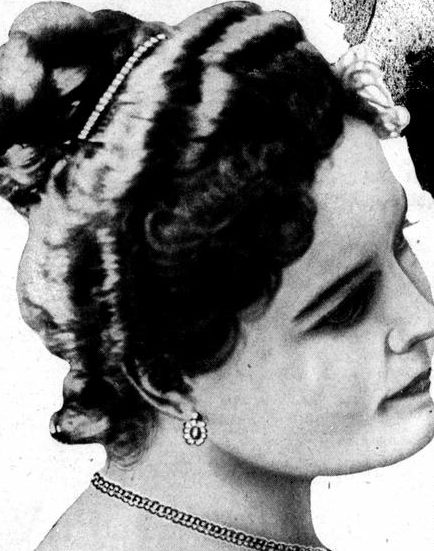
The zinc cans became thirty-five zinc coffins, neatly arranged around the cellar, each bearing the name and age of the occupant. The cellar acquired an ancient chateau above it, with long vaulted corridors and three iron doors and the old servant who fought the police. At the top of the page, beside the headline, the editors placed a photograph. That woman is not the actress. She is not the model. She matches no portrait in the legend's whole century of faces, and she has never been identified.
Related documentsThe trial of Julka Relic opened in Beckerek on the tenth of November, 1925, and the town treated it as the event of the decade. Three thousand people applied for three hundred seats.
The court reopened its old grand-jury hall to hold the crowd, and on the first morning the crush at the doors was described by the press as life-threatening. Julka had a new black dress made for the occasion. Reporters wrote that she entered pretty, brown-skinned, in black, startlingly calm, idly picking at her nails while the indictment was read.
Related documentsThe verdict came on the seventeenth of November, 1925, at eight in the morning, to a packed hall that the press noted was filled mostly with women. The court found her guilty of the premeditated poisoning of her husband and her stepson.
On the death of her daughter Sofia, it acquitted her: the chemistry after ten years in the ground, and the testimony, were not enough. The sentence, under the old code, was death by the rope. Asked if she had anything to say, she gave the room one sentence: nothing. It is all the same to me now.
Related documentsIn September 1926, a reporter from the Subotica daily was allowed to see her on death row, and his interview survives.
She came to the visiting room elegant, in a grey flowered gown and smart buckled shoes, and gave her interview readily. I would go dancing and singing to my death, she told the reporter. I did not kill my husband and my child. If I had, I would not be alive today.
Related documentsThe appeal was finally heard in Novi Sad in February 1928, and the coverage preserved what she wore: black silk, head to toe, dress, headscarf, gloves, stockings and patent shoes.
The presiding judge confronted her: your family members died, one after another, after quarrels with you. An unfortunate coincidence, she answered. Later that day she broke down, sobbed into her palms, and cried out, do with me what you want, I am innocent.
Related documentsThe next day the court announced its decision into what the press described as grave-like silence. The death sentence was commuted to life imprisonment, her four years of investigative custody weighed in the balance.
She heard it, the reporters wrote, with icy indifference, without a single movement of her face. That June the high court made it final.
Related documentsShe served her life in the fortress prison at Pozarevac, and there, in September 1935, she died, at fifty-two.
The obituary called her the witch of the Banat, and it recorded one thing above all: that she had maintained her innocence, in the paper's words, in the most determined manner, to the very end. Eleven years, from arrest to death, and she never confessed to anyone.
Related documentsThen the wall came down, and in 1993 she crossed back over: a Prague daily introduced Czech readers to Vera Renczi the same year a British paperback anthology carried her to a new generation.
In 2007 the English Wikipedia article was created, with the impossible birth year in its very first line. From there the mirrors multiplied.
Related documentsIn 2012, a British tabloid printed a supplement on women who kill, and the photograph it ran for Vera Renczi was a self-portrait that a living fashion model, Patricia Belda Martinez, had posted online in 2004. The paper printed an apology to her.
The photograph is still, today, the face of the Black Widow on some of the biggest tellings on the internet.
Related documentsA chemistry professor at the University of Belgrade, Simon Djarmati, who has spent years on the history of poisoning in the Banat, went through all of it: the historical archives, the court records, Politika for 1925, and both of the town's own papers.
He put his conclusion on the record in the Belgrade daily Danas, in one sentence. Vera Renczi is invented. In no relevant source, he said, is there a single letter about her.
Related documentsIn 2024, a peer-reviewed psychiatry journal published a psychobiography of Vera Renczi, building a clinical model of her jealousy from, its own references show, the 1925 Hearst texts and the anthologies downstream of them.
The paper concedes, in passing, that the first part of her life is, in its own words, not well-proofed.
Related documents
Key locations
Full mapDocuments and evidence
Sources
- Newspaper
The American Weekly Hearst Sunday supplement, seen in the San Antonio Light; via The Portal to Texas History, 2 August 1925.
The American Weekly was Hearst's Sunday magazine, folded into newspapers from coast to coast, a full-page factory of marvels.
- Newspaper
Utica Observer-Dispatch Utica, New York; via NYS Historic Newspapers, 19 May 1925.
In Utica, New York, the evening paper headlined it: woman is held for poisoning of thirty-five persons.
- Newspaper
The Bee Danville, Virginia, 22 May 1925.
Three days later a fuller version ran, datelined Berlin, and this one carried a byline: O. B. Tolischus, of Hearst's Berlin bureau, a reporter whose name would one day sit under journalism's Pulitzer Prize.
- Newspaper
Bacsmegyei Naplo Subotica; via the Arcanum Digital Theca, 1924 to 1935.
What happened around her over the next decade is not a legend. It is a court file, covered day by day by the regional press, and it is dark enough on its own.
- Newspaper
Hirlap Subotica; via the Arcanum Digital Theca, 1926.
Principal sources: the Hungarian-language regional press, 1924-1935 (Bacsmegyei Naplo, Hirlap and others, via the Arcanum Digital Theca).
- Newspaper
Miskolci Reggeli Hirlap Miskolc; via the Arcanum Digital Theca, 13 December 1924.
Two days later a paper in Miskolc, Hungary, reprinted the item, and in that single reprint her name appears spelled two different ways, Relic and Belics, in the same text.
- Newspaper
Temesvari Hirlap Temesvar; via the Arcanum Digital Theca, 16 December 1924.
Three days after that, a paper in Temesvar, in Romania, ran it with the fresh twist of the first husband's exhumation, and there she is Belics for good.
- Newspaper
Grazer Tagblatt Graz; via the Arcanum Digital Theca, 11 April 1925.
A daily in Graz, Austria, printed a sober dispatch written from Beckerek itself, dated April the ninth.
- Newspaper
Villacher Zeitung Villach; via the Arcanum Digital Theca, 22 April 1925.
On April the eighteenth, a dispatch datelined Prague announced Julie Remic, held in Beckerek, and credited her with at least thirty poison murders.
- Newspaper
Salzkammergut-Zeitung Austria; via the Arcanum Digital Theca, 3 May 1925.
And on the third of May, a small Austrian paper completed the transformation in a single sentence: the Remic finally confessed to all the poison murders.
- Newspaper
Vorwarts Czernowitz; via the Arcanum Digital Theca, 14 May 1925.
On the fourteenth of May, 1925, five days before America, a German-language daily in Czernowitz printed the finished legend, in an item datelined Temesvar.
- Newspaper
Danas Belgrade, 2022.
He put his conclusion on the record in the Belgrade daily Danas, in one sentence. Vera Renczi is invented. In no relevant source, he said, is there a single letter about her.
- Newspaper
Daily Mirror, the Women who Kill supplement and the apology London, March 2012.
In 2012, a British tabloid printed a supplement on women who kill, and the photograph it ran for Vera Renczi was a self-portrait that a living fashion model, Patricia Belda Martinez, had posted online in 2004. The paper printed an apology to her.
- Web
Journalism.co.uk on the Daily Mirror apology to a fashion model 2012.
The paper printed an apology to her.
- Archive
The Arcanum Digital Theca Arcanum, the digitized Hungarian language press.
A full-text search of the region's digitized Hungarian-language press returns two thousand two hundred and seventy-eight articles about poisoners between 1925 and 1930. The Banat's newspapers could not get enough of poisoners. The name Vera Renczi appears in none of them.
- Archive
NYS Historic Newspapers New York State digital newspaper collection.
Newspaper scans via the Arcanum Digital Theca, NYS Historic Newspapers and The Portal to Texas History.
- Archive
The Portal to Texas History University of North Texas Libraries.
Period newspaper pages (1924-1935) and all pre-1931 US press material are in the public domain.
- Archive
Period postcards and portraits via Wikimedia Commons (public domain).
- Web
Vera Renczi, the article on the English Wikipedia 2007.
On the English Wikipedia, after fifteen years of editors fighting over her, the article now sits in a category reserved for a special kind of person: people whose existence is disputed.
- Web
The Find a Grave memorial page for Vera Renczi
There is even a memorial page for her on a gravesite database, born nineteen-oh-three, died nineteen sixty, cause of death filled in. It was created by a user, for a woman with no grave.
- Web
Murderpedia, the index of women
On the internet's biggest murder database, she is a row in the index with no page behind it. Even the completists could not build her a file.
- Book
The Mammoth Book of Killer Women 1993.
Then the wall came down, and in 1993 she crossed back over: a Prague daily introduced Czech readers to Vera Renczi the same year a British paperback anthology carried her to a new generation.
- Academic
Psychiatria Danubina, 2024: a psychobiography of Vera Renczi Psychiatria Danubina, volume 36, number 2, 2024.
In 2024, a peer-reviewed psychiatry journal published a psychobiography of Vera Renczi, building a clinical model of her jealousy from, its own references show, the 1925 Hearst texts and the anthologies downstream of them.
What remains unresolved
- Where did Vera Renczi end up?
- What is a fact you have always believed, that nobody ever showed you a document for?